

How The Temperance Movement Led To The Invention Of Disposable Cups
The temperance movement sought to steer the public away from consuming alcohol, which ultimately led to the passage of Prohibition and alcohol being illegal to sell or manufacture until 1933. It reached the peak of its influence in the United States during the mid-1800s; temperance groups often traveled to cities with a water wagon, encouraging residents to turn away from alcohol and instead drink water, which was offered from a communal cup. At this time, science also began to have a greater understanding of germs, and the idea of multiple people drinking from a single cup left many observers horrified by the notion of shared germs (and to get an idea of what a super-spreader a communal cup might be, consider how nasty grocery carts really are).
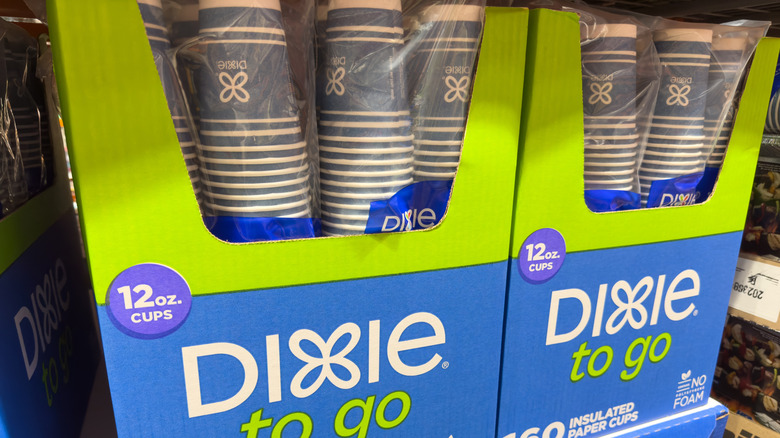
Noting that so many individuals drinking from a communal cup could make people sick, Lawrence Luellen, a Boston-based lawyer and inventor, invented the Health Kup, a disposable drinking cup, in 1907. Luellen worked with engineers to create a manufacturing process that would ensure the paper cups were never physically touched throughout the production stages to minimize germs. Eventually, the Health Kup was renamed "Dixie Cup" after the Dixie Doll Company. In 1918, the Spanish flu killed millions of people and brought with it a new fear of germs, which helped make the case for the disposable cup's usefulness.
Disposable dinnerware continued to thrive
What began as a way to avoid spreading germs eventually became a way to deliver convenience. In the 1940s, Dixie cups began to collaborate with fast food restaurants and even allowed companies to customize the cups. And products like the Dixie Cocktail Time Set, which was made specifically for alcoholic beverages in 1952, proved that any drink could be housed in a disposable vessel. Dixie later leaned into the world of parties and holiday gatherings by releasing themed lines for varying seasons and occasions. Just because the dishes being used were disposable doesn't mean they couldn't be chic — or at least festive.
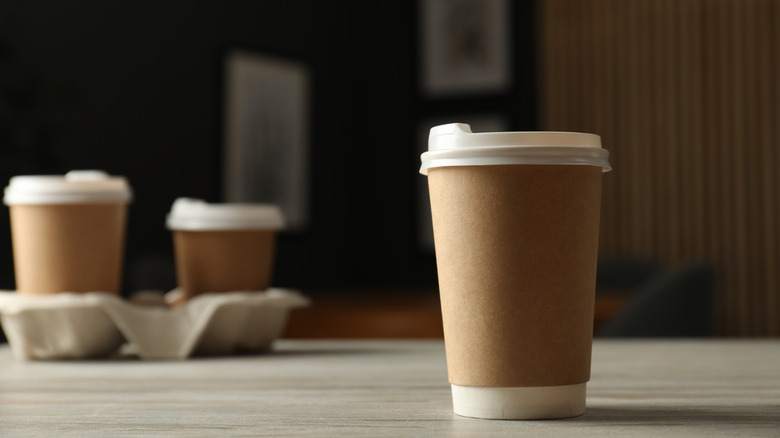
As American needs and schedules continued to change with the times, 7-Eleven revolutionized how America drank coffee when it introduced the to-go coffee cup in 1964. This wasn't the first time a lid had been put on a disposable cup. Dixie had been working with ice cream makers to create small frozen treats with peel-off lids since the 1920s. Though this was the first time consumers could take coffee on the go without worrying about spills from a full, open mug.
Disposable cups have continued to change and evolve as the needs of people have done the same. In the 1990s, Dixie created a cup designed to keep warm drinks warmer for longer periods. And prevention remains an important factor for disposable cups; now, many manufacturers are focused on making their products more sustainable, and even biodegradable, to combat single-use products ending up in landfills or being tossed out as litter.