

The Top Priority When Making An Italian Pasta Dish That Rivals Any Restaurant
There's a good chance that the pasta you're making at home is less complex than professional pasta dishes from chefs. This isn't just about the number of ingredients you add to your pasta and sauce; for any restaurant pasta dish, the chef likely puts much more thought into pairing the pasta shape and sauce than you might. Some folks might say rigatoni is the best pasta shape for anything, but are there specific tips for pairing pasta with sauce? We spoke with Scott Conant, award-winning Italian chef and TV personality, about mixing shapes and sauces.
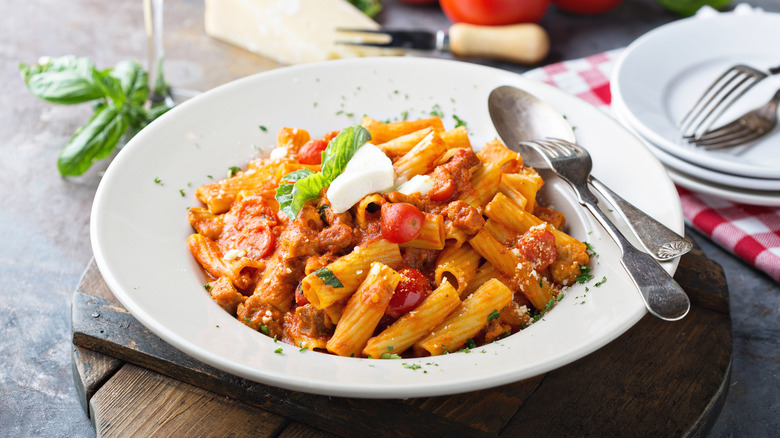
Conant made a point of saying that rules around pasta change between regions, and there's no method that everyone agrees on, but he provided one helpful tip to use as a guideline. Conant explained, "The general rule is that long, thin pastas pair best with lighter, oil-based sauces, while shorter, sturdier shapes work better with hearty ragùs." This is because different pasta shapes are designed to hold onto different sauce textures. Skinny pasta shapes are better at handling thin sauces, which can evenly coat the noodle without weighing it down. On the other hand, wide and heavy noodles are great at holding thicker, chunkier sauces, which would fall off a thin strand of spaghetti.
Wide noodles are built for hearty sauces
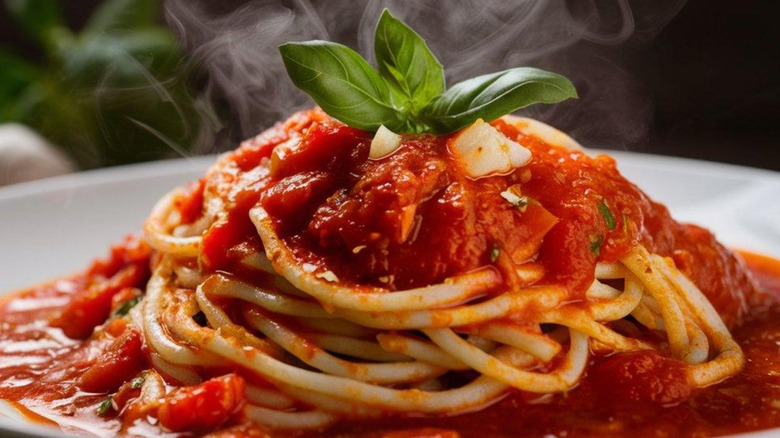
Scott Conant elaborated on this rule of thumb. "One classic example is tagliatelle Bolognese, which is technically a long, thin pasta. In contrast, spaghetti Bolognese is generally not served in Italy." Bolognese is a rich, ground beef-based sauce, and a wider tagliatelle noodle will scoop up that heavy sauce and even some bits of ground beef. On the other hand, next time you eat spaghetti Bolognese, check how much sauce actually stays on your spaghetti when you raise your fork. Instead, a thinner tomato-based pomodoro sauce would be a good fit for thoroughly coating spaghetti.
There are more arguments to be made over the many pasta shapes in between thick tagliatelle and skinny spaghetti. Stuffed pasta like ravioli — despite being flatter in shape — is often paired with mild butter or cream sauce to avoid overpowering the fillings. Small pasta shapes like farfalle or acini de pepe work well in soups instead of sauces, where they can be easily scooped up with a spoon. And corkscrew-shaped pasta is often the best pasta shape for pasta salad because of how it holds the dressing. Beyond all the edge cases and regional exceptions, if you want your sauce to stick to the pasta, think about your pasta shape and how different sauces might interact with it.