

The Best Homemade Fried Food Is Made Using This Unique Pot
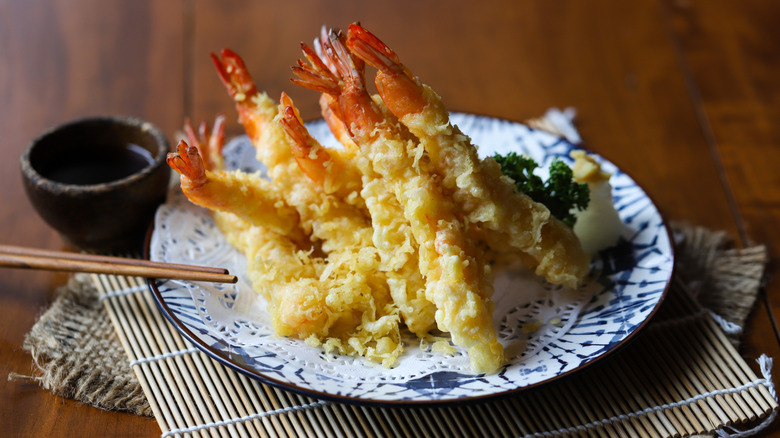
There are all kinds of different ways to fry your food (really fry, that is, not "air fry" in a mini convection oven). One way is to deep fry it (in a pot, not a pan). Another is to pan-fry it – the difference lies in the amount of oil as well as the vessel used. For something more delicate, you can also use the Japanese technique known as tempura. If you do, Maricel Gentile of Maricel's Kitchen recommends purchasing a dedicated tempura pot to have the best outcome when cooking.
Gentile explains that tempura pots are tall and narrow, which means you'll need less oil for depth. They also have thick walls, which help to maintain the steady oil temperature necessary for lighter batters — or any batters, for that matter. As compared to a frying pan or Dutch oven, she says, "A tempura pot keeps oil deeper with less surface area, which helps food fry evenly and stay crisp." She likes to use a tempura pot when demonstrating for a cooking class, explaining: "It also makes frying feel calmer and more controlled, which matters when you are teaching or cooking for a group."
What to look for in a tempura pot
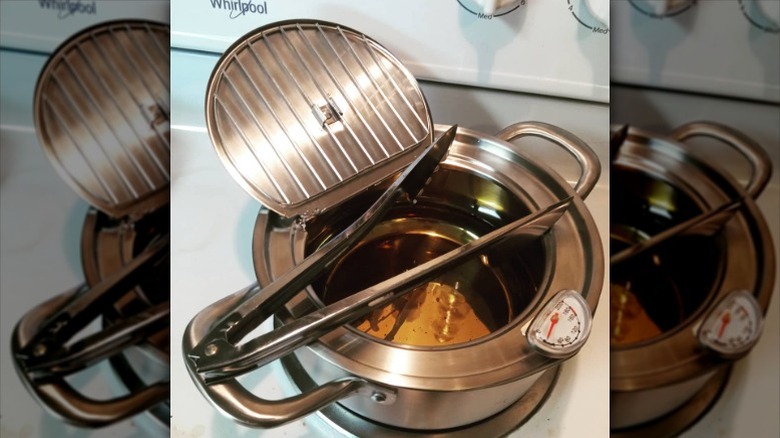
If you decide to purchase a tempura pot, Maricel Gentile has a few tips to offer. "When buying one, look for weight and stability. Thin metal loses heat fast. You want a pot that feels solid." She also pointed out that you should choose one that will fit on your stove top, saying, "Bigger is not always better for home cooks." You might also not need the largest pot, nor one with all of the bells and whistles, if you won't be making tempura on a regular basis.
Some bells and whistles, though, are certainly nice to have. As Gentile related, "I prefer the style with a built-in drain board in the lid. After frying, [you can] rest the tempura right on the cover so it can cool slightly and the excess oil drips back into the pot. That small detail keeps the tempura lighter and less greasy, especially when you are frying in batches." A built-in thermometer that is easy to read is also nice to have, especially if you're not an experienced fry cook and are unable to judge the oil temperature without such an aid. Gentile also recommended purchasing a tempura pot with a removable basket, saying: "Built-in baskets make lifting food easy without splashing." This accessory will also help you drain the fried food in one step instead of having to fish it out piece by piece with a spider strainer.
How to use a tempura pot
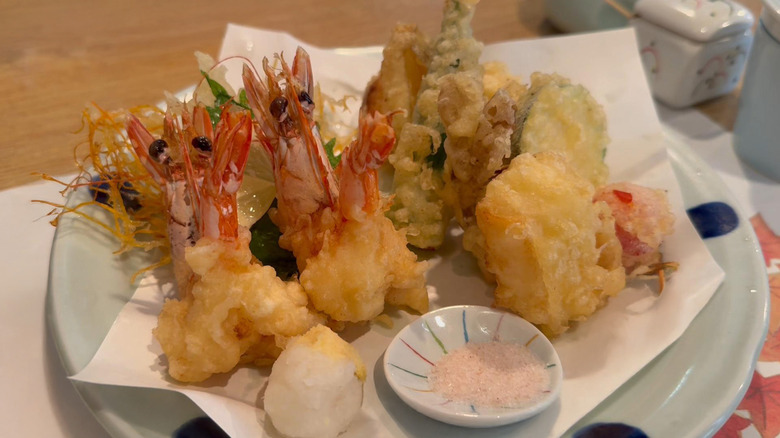
Before your tempura pot comes into play, you first need to select what you'll be cooking. "Vegetables shine in a tempura pot," Maricel Gentile advised. "Sweet potato, eggplant, green beans, mushrooms, and shiso fry beautifully because the heat stays steady. Shrimp and soft fish also work well. The pot supports quick frying, which keeps the batter light and the inside tender."
Once you've prepped the food and mixed up the batter, you can then heat the oil. Some cooks recommend taihaku sesame seed oil as the right frying oil for restaurant-quality tempura, but vegetable oil makes a perfectly serviceable and far more budget-friendly alternative. (Kuki taihaku pure sesame oil may cost over $4 per ounce, whereas vegetable oil can be found for under 7 cents per ounce.) Heat the oil to between 340 and 360 degrees Fahrenheit. At this range, Gentile says, " ... tempura stays delicate, not greasy." When the oil is hot, dip your meats or vegetables in the batter, then drop them into the pot. Don't overcrowd it, though — tempura pots were designed for frying small batches, since overcrowding the pot will drop the temperature and the food may come out soggy.