

Don't Microwave Eggs Like This Unless You Want A Huge Mess
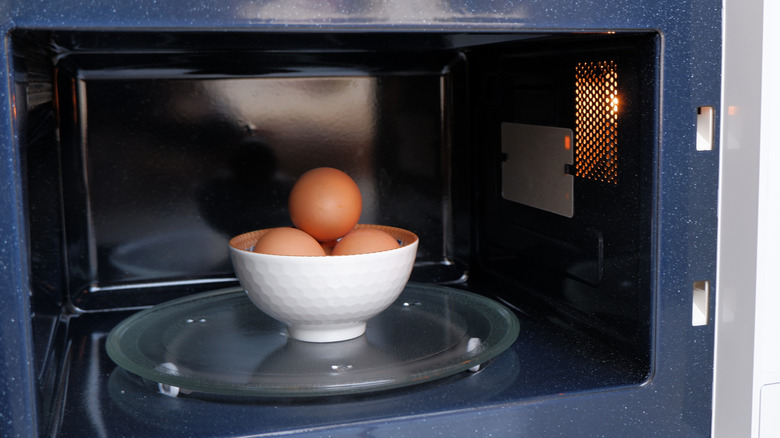
Eggs and microwaves can work together, but only if you take certain steps and precautions. You can make something like a fried egg, but only if you pierce the yolk before cooking. If you must reheat scrambled eggs in the microwave, you need to place a damp paper towel over the top or you lose all the fluffiness. However, if you want to make hard-boiled eggs quickly in the microwave, you might want to reconsider — under the right conditions, hard-boiled eggs can explode in the microwave.
This creates a huge mess, but it can actually get worse. In the United States, there are multiple cases admitted to the emergency room with burns from exploding microwaved hard-boiled eggs every year. Some children have received serious eye damage. The surprising key to this explosive tendency has to do with the shell; take care to remember that it's never okay to microwave an egg with the un-punctured shell still on. You might be curious as to why this is such a messy and dangerous mistake, though, and the answer is all about fast heat.
Why microwaved eggs explode
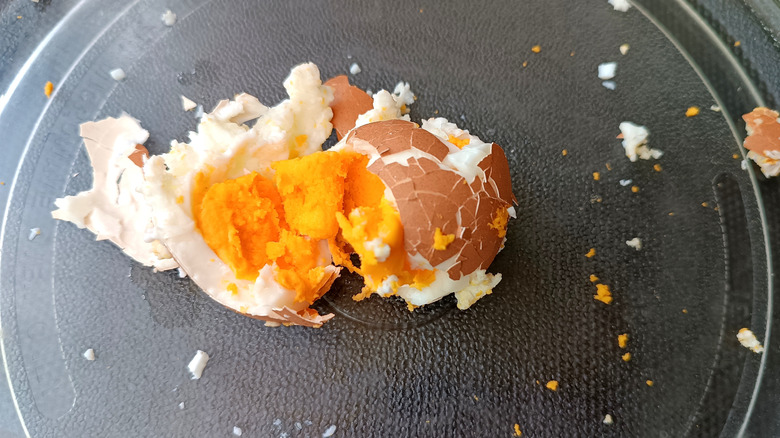
The science behind this disaster has everything to do with moisture and steam in the egg that have no way to escape. It's great that microwaves work so quickly, but that speed is actually the crux of the problem. The high liquid content of the egg heats up to boiling inside the shell in minutes, letting off steam. However, because the steam is contained in the shell and can't leave quickly enough through the shell's pores, it eventually exerts too much pressure and causes an explosion. This may happen before you open the microwave, leaving you with a massive mess. At worst, it could happen when you agitate or cut into the egg after removing it, causing it to literally blow up in your face. All this means that a shell-on egg is something you should never put into your microwave in the first place.
Even if you take the shell off, that doesn't mean you're guaranteed a non-exploding egg. The egg yolk is high in fat, which may help make it more explosive, but mostly it has to do with the proteins. The tight protein network, when exposed to heat, can lose its bonds, causing the yolk to come apart in a drastic fashion. Basically, the yolk pops when it gets hot, which is why you should always prick a raw egg yolk before nuking.
How to safely cook an egg in the microwave
If you want a hard-boiled egg and only have a microwave at your disposal, there's still a way to do it. If you are okay risking a little mess, you can make a tiny hole in the bottom of the shell with a needle and put the egg in a covered microwave-safe cup of salted water. Then, set the microwave at 50% power, and heat for five to eight minutes, resting for a few minutes partway through. Let it sit in the microwave for a while before removing it, and don't hold the egg by your face just in case there's a delayed explosion. Yes, it takes longer this way, but it's much safer to do this low-and-slow.
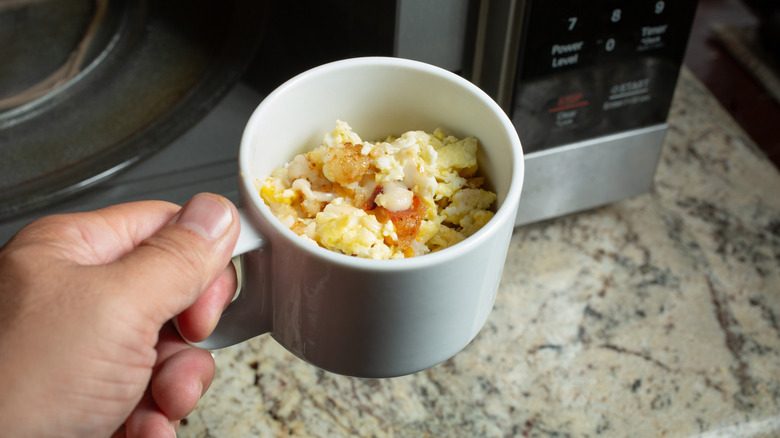
If you're craving eggs and don't mind what form they take, the microwave can actually work well. Beat an egg in a mug with some milk, then add cheese and other toppings and microwave until it's all fluffy. Place an egg into a microwave-safe bowl, pierce the yolk, then cover it with a small amount of water and microwave for an easy poached egg. There are even fun microwavable molds you can crack a raw egg into, so you can get a heart or flower shape without a lot of effort. As long as you steer clear of these egg cooking mistakes, things should all turn out sunny side up.