

The Crockpot Mistake That Can Ruin Your Food And Put You In Danger
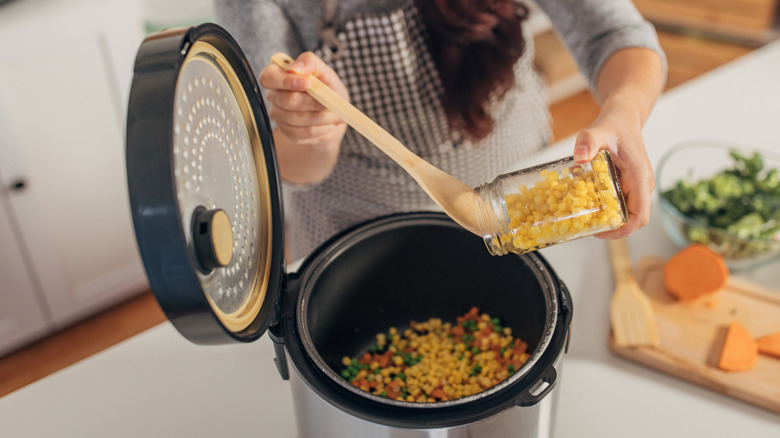
With so many easy recipes to make in a slow cooker for the fall season, it shouldn't be a surprise if you find yourself using your Crockpot more frequently than before. The electric appliance is one of the most convenient ways to cook delicious meals without having to check on their progress every so often. However, when you're hosting a gathering or meal-prepping for the week, it might be tempting to fill the slow cooker to the brim, thinking it will cook the food faster and yield a bigger serving. But according to experts, that's actually one of the biggest mistakes that can make your food unsafe to eat. Overfilling apparently prevents proper and even heating, leaving some parts of your food undercooked or overcooked.
"When a slow cooker is too full, it may not heat the food evenly. This can also increase the risk of foodborne illness, because the food might not reach a safe temperature throughout," Florida Education Institute chef creative director and recipe developer Isamar Leal explains via the Martha Stewart website. Another expert, chef and founder of Los Angeles–based Gracefully Fed, Traci Weintraub, warns via the same website that overfilling may also create a mess in the kitchen. "Overfilling your slow cooker could lead to food spilling over as it starts to warm, which would create a mess," she says.
Why you should never overfill your slow cooker
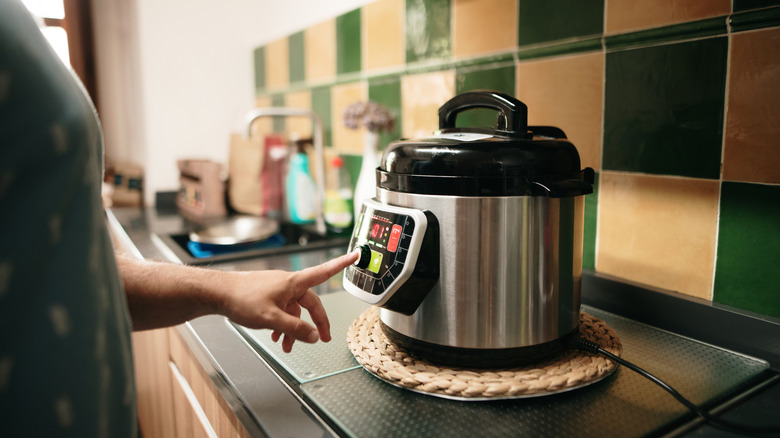
In a video guide on its own YouTube channel, even the Crock-Pot brand says that an overfilled crockpot won't cook as "evenly and thoroughly as it should." Instead, the brand recommends stopping at the two-thirds full mark. A Crockpot is designed to provide steady, low heat over an extended period to cook a dish. When packed too tightly or filled to the brim, steam and heat cannot circulate properly within the stoneware, thus interfering with safe cooking.
If you are preparing a dish that involves meat and poultry, there's a big chance that they will turn out raw since the ideal internal temperature will not be reached when the slow cooker is overfilled. When this happens, the possibility of your food being contaminated with bacteria like Salmonella or E. coli is high. Even if you're following the recommended time to cook a roast in a Crockpot, the resulting dish might be unsafe for consumption.
Overfilling also promotes safety hazards in the kitchen. As the soup base bubbles up during the cooking process, there's a tendency for the liquid to spill over the edges. This will not only create a mess on your countertop, but it can also force the appliance to work harder, possibly leading to overheating issues or fires. So the next time you're tempted to overfill your Crockpot, remember: less really is more when it comes to slow cooking.