

Double The Umami In Tuna Salad With This Briny Canned Ingredient
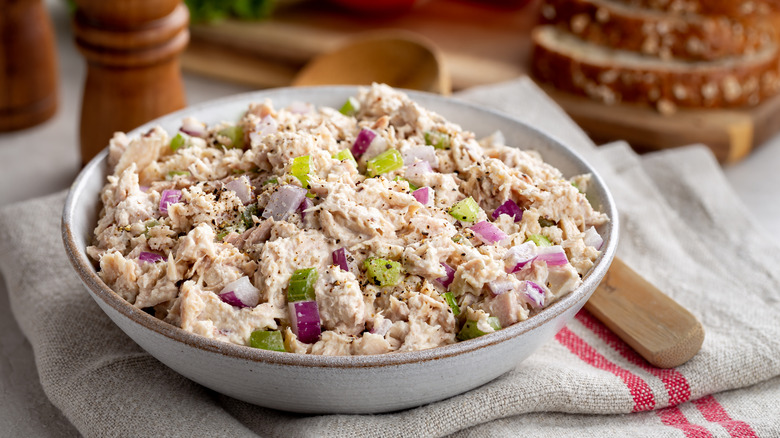
Whether you're enjoying it in a sandwich, toasted with cheese in a tuna melt, or over a crisp bed of lettuce, tuna salad is a tasty, protein-packed dish that makes a great lunch or light dinner. But while there are many ways to punch up tuna salad — from olives to capers to herbs — consider packing a burst of rich umami flavor, plus plenty more protein, by adding a second layer of fishy goodness: canned sardines. Mix it with the canned tuna to create a double-fish salad that is richer than traditional tuna salad but can be served in many of the same ways.
To make sardine-tuna salad, you'll have to decide on the sardine-to-tuna ratio you prefer. Remember, canned sardines tend to be slightly richer and fattier than canned tuna, which will impact the flavor of the dish, so you might want to use less mayo than you would in a typical tuna salad. However, you will likely want to add a bit of crunch in the form of tuna salad's traditional veggie add-in — chopped celery — and a touch of pepper for a little spice.
More ways to enjoy your sardine-tuna salad
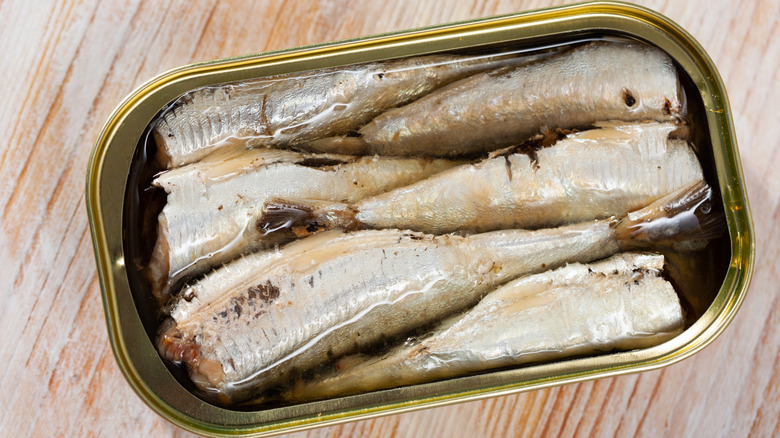
Once you've mastered the art of sardine-tuna salad, you might want to experiment with how you serve it and incorporate additional ingredients. If you're making a classic sandwich with your sardine-tuna salad, you can try pairing it with some sliced avocado, which is one of the best ways to enjoy canned sardines, or a bit of fresh or sun-dried tomato to add a note of acidity. You can also try serving sardine-tuna salad in a wrap, or on its own on a plate with a green salad or with hot soup on the side.
However, if you want to experiment with the sardine-tuna salad recipe itself, some additions to liven up traditional tuna salad may also be used in its sardine variation, like diced red onion, sliced pepperoncini, capers, or sliced olives. You might also consider using crème fraîche to complement the flavor of the sardines in place of some or all of the mayo in your recipe for a lighter, tangier variation that highlights the rich umami flavors of the fish you're using.