

Stop Annoying Your Bartender And Learn Your Ideal Martini Order
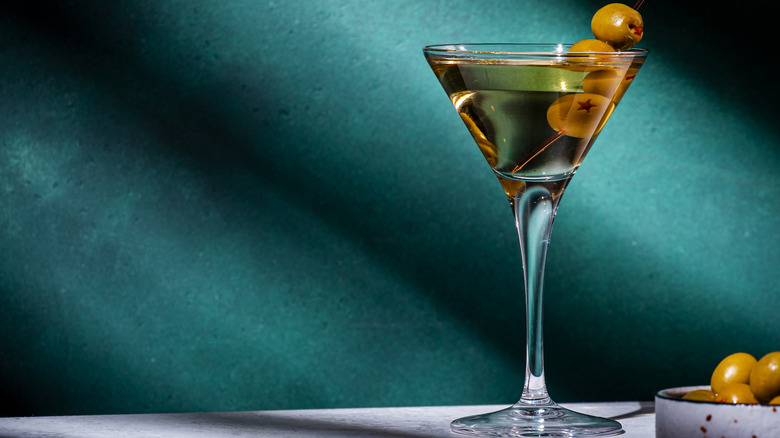
If you're a fan of spirit-forward cocktails, no doubt you're very familiar with the martini. In order to get the most satisfying experience when drinking, however, it's best to know exactly what you want so you can order it accordingly (or mix it yourself, if you're imbibing at home). Lexi Parker, who works as the beverage manager at a Denver cocktail lounge called Poka Lola Social Club, shared her martini knowledge with The Takeout to help you consider your options.
If you want to order a martini like you're actually a connoisseur, you'll need to know the lingo — just asking for a "martini" will prompt several more questions from your bartender, which can be a hassle on a busy night. "The most important cocktail terminology you need to know is whether you want your martini 'dry,' 'extra dry,' or 'dirty,' and maybe 'up' versus 'on the rocks,'" said Parker. These terms let the bartender know the ratio of the ingredients and how you'd like them to be prepared.
Parker explained that what makes a martini dry is the fact that it has much less vermouth than a classic one, with the latter traditionally being made with five parts gin or vodka to one part dry vermouth. Extra-dry martinis have no vermouth at all, so essentially you're drinking straight-up booze with a garnish. You can also order a wet martini, which usually consists of two parts gin or vodka to one part vermouth. As for a dirty martini, this has olive brine as an extra ingredient. Parker also explained, "'Up' versus 'on the rocks' just means in a martini glass or in a rocks glass with ice, respectively."
Should you order a martini with gin or vodka?
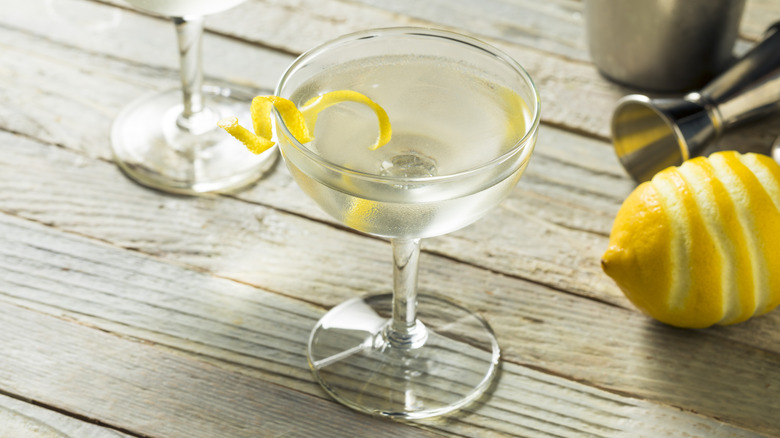
The origin story of the martini is somewhat muddled, so to speak, but the earliest ones do seem to have been made with gin. These days, however, no bartender is going to sneer at you for ordering a vodka martini instead. As Lexi Parker told us, "Choosing between a gin or vodka martini is entirely based on personal preference. I've found that people tend to order vodka martinis a little more often than gin martinis, but again, it totally depends on the guest and what they prefer."
If you're on the fence about which spirit you'd like, there is one point in favor of the vodka version — you can order it shaken, not stirred, just like James Bond. (The character helped to popularize the vodka martini, along with a vodka-gin hybrid called the Vesper.) "As a general rule, I shake all dirty martinis and all vodka martinis, and I stir gin martinis that have vermouth or are extra dry," said Parker. The reason she gave is this: "I find that people tend to lean towards a shaken martini because of the super cold, crisp mouthfeel you get ... because stirring gin, as opposed to shaking it, really lets the nuances of the gin itself shine through that might get lost underneath a good shaken martini."
How to garnish a martini
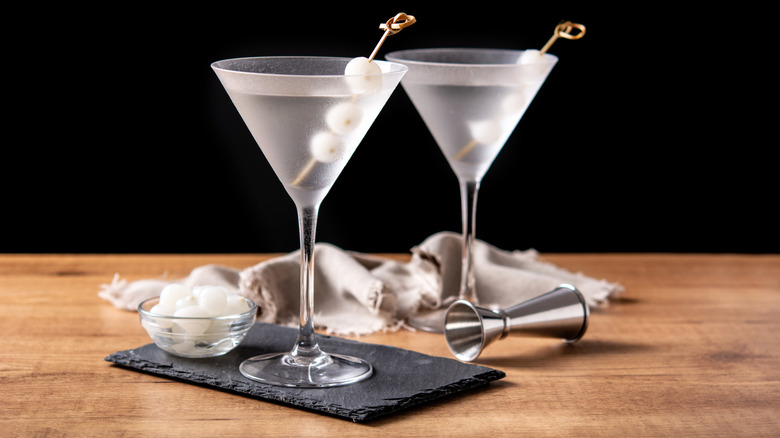
"Options for garnishes for martinis fall right in line with the question of gin versus vodka. They're entirely dependent on personal preference," declared Lexi Parker. Either a twist of lemon peel or an olive is the typical martini garnish. Parker explained, "Those looking for a brighter, more citrusy finish to their martinis are bound to go with a lemon twist, whereas anyone looking for a hint of brine and salinity might be more inclined towards an olive." Neither one is superior, although, of course, if you're ordering a dirty martini, you're probably going to want the latter.
Just as sometimes the drink can determine the garnish, so, too, can the garnish determine the drink. If you are at a bar where pickled onions are available and you ask that these be used to garnish your gin martini, you've just transformed it into a Gibson. What's more, you'll be drinking a martini like Ernest Hemingway. You can even order a vodka Gibson, too. Papa might roll over in his grave, but Martha Stewart has given this drink her endorsement. If you patronize a particularly fancy bar, you may even find your martini dressed up with fresh herbs or dried citrus. Don't expect this at every establishment, though, since these types of garnishes may still be considered somewhat outside the norm.