

Here's How Much Cheese You Need (Per Guest) On A Charcuterie Board
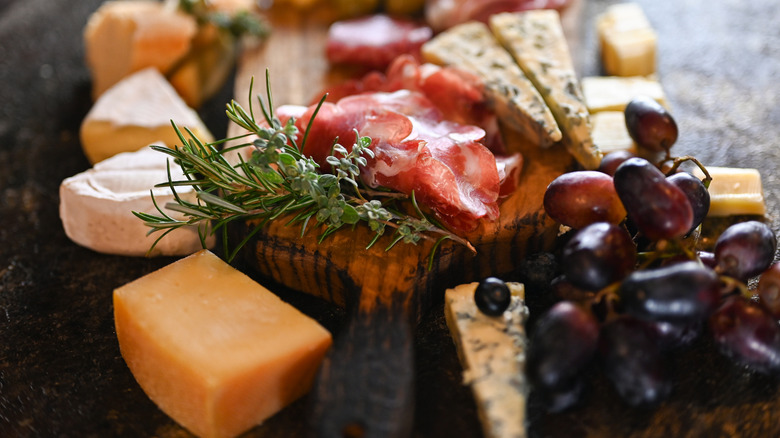
A charcuterie board is guaranteed to be a crowd-pleaser, especially when it's loaded up with piles of cheese. The only way you can go unforgivably wrong is running out too soon — you'll want plenty of Manchego, aged cheddar, and other fan favorites to go around. But how exactly does a person figure out the amount of cheese to lay out for a gathering? To save you the embarrassment of a skimpy platter, we turned to a dairy expert for advice on the right amount of cheese so you can achieve a mistake-free charcuterie board.
Molly Browne, education director at Dairy Farmers of Wisconsin, told The Takeout you should judge the amount of cheese you need for your charcuterie board based on the number of guests. She gave us a general rule to calculate how much you'll need: "Generally, 0.5 to 1 ounce of each cheese per person is a good ratio to keep in mind when buying cheese for a crowd," Browne said.
The amount of cheese you need will change depending on the setting as well. Use Browne's rule for appetizer-style charcuterie boards, especially if you are contributing to a potluck or snack bar. Ramp up the amounts to 3 to 4 ounces of each cheese per guest if the charcuterie board is the main meal for the event. So, if you're building a charcuterie board for 10 guests, you should have at least 30 ounces of each type of cheese (or 10 ounces of each if the board is an appetizer).
How to create a balanced charcuterie board
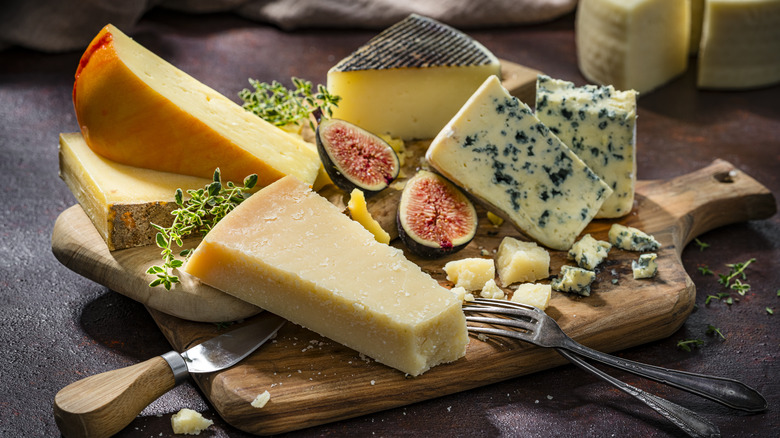
Now that you know how many ounces of cheese you need, creating a balanced and unique charcuterie board should be your next priority. You can decide how many cheese varieties you should include on the board by dividing the number of guests you're expecting in half. So if you are expecting 10 guests, include five types of cheese for a wonderful assortment. "Three to five cheeses is always a good place to start, though, and if you have time and space to add more, go for it!" Molly Browne said.
While the cheeses on your charcuterie board should have plenty of individual character, there is a lot of room to experiment. Remember the general rule of choosing something that's aged, something newer, a variety or two of blue cheese, and a cheese that comes from another kind of animal — like goat or sheep. It's also important to consider the platter's other ingredients. "Pairing picks are a great way to enhance your experience, bring out different aspects of the cheeses, and create a richer cheese tasting experience," Browne explained.
If you want a low-effort spread, remember apples and cheddar cheese are an unrivaled flavor pairing. Add a dash more creativity (with almost zero extra work) and turn boring saltines into the star of your charcuterie board by pairing them with goat cheese and bacon jam. "Make sure your accompaniments meet the following criteria: crunchy, sweet, spicy, salty, pickled, and fresh," Browne said. "Also, don't forget to throw in something unexpected. Examples of non-traditional cheese pairings your guests will love might include red miso, umeboshi plums, dark chocolate, and roasted chickpeas."