

People Use This Common Pan For Ground Beef, But It's A Big Mistake
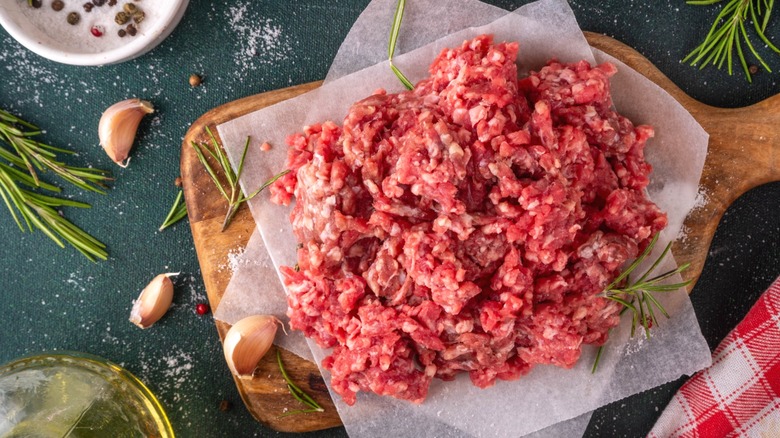
Whether you're making the filling for homemade tacos or preparing beef stroganoff, you'll doubtlessly find plenty of use for ground beef in your kitchen. Well, we certainly hope so, anyway, or the twenty bucks you spent on it at the grocery store would go to waste. But since beef is so expensive these days, it stands to reason that you'd want to prepare it exactly right. So what should you brown it in to get that sweet, sweet Maillard reaction? We talked to Jennifer Borchardt, culinary director at Pre Brands, and she told us to set the saucepan aside when you're trying to brown your meat.
"Saucepans are great for a lot of things, but cooking ground beef isn't one of them," said Borchardt. "There's usually not enough surface area to prevent overcrowding and the high sides let water pool, causing your beef to steam instead of fry." The goal of browning ground beef, after all, is to add a roasty flavor and develop a brown color — there's a reason why we don't call it "graying" ground beef, right? Luckily, saucepans still have their place in the kitchen. They work much better if you're making an actual sauce, such as these 13 sauces chefs say you should try making at home.
How should you brown your meat?
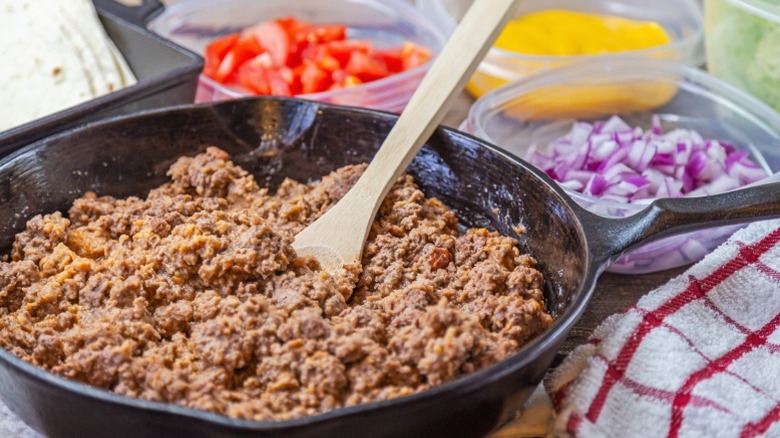
So what implement should you use to enhance your ground beef browning experience? According to Jennifer Borchardt, you should go for something big and flat. "The best pan size for frying ground beef is as big as your cooking space can handle!" she said. "I generally like at least a 12-inch surface. It doesn't take up too much space and has just enough surface area to maximize the amount of beef touching the heat." That could be a regular frying pan or a cast iron skillet, which you should take care to preheat before using it to cook.
Borchardt also said to make sure you have ample room when browning your beef. "Overcrowding your pan will cause your ground beef to steam instead of brown," she said. "This is because the moisture that's released from the beef has nowhere to go, making a wet, steamy environment instead of the high, dry heat needed to achieve that perfect Maillard reaction." Unless you have a taste for the gray and pallid, it's worth heeding that advice — just as it's worth making use of the perfect fat-to-meat ratio.