

The Eight (Or Nine!) Course Meal Frank Sinatra Would Have At His Parents' Sunday Dinner
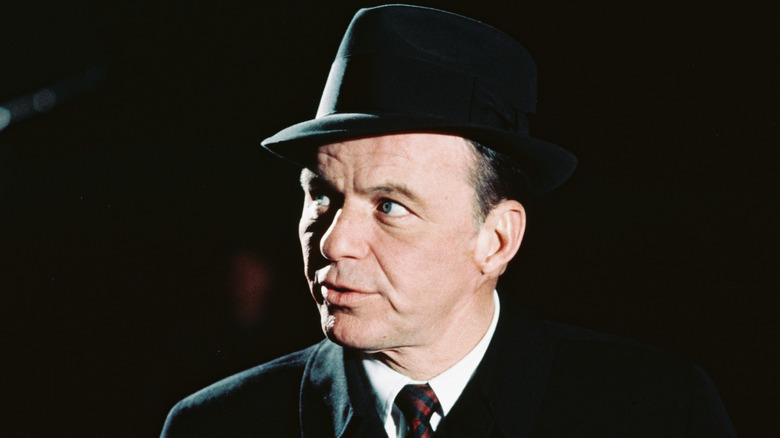
Frank Sinatra is known first as a singer (or is it a "crooner"?), second as an actor, and third as a foodie. The old-school star knew what he liked when it came to his meals, whether it was the sandwiches he always requested in his dressing room, a martini on the rocks, or a sweet, citrusy dessert after a good meal. But Sinatra was an Italian-American icon who, according to a quote from his daughter Nancy, would save his heartiest appetite for a feast at one of his parents' Sunday dinners, which could include eight or nine courses and last several hours. The meal, according to Nancy, would start with antipasto, then continue through courses of seafood, pasta, a "red meat" course, a vegetable course, a chicken course, a green salad, and dessert, finishing with espresso with different liqueurs.
A meal like this couldn't be eaten too quickly, or the diners would get sick, so each course was followed by a break to rest, digest, and talk. This would extend the meal over the course of several hours, turning it into an opportunity to hang out with friends and family rather than just simply a way to eat. A photo of one Sinatra family dinner shows a young Frank embracing his mother, to laughter and cheers from other relatives, at a dining setup that called for multiple tables to be pushed together.
The reason behind the courses in a Sinatra family feast
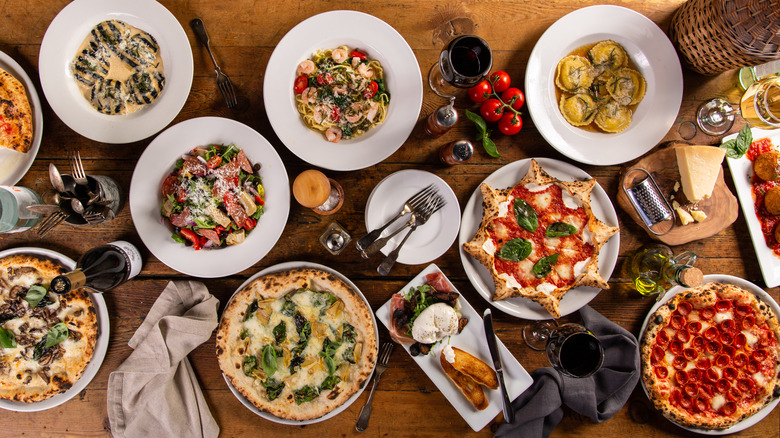
While there may be an eyebrow-raising number of courses and staggering quantities of food at a Sinatra family Sunday dinner, Frank's family wasn't being eccentric with this meal style. Multi-course meals, with separate courses for seafood, pasta, and more, in a highly specific order, are traditional in many cultures around the world, including in Italy and other places in Europe, and immigrant American families, like the Sinatras, brought the concept with them when they came to the United States, making adjustments for personal tastes. The order of the different courses helps determine the rhythm of the meal, and each course is meant to complement the ones before and after it.
This is especially evident in the way the Sinatra Sunday dinners were structured. Heavier courses, like meat and chicken, are split up by lighter courses, like cooked vegetables, and rich pasta follows lighter seafood. Salad is served before dessert as a "palate cleanser," and the coffee with liqueur at the end is meant to help along the digestive process.