

The Easy Old-School Way Lidia Bastianich Cooks Cabbage And Potatoes

With no shortage of cooking blogs and recipe websites online, it's common to see people attempt to make their little corner of the internet stand out by introducing new and exciting ways to prepare classic cuisine. Occasionally, folks come up with solutions to problems that become game-changing kitchen hacks, but other times, people are needlessly reinventing the wheel. Cabbage and potatoes is an example of a staple that doesn't need to be overcomplicated, and famed culinary icon Lidia Bastianich agrees.
Bastianich takes a much simpler, old-school approach to the dish than some. Once the cabbage is properly rinsed and cored like a pro, she shreds it up and opts to cook it in the same pot of water the potatoes are boiling in. Specifically, she uses whole peeled potatoes and moderately sweet Savoy cabbage (not the same type of cabbage used for coleslaw). After the two main ingredients are cooked and drained, Bastianich transfers them to a saute pan. There, garlic, olive oil, and butter infuse the dish with flavor, and she gives the spuds a rough mash with a potato masher. Add salt and just a touch of black pepper if desired, and cabbage and potatoes are served with minimal effort.
This old-school method embraces the simplicity of cooking everything together at once. The primary focus is on highlighting the flavors of the main components of the dish, eliminating the extra and arguably unnecessary steps you'll often see in other recipes.
How Lidia Bastianich's approach to cabbage and potatoes differs from others
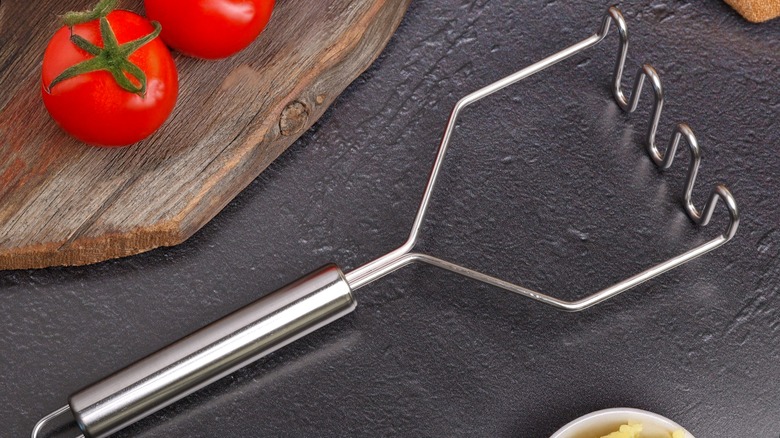
When Lidia Bastianich makes cabbage and potatoes, the end result is a simple, rustic, mashed version of the classic fare. Yet, a quick look at various recipes online reveals that this is a fairly contrarian way to make it. Perhaps the most notable difference between how Bastianich prepares the dish compared to others is that she leaves the potatoes whole and mashes them at the end. Many recipes call for the spuds to be quartered or even cut into smaller pieces, creating more prep work that one could certainly argue is unneeded if mashing the potatoes as a final step is an option. After all, it's humble potatoes and cabbage –- how fancy does it really need to appear?
Many folks also like to include additional ingredients in their recipes. Bacon is a popular add-in that many people include, as are onions. Some folks also prefer to do the boiling with broth or stock as opposed to plain water. All these ingredients will undoubtedly add more flavor, but the question is this: Do they help to create a balanced, cohesive dish?
It's not that these versions are any less appealing than the old-school way Bastianich prepares hers. The idea is that they call for steps that might not be necessary or prudent. Sure, onions and bacon are rarely going to disappoint. Yet, if the goal is to showcase the subtle flavors of cabbage and potatoes, all those extras could end up masking those ingredients, turning the embellishments into the heroes of the dish rather than augmentations.