

The 12 Biggest Food Product Recalls Of 2025
It takes a significant amount of labor to feed 343 million Americans. Food is industrialized so that the number of people that can get fed is maximized. Naturally, most food is processed in some way. Everything from produce to meat to prepared meals is created, cooked, and packed somewhere, then shipped out via a sophisticated network.
That's nothing short of a miracle of science and industry, but it also means there are a lot of steps in the process of making and shipping food. And the more chances there are for something to go wrong, the more likely it is that something will go wrong. All that machinery involved with so many natural-based foodstuffs makes a number of problems a possibility, like an instantly widespread outbreak of a bacteria that causes severe food-borne illness, or foreign, inedible materials that can also cause bodily harm. Once an offending party is identified, major food companies, with help from some government agencies, must limit the damage and issue a recall as soon as possible. In 2025, there were a lot of recalls — and some of the biggest and strangest food recalls in U.S. history. Here are the ones that involved the most poundage and the most consumers.
Bits of wood were in the edible part of millions of corn dogs and sausages-on-a-stick

In what's technically a case of both a deli meat recall that affected millions and a corn recall that affected millions, Hillshire Brands called back a slew of battered sausages on sticks. On September 27, 2025, the U.S. Department of Agriculture's Food Safety and Inspection Service announced that the Texas-based company would recall a whopping 58 million total pounds of sausage-on-a-stick and corn dogs. While both products necessarily have a thin wooden stick in the middle, the problem is that small pieces of wood made their way into the batter used on Jimmy Dean-branded sausages, State Fair corn dogs, and Fresh to You products. The items affected were designed for sale at retail outlets like supermarkets, dollar stores, and convenience stores, as well as in industrial operations, and were included in vending machines at large office parks and medical facilities in the Midwest. The recall took place following an internal investigation, triggered after several consumers issued complaints, including five who sustained minor injuries.
Oddly, that wasn't the only major wood-related corn dog recall of 2025. After numerous complaints and the news of five injuries made their way to the Foster Farms corporate office, the company recalled about four million pounds of corn dogs made with chicken-based franks and ground turkey in October 2025. Wood pieces had appeared in the whole-grain batter used on one specific product.
Many kinds of ice cream bars could've carried listeria

Florida-based ice cream company Rich's deals exclusively in what are called frozen novelties. Rather than sell big tubs or pints of ice cream, it sells fruit bars, ice cream sandwiches, filled cones, single-serve swirl cups, push-style pops, and other "dairy snacks." In the middle of the summer of 2025, which is prime ice cream-eating season, Rich's had little choice but to issue a recall of 10 of its products. Cases and boxes of Chocolate Crunch Cake Bar, Strawberry Shortcake Bar, Rich Bar, Crumbled Cookie Bar, Orange Cream Bar, Fudgy Frenzy Bar, Cotton Candy Twirl Bar, Savagely Sour Blue Raspberry Bar, Savagely Sour Cherry Bar, and Cool Watermelon Bar were collected and returned to Rich's. That amounted to 9 million pounds of frozen treats.
Affecting 23 states across all regions of the contiguous United States and the Bahamas, no illnesses were reported at the time of issuance, but the move happened because of the possibility of listeria contamination. A food-borne illness caused by the ingestion of the Listeria monocytogenes bacteria can cause fever, headache, seizures, fatigue, aches, and neurological impairment. Because ice cream can remain stored unconsumed in consumers' freezers indefinitely after purchase, the recall remained active as of December 2025, six months after it was first ordered.
There was a food poisoning issue with nutritional supplement shakes
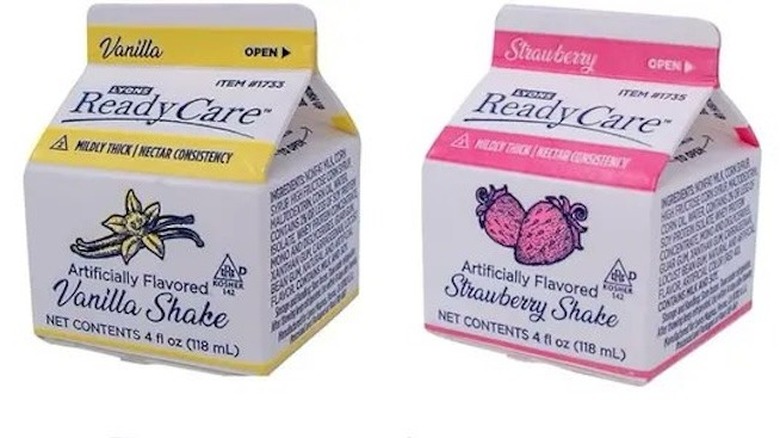
At its factory in Fort Wayne, Indiana, Prairie Farms Dairy makes nutritional supplement shakes for food distributor Lyons Magnus, which also contracts with Sysco to stock medical and long-term care establishments with product. Those were sold and sent, as per usual, throughout the United States in four-ounce bottles under the brand names of Lyons ReadyCare and Sysco Imperial. In 2025, a large production line was recalled because it was potentially infected with a food-borne bacteria that is most likely to cause severe illness in the exact target audience for those nutritional shakes: older people and those with long-term health issues and compromised immunity systems.
The FDA oversaw the voluntary recall after Lyons Magnus and Sysco were told by Prairie Farms that the presence of Listeria monocytogenes was likely. The pathogen can get into food and, if eaten, causes flu-like symptoms in younger people but can be deadly to the elderly. A total of 9.5 million pounds of shakes were quickly recalled.
Salmonella-infected eggs were recalled across the country
One of the biggest food and health stories in 2025 was a series of egg recalls. On September 29, a test by the FDA uncovered Salmonella, a food-borne bacterial pathogen that causes intense gastrointestinal distress, in 40 egg samples from the Arkansas facility of the Black Sheep Egg Company. Within days of the discovery of seven separate strains of Salmonella, Black Sheep issued a recall notice, informing the public not to eat eggs from 10 different codes and designations. That portion of the recall covered 6.27 million individual eggs, which had been distributed to supermarkets and wholesalers that serve restaurants and retail operations. About two weeks later, the recall expanded when Texas-based Kenz Henz put out a warning regarding its 12-count Grade AA Large Pasture Raised Eggs sold throughout the Houston metropolitan area, because those, too, may have been infected with strains of Salmonella.
As part of a separate, slightly earlier recall in 2025, Country Eggs LLC called for the return of its Country Eggs, Nijiya, and Golden Yolks products, all large, brown cage-free eggs. More than 90 people grew ill after eating eggs linked to Country Eggs. And back in June 2025, the August Egg Company recalled multiple brands of organic and cage-free eggs. This measure covered 1.7 million eggs that caused 79 people in seven states to fall ill.
Ohio got shorted on its pizza cheese because of a stainless steel issue
Leprino Foods is no stranger to controversy. In 2022, an Associated Press report indicated that the company was complicit in using prison labor to help fuel its fast food business, exploiting incarcerated individuals to raise the animals that provide the large volume of mozzarella-style cheese that it's contracted to produce for three of the biggest American pizza chains, Domino's, Papa John's, and Pizza Hut. While some of its cheese came from origins of dubious morality, it wasn't dangerous to eat. In 2025, however, a great deal of Leprino Foods' mozzarella was actually harmful.
A dozen batches of 10-pound mozzarella blocks produced in September 2025 were subject to a recall announced in early October 2025. Altogether, that was about 5.4 million pounds of cheese that the FDA ordered out of the food supply because of its ability to do harm to consumers. Small pieces of stainless steel had infested a sample of the cheese, and so all of the potentially affected stuff was deemed unfit for consumption because it may also be tainted with metal. All of that cheese was prepared for use in Ohio pizza parlors.
Metal pieces were the cause of a Hormel frozen chicken recall
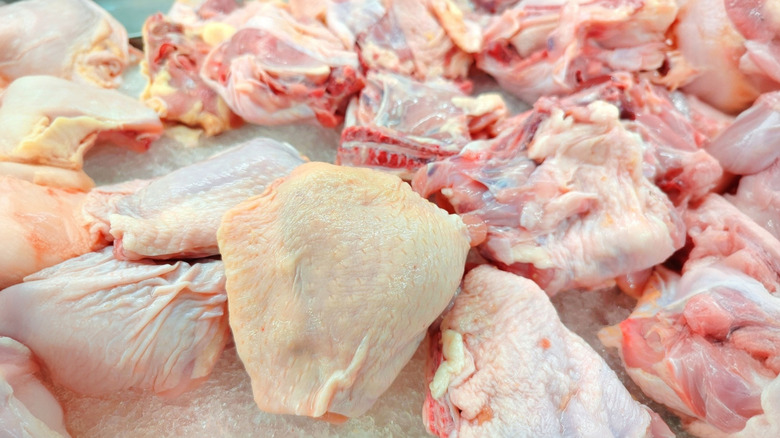
Hotels and restaurants often buy the raw ingredients for their fare from industrial food distributors, who sell product in bulk sourced from some of the same places that sell their edible wares directly to the public in smaller packages. For example, many restaurants and hotel kitchens around the country contract with HRI Commercial Food Service, which gets much of its chicken from Hormel Foods, otherwise known for making the best bacon brand available in stores and still telling the story of Spam.
As 2025 unfolded, HRI clients fielded several complaints from its customers, who reported finding telltale metal chunks in dishes made with Hormel's chicken. The processed meat company looked into the matter and discovered that small pieces of metal may have been present in more than 130 batches of chicken of various styles. In October 2025, under the assumption that restaurants could still have tainted chicken in their freezers, Hormel Foods recalled all poultry stamped with the USDA inspection designation code of P-223. That included Hormel's Fire Braised All Natural Boneless Chicken Thigh Meat, Fire Braised All Natural Boneless Chicken Breasts in three, four, and five-ounce sizes, and Boneless Chicken Breast with Rib Meat. That recall involved the possible return of 215,258 cases, or 4.87 million pounds of chicken.
Small bits of metal wire wound up in pork jerky
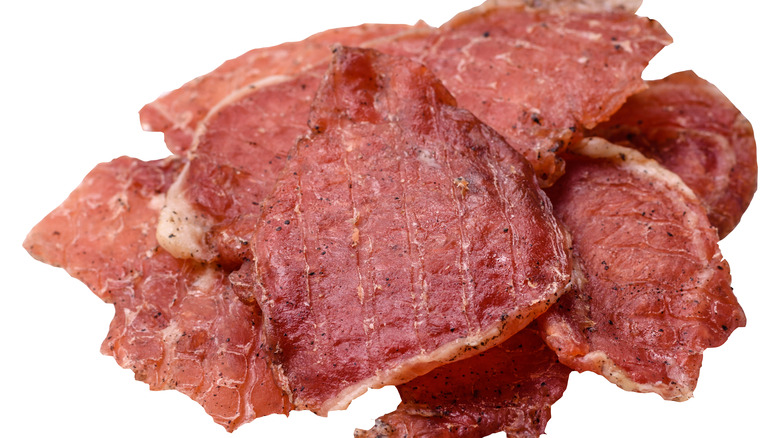
South Dakota processor LSI makes and distributes Golden Island jerky products, serving multiple levels of retail, including warehouse-style stores like Costco and Sam's Club. Those chains get Golden Island dried meats in bulk sizes, including Golden Island Korean Barbecue Pork Jerky. In October 2025, LSI issued a recall of its warehouse-oriented Korean Barbecue flavor, asking club store members to be on the lookout for, and to avoid eating product from 41 lots of the 14.5-ounce bags and seven lots of the 16-ounce size.
The recall was a logical response to field the many complaints it received from customers who had found small pieces of metal wire in that particular flavor and style of jerky. LSI determined when the possibly tainted product could've been made, and discovered that a faulty conveyor belt in its facility was to blame. No injuries had been registered at the time of the recall, which involved 2.28 million pounds of pork jerky.
A vast amount of shredded cheese also contained metal
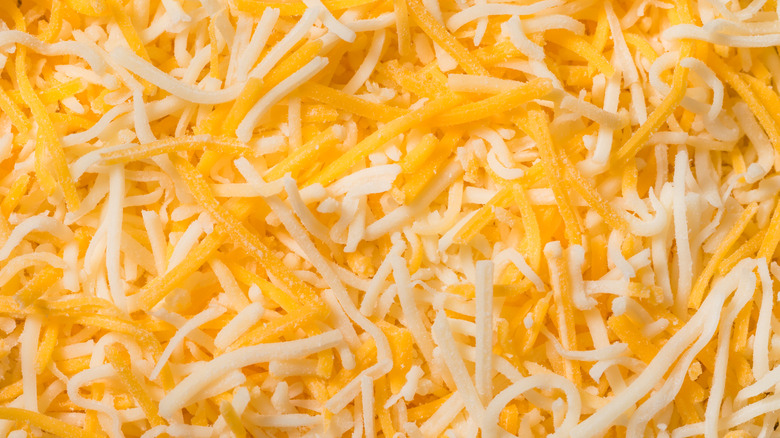
To make its store brand and private label items, supermarket chains and big box retailers contract with food companies that specialize in certain products. They arrive at distribution centers and stores already in packaging bearing store branding. The Great Lakes Cheese Company of Ohio is the dairy processor that really makes the cheese sold under names like Good & Gather at Target, Great Value at Walmart, Publix, Happy Farms, and Sprouts. When a firm like that needs to issue a recall, it's a daunting task to round up all the affected products from so many different chains.
On October 3, 2025, under the watchful scrutiny of the FDA, the Great Lakes Cheese Company recalled an Italian cheese blend — consisting of a mixture of shredded mozzarella, provolone, and asiago — made identically for several mega-chains. The dairy didn't reveal exactly how it discovered the reason for the recall, only that metal fragments had been detected in that style of shredded cheese. After expanding the measure, the recall included in excess of 1.5 million pounds of cheese, which had been sold at Target and Walmart in 30 states and Puerto Rico. By early December, Great Lakes Cheese had managed to fully recover from stores and had all remaining unsold cheese.
Millions of radioactive frozen shrimp were recalled
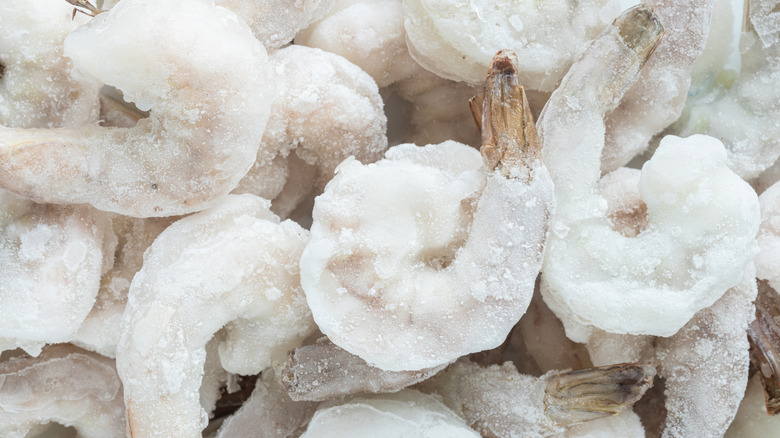
Seafood company Southwind Foods packages shrimp under several different brand names for multiple retail clients, including Arctic Shores, Best Yet, Great American, First Street, and Sand Bar. On August 21, 2025, Southwind Foods announced that it would recall a particular amount of shrimp for a strange and rare reason: the shellfish bore traces of what the FDA calls an "impermissible chemical" in food sold in the United States: Cesium-137, which is a non-naturally occurring radioisotope of cesium. It's literally radioactive.
With the recall expanded twice before the month was over, investigators figured out that the Southwind's source, Indonesian fishery BMS, had used shipping containers that tested positive for radioactive material. It's not just that the shrimp was potentially and technically radioactive that makes this recall so concerning; it's how much shrimp was determined to be impacted. Southwind Foods attempted to recall at least 1.28 million pounds of product. The FDA released its own notice, explicitly warning Americans not to consume the toxic shrimp.
Cucumber caused a Salmonella outbreak
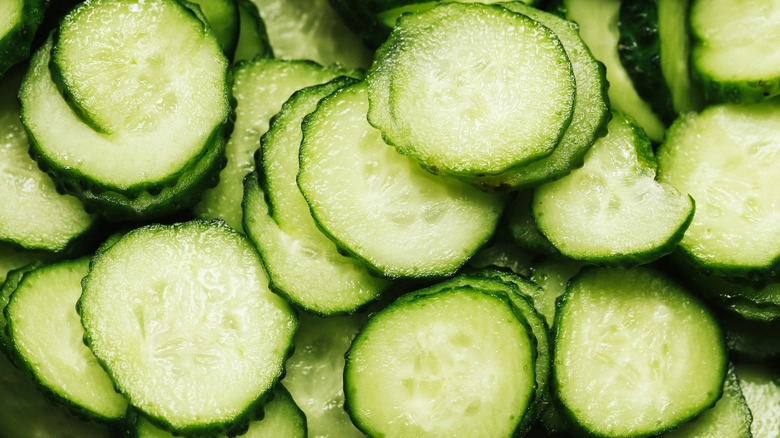
A vast and multi-level cucumber recall began at a produce market in Florida. Bedner Growers operates three Bedner's Farm Fresh Markets stores to directly sell some of the vegetables it grows, and from there it sells cucumbers, distributing them also to Kroger-owned stores around the U.S. In May 2025, with the FDA, Bedner Growers recalled cucumbers sold in 15 states when they were determined to be the cause of a Salmonella outbreak that had afflicted 26 individuals. In the early days of the recall, more sicknesses were reported, with 45 infections (and 16 hospitalizations required) in 18 states by the end of May.
Bedner's didn't just sell whole cucumbers — it was a cucumber supplier for pre-sliced vegetables, bagged salads, and ready-made meals that contained the vegetable. All of those cucumbers could potentially be carrying the Salmonella bacteria, too, resulting in more preventative actions. Walmart recalled Marketside Fresh Cut Cucumber Slices, Target recalled Good & Gather salads and Mai sushi boxes, The Coastal Companies recalled several brands of salsas and salads, and Albertsons Companies recalled ReadyMeals and salads made with the veggie and its network of affiliated supermarkets, among other moves made to rid the country of infected cucumbers.
Bacteria in ready-to-eat pasta meals proved deadly
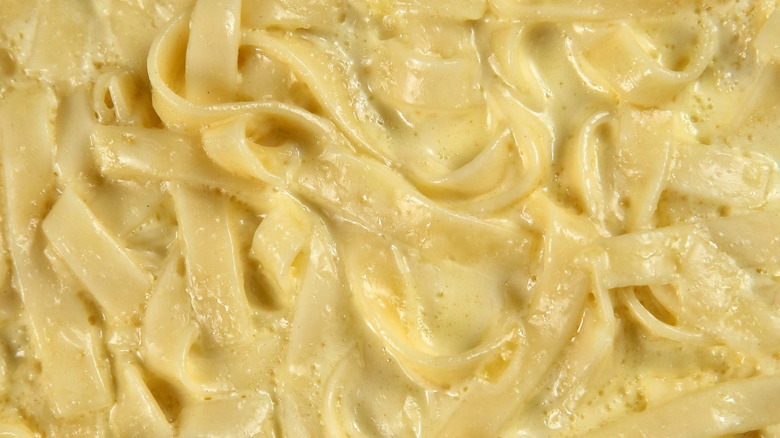
In June 2025, the federal Food and Drug Administration and the Centers for Disease Control issued the first of multiple recalls seeking to stop the transmission of food poisoning caused by the Listeria monocytogenes pathogen. Those who contracted the infection — 17 people in 13 states at first — were found to have eaten Marketside or Home Chef-branded chicken fettuccine Alfredo pre-made meals. Those dishes were made by Nate's Fine Foods, which doesn't sell directly to customers but offers ready-to-eat pasta dishes offered in supermarkets and delis.
By late September 2025, the casualty numbers had grown to 20 individuals in 15 states who had been conclusively linked to eating pre-cooked pasta originating with Nate's Fine Foods, had been diagnosed with listeria poisoning. Of that figure, four people died, and one individual suffered a miscarriage. At that point, the recall expanded to include Nate's Fine Foods products made with fettuccine, linguine, and bowtie pasta. As of November 2025, 25 illnesses and six deaths in 18 states had been recorded. They'd all eaten Italian-style products sold by Kroger, Walmart, Trader Joe's, and Albertsons.
Hashbrowns are supposed to be made of potatoes, not plastic

Industrial-level potato producer Lamb Weston is one of the world's most prolific suppliers of frozen vegetables, particularly processed products made from potatoes grown in the Pacific Northwest. It's not generally a consumer-facing company; instead, it stocks restaurants and chains with what they need to meet the insatiable demand for potatoes in the form of french fries, crinkle cut fries, potato wedges, and golden brown hashbrown patties intended to be heated or fried and served to fast food customers.
Lamb Weston Hashbrown Patties are particularly popular with restaurants, and in April 2025, the FDA launched a recall of four different styles of the pressed and oval-shaped breakfast potato side. A total of 56 products with different codes were a part of the recall, adding up to 34,081 cases, weighing nearly 731,000 pounds. The reason that the FDA and Lamb Weston couldn't allow those millions of hashbrown patties to be cooked, served, and sold was that some of them been discovered to be laced with plastic bits. The pieces measured anywhere between one millimeter and eight millimeters and could cause injury to the mouth or digestive system if inadvertently consumed.