

Whatever Happened To My Fruity Faces From Shark Tank?
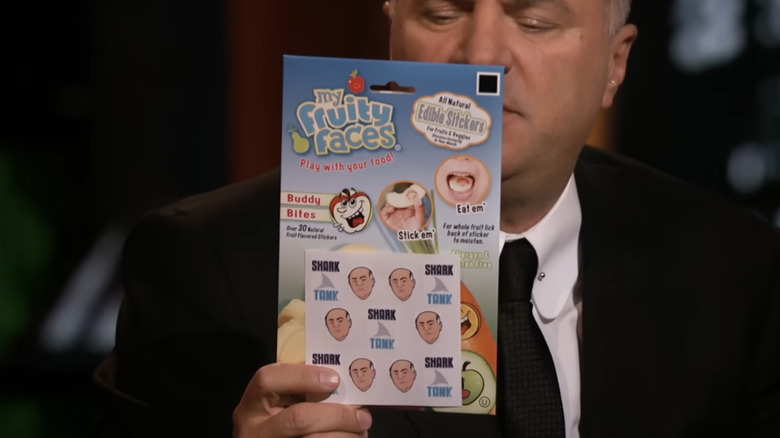
Kids can be quite selective when it's time to eat. They may even turn down the safest food options, like apples and bananas, when they're not comfortable with what's being served. And while you can look for ways to cook for a house of picky eaters, there's no guarantee that these ideas will work. That's why Adam Gerber and Bob Ntoya came up with an ingenious solution to help tackle this challenge: edible stickers. Through their company, My Fruity Faces, the business partners created stickers that were safe to eat and made healthy foods more fun.
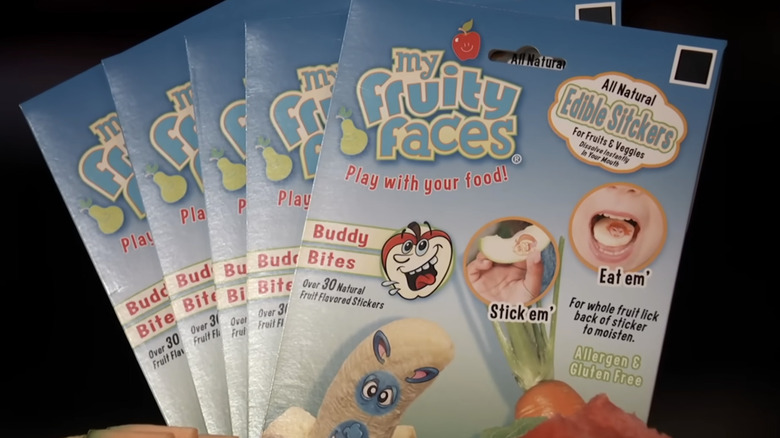
The edible stickers that were gluten-free and all-natural came in various styles and designs, with customization options also available. Parents simply could peel the stickers off the bundle and attach them to sliced fruits and veggies. This made the food attractive in the eyes of the children, so meal time became less stressful and more hassle-free. With such a creative approach to feeding picky eaters, My Fruity Faces seemed like it had a lot to give. However, the company's sales figures suggested otherwise. In their quest to take their brand to greater heights, the co-founders pitched their edible stickers on ABC's "Shark Tank" in 2016.
What happened to My Fruity Faces on Shark Tank?
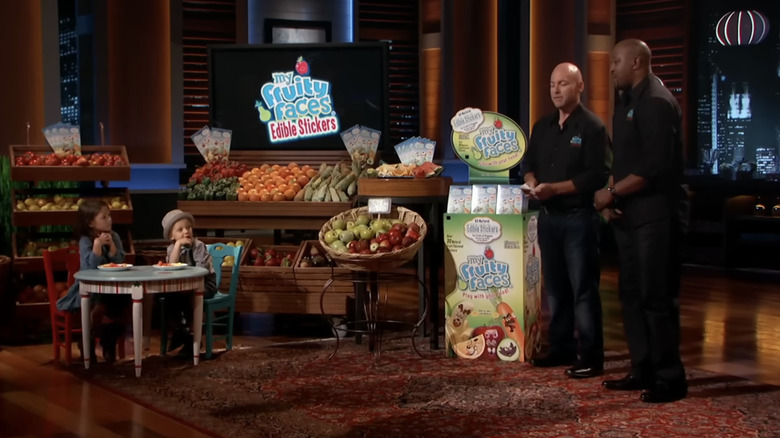
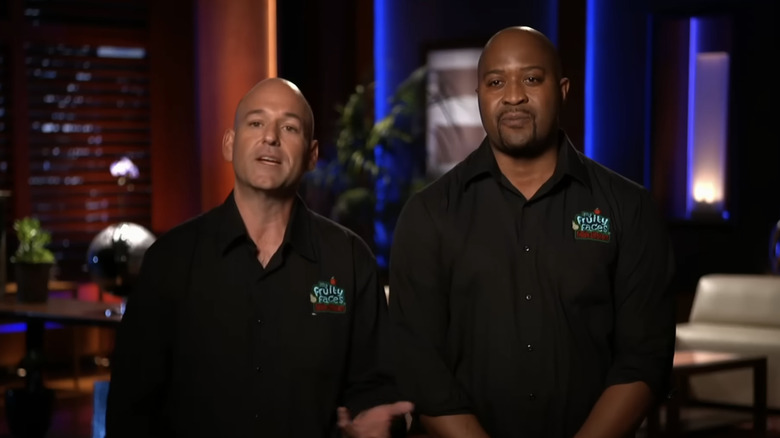
With a self-proclaimed valuation of $2 million, My Fruity Faces co-founders Adam Gerber and Bob Ntoya entered "Shark Tank" Season 7, Episode 26, seeking a $200,000 investment for 10% equity. During their pitch, Ntoya struggled to deliver his lines flawlessly, causing Gerber to take the lead in convincing the Sharks to consider their proposal. Each Shark tasted customized samples, which were made using tapioca starch. While the Sharks didn't find a bone to pick with the simple product, they quickly found issues with its market performance when they began discussing sales.
My Fruity Faces wasn't getting the traction the Sharks were hoping for, despite its novelty and creative way of tricking kids into eating more vegetables. While the company had a 78% sell-through rate during a trial run with Walmart, it had only earned $125,000 in sales in three years prior to appearing on "Shark Tank." It also didn't help that Gerber and Ntoya were only making $2,000 in monthly sales at the time of filming. Although they had raised $482,000 in funding, the co-founders admitted they were $177,000 in debt. Given the lack of inventory, low sales, and high debt, all the sharks — Kevin O'Leary, Barbara Corcoran, Daymond John, Mark Cuban, and Chris Sacca — opted not to invest, prompting the pair to exit the tank without an offer.
My Fruity Faces after Shark Tank
Brands often experience a strong surge in sales soon after their "Shark Tank" episodes air. This happened to MUSH from "Shark Tank" during season 9, as well as to several other businesses and their products that were featured on the show. In the case of My Fruity Faces, however, it seems the edible stickers failed to resonate with retailers. During Adam Gerber and Bob Ntoya's pitch, they said they had been approved as a vendor to place their product in 3,400 Walmart stores, though they didn't have any purchase orders. They were also purportedly in early discussions with Whole Foods, SuperValu, and Target, but hadn't secured any order contracts with these retailers either.
Still, all hope wasn't lost, as My Fruity Faces managed to land in three California stores. The business also started selling its edible stickers on Amazon and through its website. But without any backing from a Shark, the brand failed to build a following and make a huge impact on the market. In the "Shark Tank" episode, the Sharks warned the duo against their approach to sales and marketing, and disagreed with holding onto their current stock of edible stickers — rather than selling them at smaller markets to get out of debt and build a following. Kevin O'Leary even advised them to stop investing in the company. As such, it wasn't surprising to know that My Fruity Faces would continue to struggle staying afloat after its "Shark Tank" episode aired.
Why did My Fruity Faces go out of business?
Similar to the biggest food flops in "Shark Tank" history, My Fruity Faces did not last long on the market. The company officially shut down in 2018. Its website is still accessible, but it no longer renders content properly. Its online shop also redirects to an error page. The company's listings are no longer available on Amazon, and its Facebook page is also defunct. What remains is the My Fruity Faces Instagram account, which has not been updated with fresh content for years. After the Sharks passed on the opportunity to invest in My Fruity Faces, Adam Gerber and Bobby Ntoya ultimately struggled to land deals with enough major national retailers to stay afloat.
It's worth noting that Gerber indicated on his LinkedIn profile that he left My Fruity Faces in February 2016, a few months before his "Shark Tank" episode aired in April that year. He quickly moved on to other ventures and is currently focused on real estate. As for Ntoya, he stayed with the company as its CEO and founder until December 2017. He also moved forward with other opportunities. As of late, he serves as the CEO and founder of a subscription-based CBD-centric platform called medibles and the biotechnology company, BIOMED. Both are based in Los Angeles.