

How To Safely Use A Pressure Cooker — And Stop Being Afraid Of Explosions
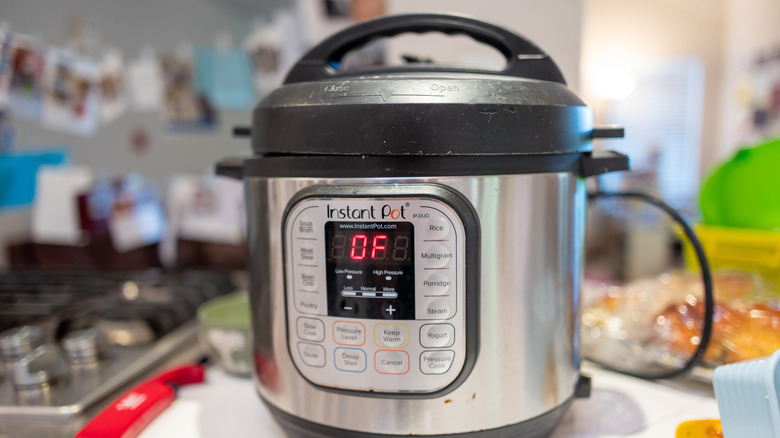
Instant Pots are beloved kitchen appliances that can help you make a wide variety of recipes to simplify weeknight cooking. They also give you the most bang for your buck, since they're basically pressure cookers that have multiple other functions. Want to make a great stew, cook rice, or even bake a cake? Instant Pot can do it all. However, because the appliance cooks using pressure, some people worry that it could explode or burn them. If you're in this camp, you'll want to hear the advice that Coco Morante, recipe developer and author of "The Instant Kitchen Meal Prep Cookbook," shared with The Takeout.
While Morante is a big fan of pressure cookers, she advises home cooks to be careful with overfilling the pot. "As a rule of thumb, most pressure cookers should only be filled halfway for foods that can expand or foam (think grains, beans, and pasta), and ⅔ full for other foods like soups [or] stews," she explains.
That said, Morante also cautions against overcorrecting. She states, "On the flip side, you don't want to use too little liquid when cooking in a pressure cooker. For a 6-quart (standard-sized) model, at least a cup of water, broth, or other cooking liquid is required for enough steam to build up so the pot can come to pressure. You can sometimes get away with a little less, but for foolproof results, just stick to the one-cup rule." As with many things in life, the trick for pressure cooker success seems to be balance.
How to avoid spills and accidents when using a pressure cooker
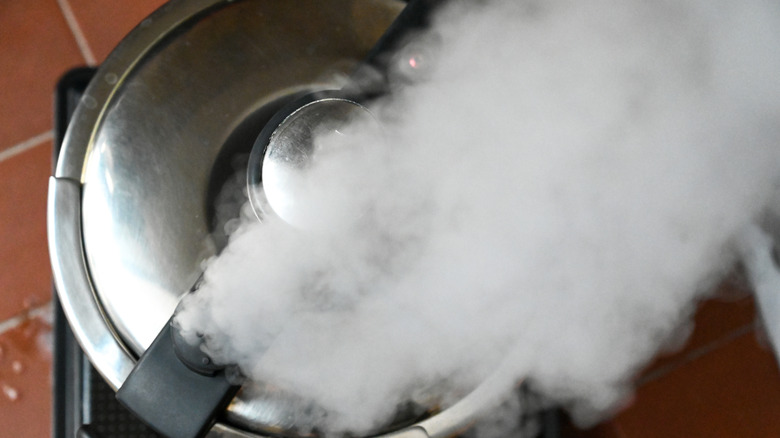
As you learn to use your pressure cooker, it's possible to not realize that you've overfilled the pot until it's too late. If this happens, don't fret! You just have to carefully release the pressure. Coco Morante highlights two methods to do this: natural release and quick pressure release.
"For a natural release, you'll just let the pot sit and depressurize on its own," Morante states. "If you've got a very full pot of soup or stew, or foods that can foam up, just be on the safe side and allow the pot to cool enough for the float valve to come down on its own." Use the quick pressure release method with foods that run the risk of overcooking, like steamed vegetables. "When the cooking program ends, you release the pressure valve right away," Morante says. "I'd definitely recommend that beginners use an oven glove to protect themselves from the steam."
All in all, the chances of your pressure cooker or Instant Pot exploding are very small. As Morante says, "Modern electric pressure cookers have multiple safety mechanisms built in, including pressure sensors and locking lids that won't open under pressure. They're nothing like the old stovetop pressure cookers from decades ago." This doesn't mean you shouldn't practice kitchen safety. "Don't overfill the pot, always release pressure carefully, and when in doubt, follow well-tested recipes so you know you're being steered correctly," she concludes.