

Anthony Bourdain's Go-To Strategy For Ordering The Best Food At A Restaurant
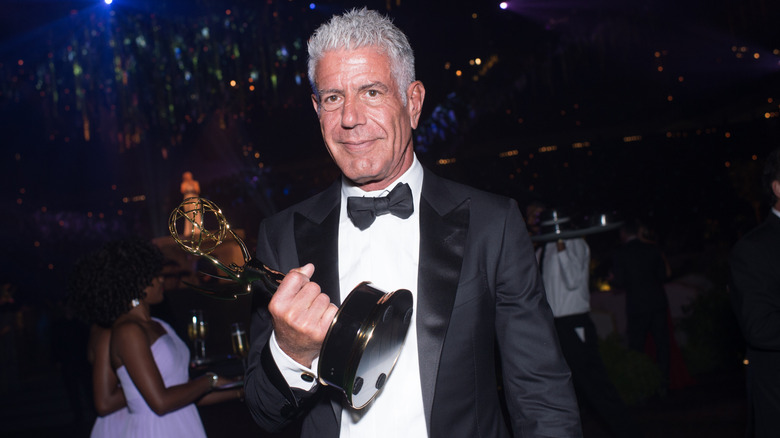
Throughout his life, Anthony Bourdain ordered a lot of food from an incalculable number of restaurants across the world, leading him to garner a reputation as someone who knows what he's doing whenever he enters a restaurant. However, similar to his long-held belief that you should always ask locals for the best places to eat rather than turning to tourist guides or Yelp — an app Bourdain absolutely despised. The iconic chef was firm in his belief that the best way to get a great meal at any given restaurant is to simply ask for whatever the cook is the best at making and allow them to take control of your meal.
Bourdain explained this strategy in a 2010 interview with Evan Kleiman on the "Good Food" podcast, which was preserved in the podcast's Bourdain memorial episode. Primarily, the chef's disinterest in overanalyzing or overintellectualizing the foods and drinks we consume (which led to Bourdain's general apathy toward craft beer) is a big element in his often preferring not to choose the dish he's eating when he's at a new restaurant. "Ideally, eating should be a completely emotional, non-intellectual experience," Bourdain opined roughly 27 minutes into the compilation, noting that his most enjoyable meals were the result of his go-to method. "Walk into restaurants and say, 'I'll have what you're good at, just do it to me.'"
How Anthony Bourdain believed being a chef impacts ordering habits
This specific methodology, when ordering food, is one that Bourdain says ultimately comes from his time working as a chef full-time rather than his time traveling the world. Chefs are known to have a handful of key dishes they order at restaurants, but Bourdain says that many of his fellow chefs take a hands-off approach when dining out. "If you look at how chefs eat, they understand that their whole lives are about control — controlling their environment, their crew," Bourdain explained, "so when they eat, chefs above all other people tend to really want to make no decisions at all. They want to relax."
Bourdain's unique perspective on releasing control of your meal to the chef who's making it is one that, he believed, was becoming much more normalized as time went on; chefs in the restaurant industry have grown to generally have much more power, creative control, and influence over the food they're making and what they put on consumers' plates. "Chefs are free-er to suggest 'this is what I think you should be eating. This is what I do, this is what I'm good at — you either like it, or you don't,'" Bourdain revealed, "[and customers] are far more trusting, interested in, and willing to take a chance and eat out of their comfort zone."