

The Unique Role Fish And Chips Played During Both World Wars
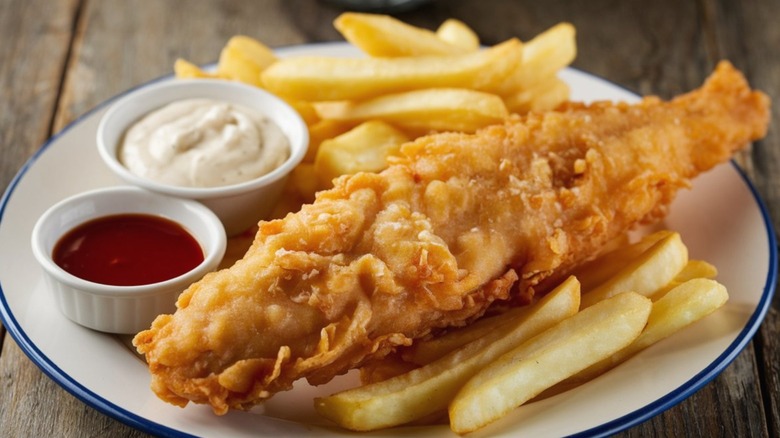
You can call British food boring and bland as much as you'd like, but it would be churlish to reject everything the United Kingdom has to offer. We all know that chicken tikka masala was invented in the U.K., but even setting that aside, who among us would turn down a good fish and chips? What's not to like, after all, about a piece of flaky, tender whitefish, fried to a golden crisp and served with big, fluffy French fries (or chips, as the case may be)? Not only is it a delicious staple of British cuisine, but it actually played a small part in getting Britain through both world wars.
You see, when Britain entered World War I, it had to adopt strict rationing measures — there certainly wouldn't be many imports from mainland Europe anytime soon, and they had to give the best of their resources to the troops. In World War II, only a couple of decades later, they had to ration again, this time with German airplanes directly bombing the United Kingdom. Almost every kind of food (save for fruits and vegetables) was rationed, with meat, cheese, and eggs being especially hard to come by. But while the people of Britain could no longer enjoy unlimited meat pies, they could still tuck into some fish and chips, which were never rationed at any point in either world war.
It wasn't easy to keep fish and chips available
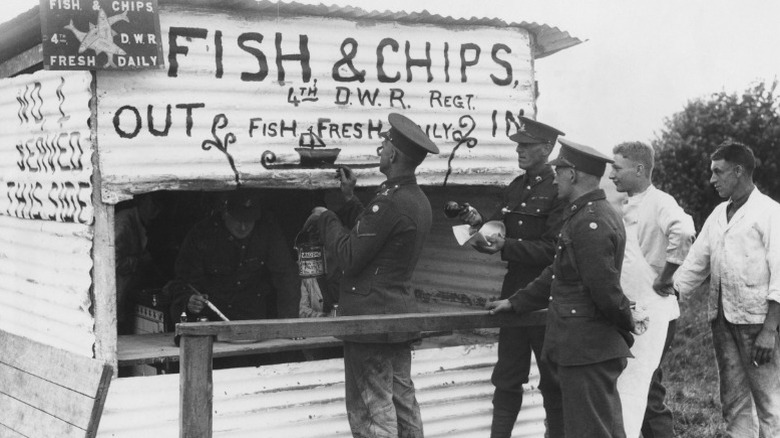
You might be wondering how the British government managed to keep the ingredients for fish and chips plentiful during such trying times. Well, it sure as heck wasn't easy: the fish part of the equation was especially difficult, considering that most British fishing vessels were either reclaimed by the Royal Navy or bombarded by German U-boats. Potatoes for the chips were a little easier to come by, as vegetables weren't rationed and the U.K. grew plenty of spuds in Victory Gardens, although frying oil was a somewhat stickier wicket.
To be sure, the British people weren't dining on fish and chips every day during the wars. Due to the sudden decrease in supply, the price of fish went way up, and the resulting dish wasn't exactly high quality. But the fact that it could be freely bought at all made it a rarity in a country suffering through rations, and it was enough of a morale boost that it helped a weary nation keep going. The boost in morale fish and chips provided the British people may have helped win World War I, and during World War II, politicians did everything possible to keep the dish available. That's a legacy worth celebrating, even if you're one of those people who eat fish and chips with your hands.