

How To Tell If The Chocolate You're Buying Is Made By A Company That Actually Gives A Hoot
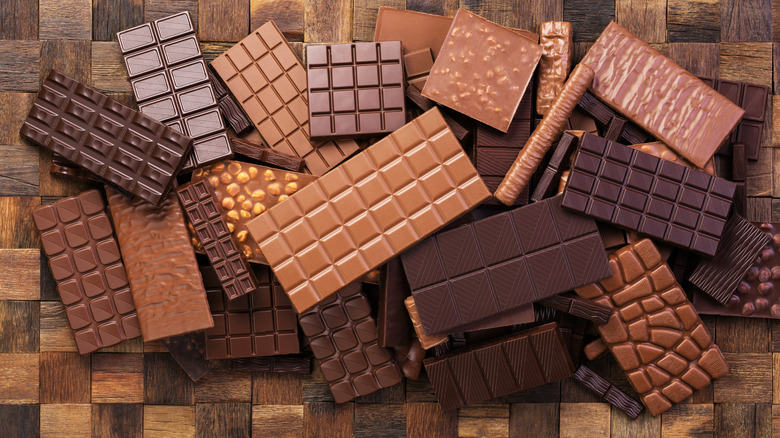
Chocolate is easy to find on store shelves, especially around holidays like Halloween and Valentine's Day. As with any food so widely produced, many companies take shortcuts and sell cheap or lazily made chocolate. We're not always good at spotting shoddy chocolate, either; studies suggest that we humans prefer gold-wrapped chocolate because we see it as being higher quality, but we don't always check the candy itself. This is why we spoke to Nicole Patel, the founder of Delysia Chocolatier and Grand Master Chocolatier, who was ranked 2025's Best Chocolatier in the Americas with its highest Six Star Award honor.
Patel said it's tough to identify ethical chocolate sellers, because certain terms like sustainable or ethical are now treated as buzzwords by some companies, who might call their chocolate "handmade" even when running large-scale factories. While certifications (such as labels mentioning organic ingredients or fair trade practices) are good to watch out for, they can be prohibitive for smaller chocolate companies that can't afford to get those certifications. What do you do, then?
"My best advice is to shop small and actually get to know your makers," Patel said. "Ask about their sourcing and their philosophy." Ethically-sourced chocolate should come from workers who were paid fair wages and used eco-friendly practices (this is what a Fair Trade certification is for), so check with smaller chocolate sellers to see if they can explain how their chocolate is sourced.
Check the chocolate ingredients too
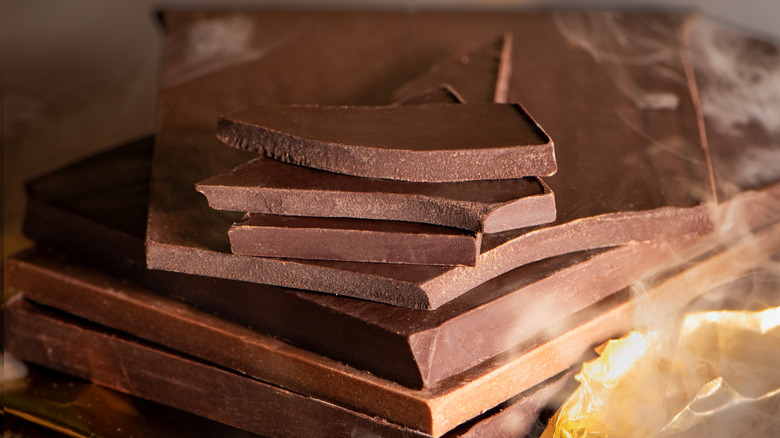
Nicole Patel also suggested some simple ways to check the quality of the chocolate based on the packaging. "Ingredients are always listed on the label from the largest proportion to [the] smallest," she shared. "This means in chocolates, the first ingredient should be milk or dark chocolate. If it is anything else, it is not made with high-quality ingredients."
You're likely to see sugar in the ingredients for most types of chocolate, but high amounts of sugar should always be a warning sign; plenty of commercial chocolate brands list sugar first. Some other suspicious ingredients might be substitutes for proper cocoa butter, like vegetable oil, palm kernel oil, or that PGPR you might see in your chocolate. According to Patel, "If there are unpronounceable words in the ingredients list, it is poorer quality chocolate and just won't taste good!"
Cocoa content can be worth examining, too. Chocolate needs to be at least 50% cocoa to qualify as dark chocolate, and should be between 10 and 50% to count as milk chocolate. Patel said that a higher cocoa content (like 60% or more) with minimal other ingredients is ideal, although milk chocolate will work differently. If you suspect the chocolate might be poorly made, also check its texture and smell: cocoa has a strong, rich smell and a shiny appearance. You can tell it's diluted if it has a dull color or bland taste.