

Thin Pizza Offers A Crunchy Crust, But Don't Ruin The Whole Thing By Making This Mistake
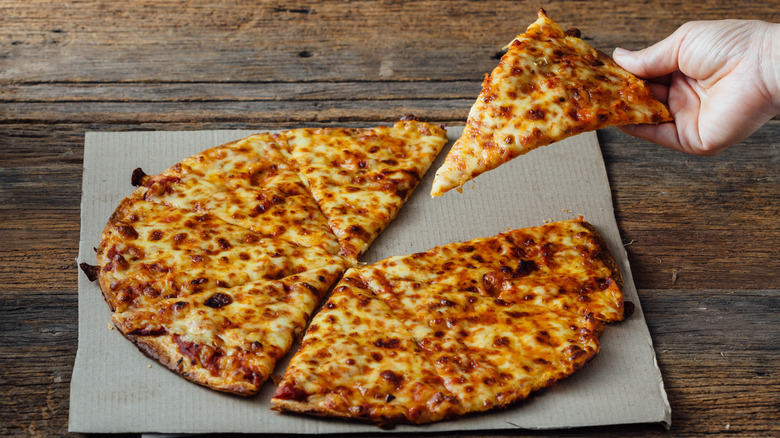
Pillowy pan, charred Neapolitan, crisp yet foldable New York style, fluffy Sicilian, or crackery tavern style; there's a type of pizza out there for every pie lover, and that's before we even get to the toppings. If you like your homemade 'za on the thin side, it's important to take a measured approach.
According to the culinary director of Prince St. Pizza, Rob Gentile, making homemade pizza with a thin crust comes with its own unique set of difficulties. "Thin crust is challenging to work with, because, well, it's thin," Gentile told The Takeout. "When the dough is stretched very thin, it becomes much harder to handle."
That delicate nature means that it can't stand up to an abundance of toppings. "This crust can only handle so much weight," he explained. Keeping the quantity in mind is key to the success and structural integrity of the finished pie. Overdo it on the toppings and you'll likely end up with a failing crust soaked in sad, spoonable pizza soup. If you want to bite into a slice of restaurant-worthy crispy pizza instead of a slippery pile of toppings and a soggy crust, just exercise some restraint.
Topping considerations for thin-crust pizzas
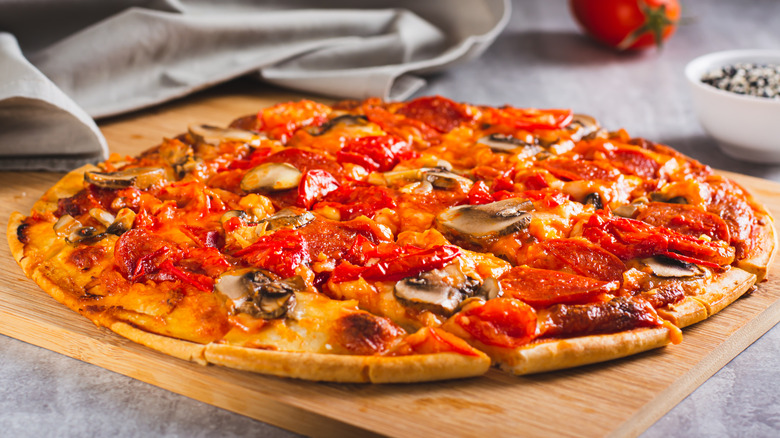
Gentile would never police what ingredients a pizza fan adds to their homemade creation; it's all fair game. "The way I see it — it's your pizza. Put whatever you want on it and have fun with it," he said, but a little thoughtfulness goes a long way. In addition to considering the weight of your veggies, cheeses, and meats, it's also important to be aware of the amount of moisture your favorite pizza toppings will introduce.
For example, a pizza pie with bell peppers, mushrooms, and sliced tomatoes will likely turn into a wet mess. Consider substituting the fresh tomatoes with sun-dried ones and giving the peppers and mushrooms a quick sauté so that some of the moisture will evaporate. Fatty meats like Italian sausage can also be briefly cooked and patted dry before being loaded onto pizza.
It also helps to slice toppings thinly — a thin-crust pizza isn't the time to use big chunks of chicken or whole rings of canned pineapple. Opt for finely diced or thinly sliced proteins, pineapple tidbits, shaved onions, and sliced olives instead of whole ones. Pat tinned or jarred ingredients dry too, like pickled jalapeños, cherry peppers, pineapple, and olives to minimize how much moisture is being introduced. Go light-handed with the cheese and sauce as well and you're well on your way to a thin pizza that keeps its crunch.