

Never Use This Kitchen Tool For Pizza Dough, Even Though It Seems Correct
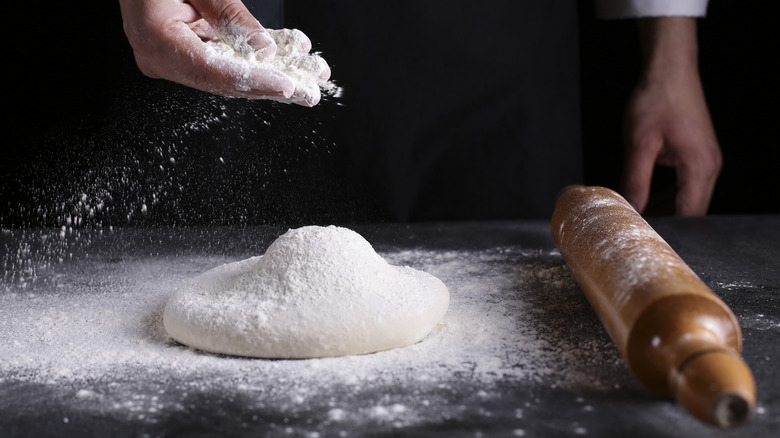
Save that rolling pin for pie crust, not pizza crust. According to Chef Glenn Rolnick, director of culinary operations for the legendary Carmine's in New York's Times Square, this well-known cooking tool can seriously affect the final product. "I never use a rolling pin for my pizza dough," says Rolnick. This is something professional pizzaioli in Italy, the land that brought us pizza, would applaud. In fact, under traditional Neapolitan pizza regulations, rolling pins are outright banned because they squeeze out the gas bubbles that give pizza crust its airy, chewy structure. "It should be done by hand in my opinion to get the best quality results," Rolnick adds.
Whether you prefer a thin New York-style crust or one much thicker, shaping pizza dough properly, especially by hand, starts with temperature. Rolnick recommends letting the dough come fully to room temperature. "If the dough is too cold it will pull back when stretched. Leaving it out at room temperature to temper is crucial for the stretching process." For shaping, Rolnick works the dough on a floured surface by pressing down while spinning and pulling it outward. This motion not only shapes the dough but also helps trap air as the gluten strands in the dough elongate, allowing it to further expand in the oven to create the characteristic lift and tenderness that hand-stretched dough is known for. Using a rolling pin creates the opposite effect. It forces out air and compresses the gluten network, creating a harder, stiffer crust.
A perfect pizza crust is an imperfectly shaped one

Beyond preserving air and structure, hand-shaped pizza dough also gives pizza crust its unique visual and textural appeal — characteristics a rolling pin takes away. "There are pizza dough press machines that some companies use on a regular basis, but to me that's a commercial-style pizza," states Rolnick. You definitely won't find uniform-looking pizzas at the best pizza places in New York City.
"I've worked with some chefs who swear by the rolling pin method," says Rolnick. He says this method is difficult to perfect, but if you're someone who prefers to use a rolling pin, Rolnick advises you at least avoid rolling the perimeter of the dough. "The edges need to have some height so there is something to hold onto and so the sauce and melted cheese doesn't run off during the cooking process."
If you're wanting to create great-tasting pizza at home, you can follow Rolnick's hand-shaping method which works with any pizza dough, whether homemade or store-bought. You can use this canned shortcut for the easiest pizza night, but just remember to learn the lessons everyone needs to know about homemade pizza which are extremely useful when trying your hand (pun intended) at pizza making.