

Remember This Rule When Swapping Heavy Cream For Coconut Milk In Soup

Swapping heavy cream for coconut milk in soups is one of the easiest ways to make a recipe dairy-free while still preserving that rich, velvety texture. But coconut milk doesn't behave exactly like cream, and understanding its quirks will help you cook a smooth, buttery soup every time. We turned to Katie Vine, experienced cook and recipe blogger at Dinners Done Quick, to get her expertise on the vegan swap. "You really want full-fat coconut milk, as it keeps the same luxurious, silky texture, and is less likely to clump," she advises.
Beware of light coconut milk, which is basically a rip-off, because it's just a watered-down version with additives and stabilizers. Heavy cream contributes richness and viscosity to soups, so always reach for the full-fat canned coconut milk, where the fat content is high enough to replicate that creaminess. Keep in mind that coconut milk is not interchangeable with coconut cream in recipes. (Save the cream for desserts like ice cream or pudding.) Always give your can a good shake before adding it to the soup, or whisk the thick cream and liquid together after opening, to ensure even consistency.
You'll also want to consider the flavor profile of the soup. Coconut milk has a naturally sweet, subtly tropical taste, which can enhance some recipes and distract in others. It pairs beautifully with tomato-based soups, Thai curries, spicy bisques, and squash or sweet potato soups. If the taste is a little too coco-nutty for you, bold flavors like lime juice or fish sauce can balance it out.
Add coconut milk toward the end of cooking
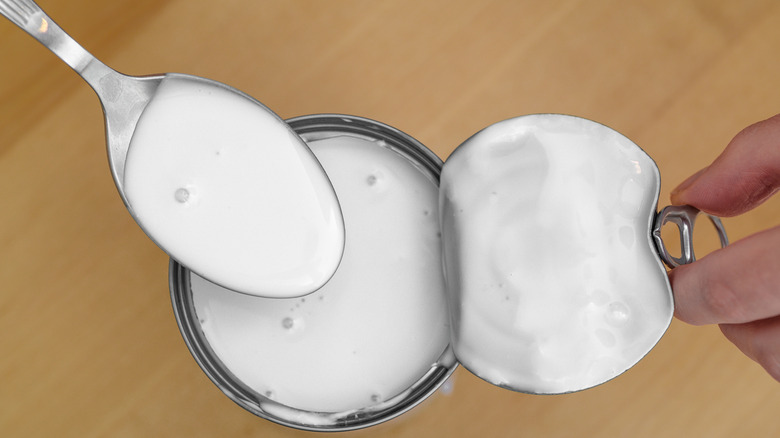
Another thing to note: The refrigerated coconut milk in your fridge ain't gonna cut it. Refrigerated coconut milk (the kind sold in cartons) is formulated as a drink, not a cooking ingredient. It's usually diluted with water, stabilized with gums, and often contains added sugars. Katie Vine elaborates: "It's not going to be quite the same. It will make it creamy but not thick, and there's definitely a difference there." It's much thinner than heavy cream and won't give your soup the rich texture you're expecting. Vine agrees, saying, "It's great for Asian-style soups and curries, or where you need a dairy-free alternative, but don't expect it to make a luxurious thick chowder."
Another key tip is to add coconut milk toward the end of cooking. Heavy cream can simmer without breaking, but coconut milk is more sensitive to prolonged high heat. If you boil it too long, the fat can separate, leaving curds floating in the broth. Instead, simmer your soup until everything else is cooked, then stir in the coconut milk during the final few minutes to gently warm it. Any leftover milk will last up to 10 days, provided you keep it refrigerated and covered.
Used wisely, coconut milk is an excellent ingredient for creating soups that are creamy, satisfying, and vegan, without sacrificing any depth or texture. Always choose full-fat coconut milk, adjust flavors thoughtfully, and add it at the right moment to transform any cream-based soup into a lush, coconut-infused version.