

Bananas Were Originally Eaten Like Vegetables (Yes, Seriously)
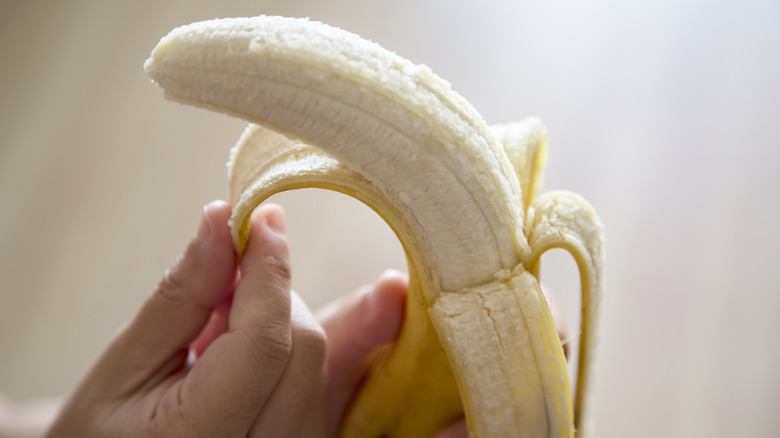
The banana we know today — the perfect grab-and-go snack one minute, and a show-stopping loaf of banana bread the next — is almost unrecognizable when compared to its wild ancestors. Bananas have a bizarre prehistoric history, like much of our modern produce, and have gone through thousands of years of human tinkering, or rather, selective breeding. They're among the earliest plants humans ever cultivated, with the first written mention dating to around 600 B.C. in India. But there's agricultural evidence to suggest that the cultivation of bananas began in Papua New Guinea roughly 7,000 years ago. Either way, the banana has been around for a minute.
According to historical research, ancient bananas had traits comparable to today's winter squash (which are also botanically considered fruit): tough, fibrous skins and flesh; large, rock-hard seeds; and very little sugar. These traits meant bananas were likely better off cooked. Early cultivators would have needed to fire-roast the banana to soften both the flesh and the seeds — nothing like the soft, seedless, dessert-like fruit we peel open and eat raw today.
Of course, these bananas looked quite different, too. Before bananas were ever eaten like vegetables, studies suggest the earliest banana plants were cultivated primarily for their fibers, which were used as valuable sheaths. Their leaves were used for cooking, similar to how corn husks are used as food-safe wrappers to secure other foods.
The hybrid that changed the world: how we got to the modern banana

So when did bananas start tasting and acting like the actual fruit that they are? It wasn't until humans began deliberately crossing different species of wild bananas that the fruit started resembling the creamy, nearly seedless snack we know today. The key banana species were called Musa acuminata and Musa balbisiana — two species with very different strengths. Musa acuminata had hints of sweetness, but was packed with seeds, while Musa balbisiana was hardier. Early farmers realized hybridizing the two species would combine the appealing flavor of one with the hardiness of the other, creating a product similar to today's plantains. Eventually, after centuries-long selective breeding practices, the fruit broke away from its vegetable-like origins.
Needless to say, the banana has come a long way since the days when it was eaten with a fork and knife — well, more like with a spear, or two bare hands. Early cultivators really knew what they were doing in transforming the savory fruit into something sweet, considering that nowadays, the banana is the most consumed fruit, and also one of the most widely produced fruits in the world. It's almost a shame bananas didn't stay classified as vegetables— we'd all be getting a lot more "veggies" in our diets if that were the case!