

15 Numbers To Remember To Make Cooking So Much Easier
We may receive a commission on purchases made from links.
Let's face it — cooking can be a daunting task, especially for those new to the kitchen. And though most of us might know a few simple rules about whipping up a good dish, the truth is that much of what happens when cooking comes down to a science — and many times, that "science" involves a healthy dose of math.
Now, before you go walking off, allow us to assure you that kitchen math isn't quite as intimidating as it seems. With the memorization of just a few numbers and several general guidelines, you'll experience a culinary confidence boost while improving the flavor of your desserts and entrées in the process.
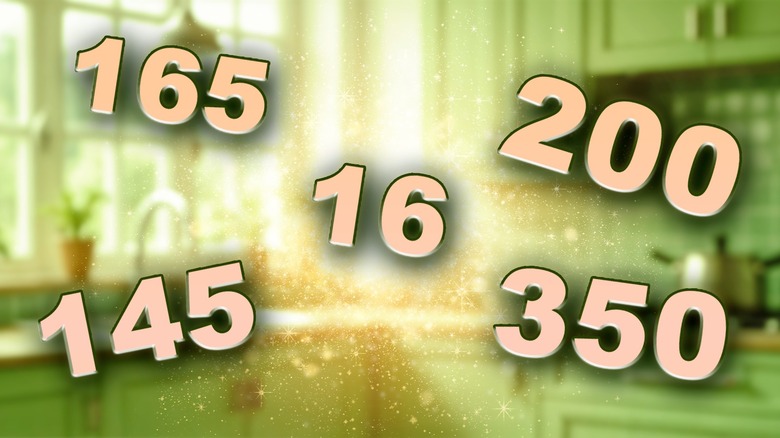
Sound interesting? If so, stick around. In the upcoming post, we're rounding up the numbers you need to help you soar on your journey to culinary excellence. From simple measurements to basic ratios, we're certain you'll find these dynamic digits useful for your next edible endeavor. Grab your calculators and get ready — the numbers needed to improve your kitchen game are coming up next.
1. 165
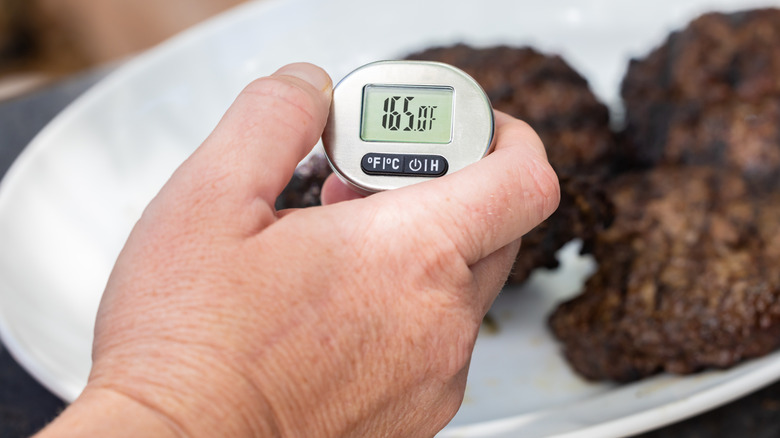
Kicking off our list of numbers that make cooking easier is 165. Why? Because this is the internal temperature many foods need to reach in order to be considered safe, according to the USDA. Beef, lamb, and poultry fall into this category, but it doesn't stop there — leftovers, reheated foods, and casseroles should also reach an internal temperature of 165 degrees Fahrenheit before they can be safely consumed.
At this point, you're probably wondering how the heck you're supposed to determine whether or not your food has reached 165 degrees Fahrenheit. The answer is simple: purchase an OXO Good Grips Chef's Precision Digital Instant Read Thermometer or similar digital thermometer. Tools like these are easy to use — simply turn them on, stick them in, and get a reading. Bear in mind that the internal temperature of some food types often increase as they sit, rising as much as an additional few degrees. Not willing to risk it? We don't blame you — in that case, go ahead and cook your meat or leftovers until the internal temperature of 165 degrees Fahrenheit has definitely been reached.
2. 350

If there's one oven temperature we'd say is imperative to remember, it would have to be 350 degrees Fahrenheit. No, it isn't a magical number that'll work for every recipe, but by and large, it is one of the most common, easy, and practical oven temperatures out there. Whether you're cooking baked goods or reheating days old pizza, 350 degrees Fahrenheit works to meet many culinary needs.
Despite the general usefulness of this oven temperature, there are times when you may need to add 25 degrees more or less to reach your desired results — certain muffin recipes, for example, may require you to kick down the heat, while other recipes, like crispy baked chicken thighs, may require you to bump it up. Think of 350 degrees Fahrenheit as a baseline that you can adjust depending on the need. It also helps that 350 degrees Fahrenheit is the upper range of the temperature needed to cause the Maillard reaction to happen – this is when the sugars in your food start to brown, leading to results that taste just as appetizing as its alluring appearance!
Oh, and did we mention that 350 degrees Fahrenheit is also the cooking temperature needed to deep fry? In general, 350-375 degrees is the perfect temperature for hot oil when frying chicken, egg rolls, doughnuts, onion rings, potato chips, and more. Pretty cool, huh?
3. 200
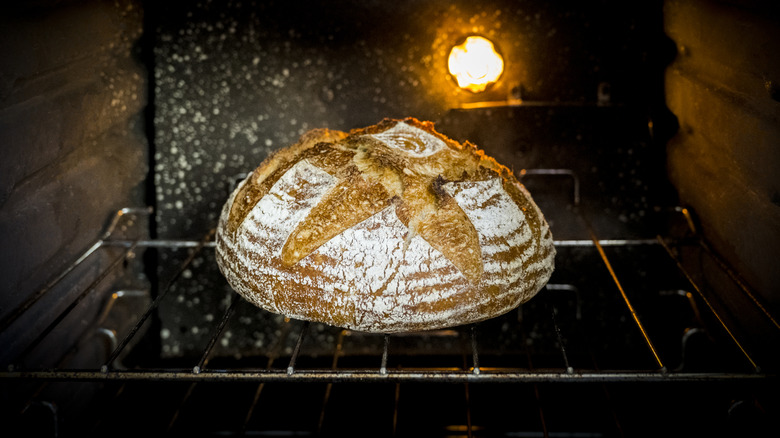
Got your digital food thermometer in hand? Great — now it's time to put it to use for more than just meat, leftovers, and hot oil. Cakes, quickbreads, cornbread, and other baked goods are generally best taken out of the oven only once they've hit an internal temperature of 200 degrees Fahrenheit, though other breads, like those made of rich dough, may require less. Even cookies, cheesecake, or bread pudding can benefit from the use of a digital thermometer — these types of desserts don't usually require an internal temperature of 200 degrees Fahrenheit, but close, at between 150-180 degrees. And while there are certainly other methods for checking the doneness of breads and other baked goods, using a digital thermometer is one of the most accurate.
No matter which baked goods you choose to whip up, make sure that they're fully cooked before eating; ingesting raw dough (or even raw flour) is not okay and can lead to health complications like food poisoning.
4. 2
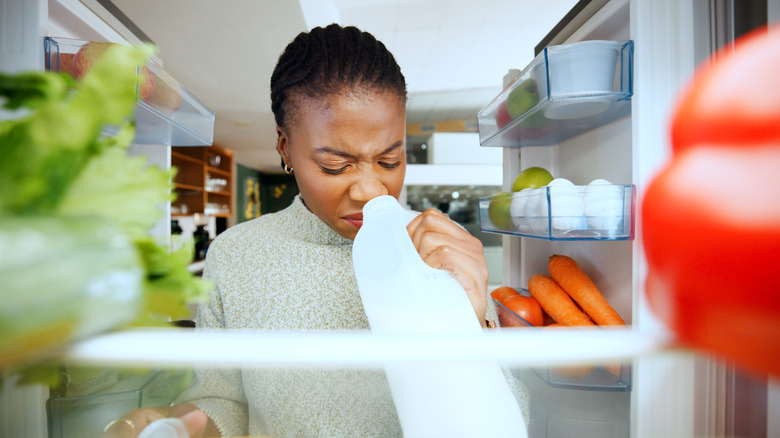
The number 2 is an easy one to remember when cooking, though not for the reasons you might think. Though the number certainly can be used in a variety of ways in the kitchen, one of the most important is for recalling the number of hours food can be left out before spoilage.
We know, we know. There are plenty of people out there who eat food left out for more than 2 hours and remain perfectly healthy. Still, according to the USDA, it is at 2 hours that bacteria begin to rapidly multiply, and it's a risk we can't justify taking. This rule applies to food items like milk, eggs, and other perishables, as well as warm meals you may have cooked or received. Of course, not everything needs to be refrigerated — canned food items, honey, ground coffee, bread, and more don't require chilling, which means that, in most cases, they're fine to leave out.
5. 16
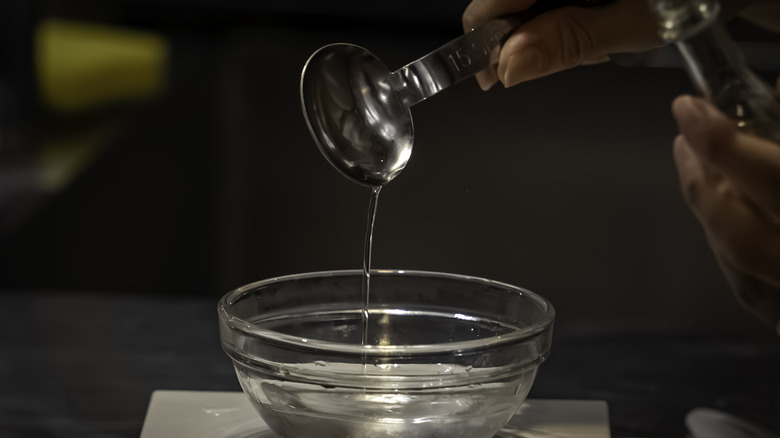
The number 16 is another important one to remember, mainly because it can help you with conversions in a pinch. There are 16 tablespoons in 1 cup, which also means there are 8 tablespoons in a ½ cup, and 4 tablespoons in a ¼ cup. This information can help in a variety of situations you may find yourself in while cooking; if, for instance, you aren't in the mood to wash dishes and wish to use tablespoons for a smaller recipe rather than busting out your measuring cups, you could easily do so using this simple 16:1 formula.
This easy conversion is also useful for when you want to reduce or increase certain ingredients in a recipe. Whether you're looking to double the recipe, cut it in half, or alter its ingredients, this basic 16:1 ratio can help you make the adjustments necessary without the use of a calculator or cell phone.
6. 40
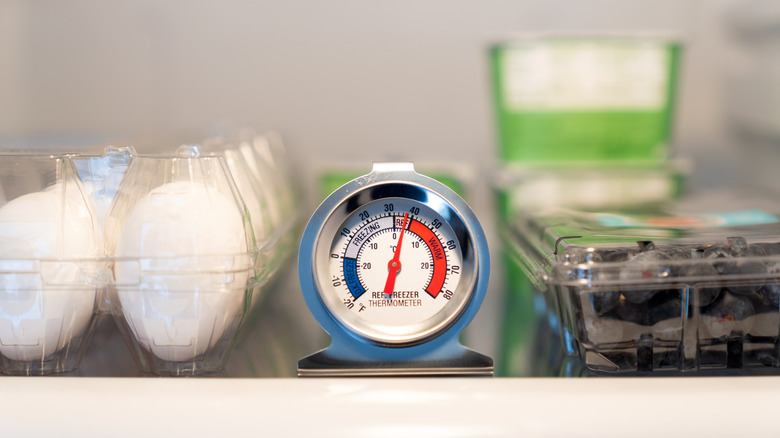
If you don't know what temperature your fridge should be set to, it's time to familiarize yourself. Ideally, a refrigerator's temperature should read 40 degrees Fahrenheit daily, according to the FDA, which is why this number makes our list of one of the most important to remember in the kitchen. Anything above 40 degrees Fahrenheit might spell trouble — at these temperatures, bacteria begins to double every 20 minutes, which is why this range of 40-140 degrees Fahrenheit is referred to as the "Danger Zone" by the USDA.
So, how can you know if your food is stored at a safe temperature in the fridge for sure? The best method is to buy a freestanding appliance thermometer. Though some refrigerators out there may come with their own, many do not, making it hard to know if your refrigerator is operating at a safe temperature. Thankfully, appliance thermometers are relatively inexpensive; this Taylor Large Dial Kitchen Refrigerator and Freezer Analog Thermometer is a great example of a budget-friendly option that works to ensure that your fridge stays at 40 degrees Fahrenheit or cooler.
7. Zero
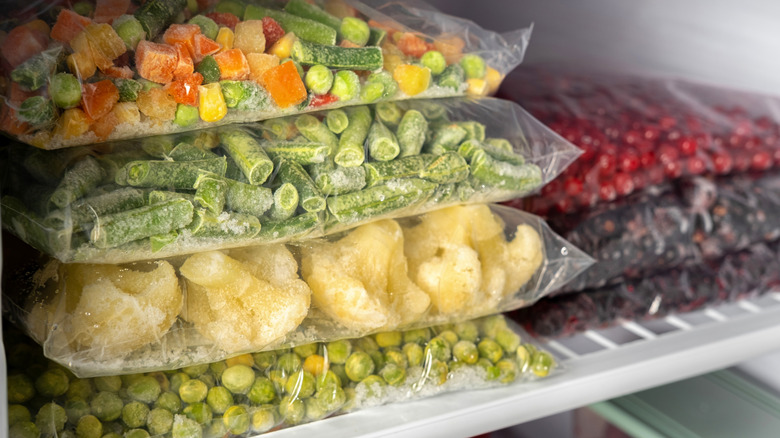
This one's easy, but it remains an essential number for keeping frozen foods safe while chilling. A reading of 0 degrees Fahrenheit is the standard for most freezers and, once again, presents yet another opportunity to utilize a freestanding appliance thermometer. It is at 0 degrees Fahrenheit that bacteria becomes inactive, making it crucial that your freezer is at least this cold to keep your frozen foods safe.
That said, while you could technically allow your freezer to get colder than 0 degrees Fahrenheit, doing so may negatively affect the food. As it turns out, fluctuations could encourage freezer burn, making this temperature a pretty precise guideline, not only for safety, but for the preservation of taste and texture, as well.
Still, unsure? Look for ice crystals. Food studded with visible ice is usually safe for consumption and can even be refrozen when necessary. Still, it can be best to utilize that appliance thermometer we mentioned — you know, just to be safe.
8. 145
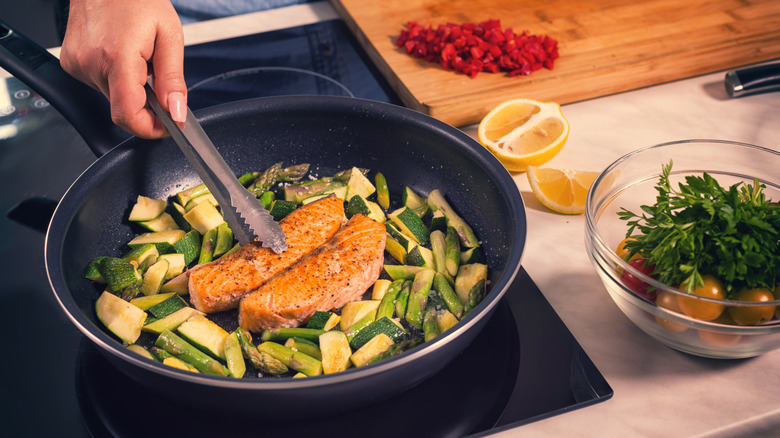
Yes, 165 degrees Fahrenheit is the internal temperature deemed safest for lamb, poultry, and some types of beef, but, as you know by now, that number doesn't apply to all foods. Some options, including shellfish, roasts, veal, salmon, tilapia, and pork chops, only need to reach an internal temperature of 145 degrees Fahrenheit to be considered safe according to the USDA. As a matter of fact, overcooking these kinds of meats may even cause the overall flavor and texture to suffer.
If you're feeling anxious about getting the internal temperature of these meats just right, don't — as with most foods, the utilization of a high-quality digital thermometer will help you determine when to pull it off the heat. Don't forget that internal temperature can continue to climb after cooking; use this to your advantage by removing the meat from the heat early, covering it, and allowing the internal temperature to rise naturally over time. In most cases, the temperature of your meat will increase at least a couple of degrees as it rests (usually about 10 minutes), making this method the perfect solution for avoiding dry, overcooked meat.
9. 3
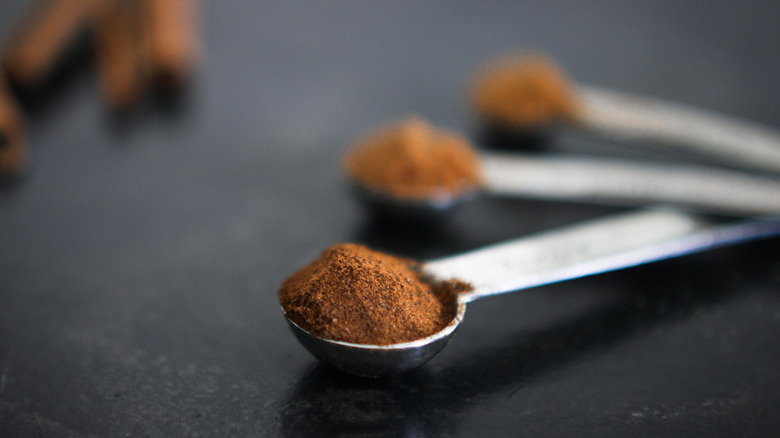
You already know that 16 tablespoons is equal to 1 cup, but did you also know there are 3 teaspoons in 1 tablespoon? Similar to the cup to tablespoons tip, knowing how many teaspoons are in a tablespoon enables you to do quick conversions when you don't have tablespoons on hand, are too lazy to get them out, or simply would like to alter your recipe in the form of halving or doubling. It can also keep you from having to dirty more dishes — and who could argue with that?
Still, while converting tablespoons to teaspoons can be helpful, you should be careful with the measuring tools you choose to utilize for the task. Many tablespoons and teaspoons meant for use as silverware vary between brands, which means sizing can be off. This will undoubtedly affect recipes you're attempting, especially when it comes to baking. For this reason, we advise that you always use standardized measuring spoons for your culinary needs — these OXO Good Grips 4 Piece Stainless Steel Measuring Spoons are an affordable and reliable alternative to using your cutlery to measure ingredients.
10. 1:1:1
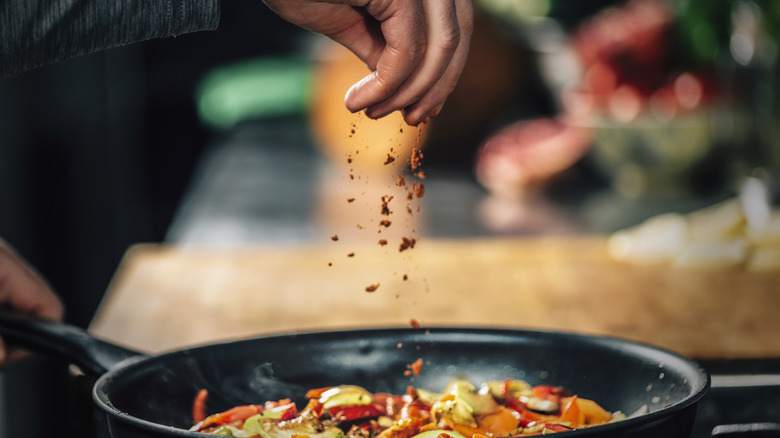
Looking to create your own spice blend? It's totally doable; simply combine spices in a jar at a 1:1:1 ratio and use on your favorite foods. Of course, you'll first need to figure out which seasonings you want to use; to start, pick spices that complement one another to prevent flavors from clashing. A combination of cumin, chili powder, and garlic can be used to infuse foods with Latin flavor, while smoked paprika, onion, and garlic powder work as an all-purpose house blend you'll want to use over and over again. If you want to add salt to your homemade seasoning, feel free to measure in the same amount as the other spices. If you're like us and prefer your blends a bit saltier, try doubling the amount of salt you use.
Oh, and one more thing. Though most spices work well when used as part of a 1:1:1 seasoning blend ratio, not all will. Black pepper, cayenne pepper, and other strong flavors may be a bit too potent to use at full strength — in these cases, it's usually best to consider reducing the amount according to preference so as not to overpower your dish.
11. 8
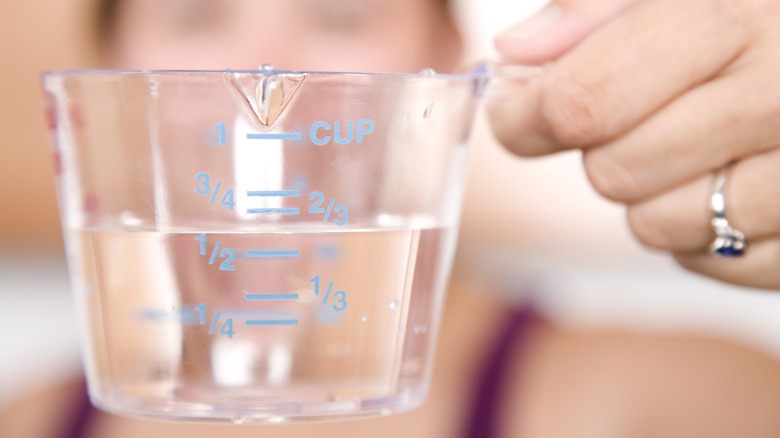
If the difference between ounces, pounds, and pints leaves you a bit feeling disoriented, no need to sweat; thankfully, there's an easy way to convert these units of measure into cups to make for a less complicated way to keep track. To do it, you'll need to remember the number 8 — that's because 8 fluid ounces is the same as 1 cup, and 16 ounces (which is 8 ounces twice, or 2 cups) is the same as 1 pint or 1 pound.
Ever heard the saying "A pint's a pound the world around"? It's not entirely true — though a pint of water or liquid will weigh a pound, they aren't the same unit of measure. A pound is dry weight, while a pint measures fluid ounces. And though this still can be confusing, remembering these measuring units in terms of the number 8 helps, which is why this is one numerical value you should always strive to remember.
12. 20
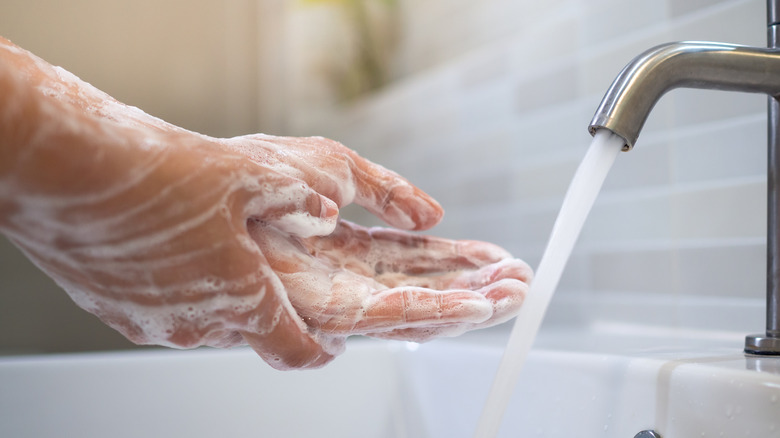
The number 20 is an important one, though not necessarily in regard to cooking. Rather, we recommend keeping this number in mind as a convenient way to recall how many seconds you ought to wash your hands.
As trivial as it may sound, the amount of time it takes you to wash your hands matters. According to the CDC, it takes approximately 20 seconds to properly cleanse your hands of germs, which can be especially important in the kitchen, especially after handling raw meat. Whether you opt to recite the "ABCs" or sing "Happy Birthday" (from beginning to end twice), you should always have some means of keeping track of how long you've washed your hands in order to ensure they are fully clean. Remember that failing to cleanse your hands properly could lead to dire consequences; germs like salmonella could make their way into your food or drinks, causing unwanted symptoms like fever, nausea, abdominal pain, and more.
13. 10
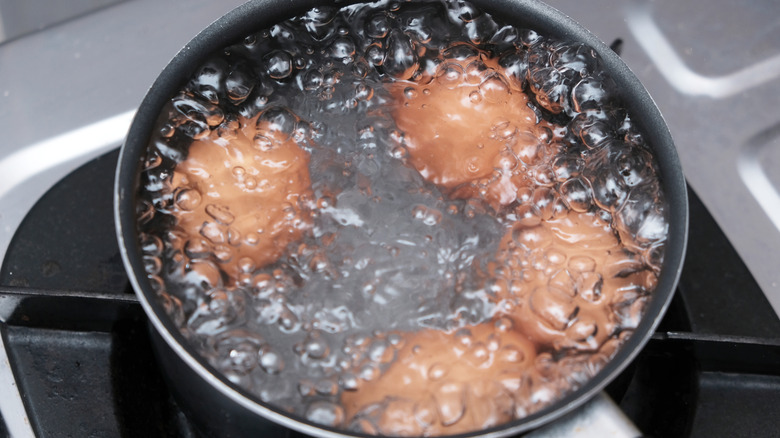
Want perfectly cooked hard-boiled eggs? If so, memorizing the number 10 might help. At 10 minutes, shelled eggs are cooked until the whites are firm with solid yellow yolks, yet without the unpleasant rubbery texture of an egg boiled too long. For softer, jammier yolks, stop boiling the eggs at 8 minutes; if you like your yolks runny, shoot for 6 minutes.
To start the cooking process, grab a pot and bring water to a rolling boil. Place an uncooked shelled egg on a long spoon and carefully lower it into the water. If you're boiling many eggs at once, be careful not to crowd too many eggs in the pot; doing so will cause them to cook more slowly, leading to longer cook times. After 10 minutes have passed, promptly remove the eggs and plunge them into ice water; this "ice bath" is an expert method for hard-boiled egg shells that slip off with ease. Easy, right?
14. 1:3
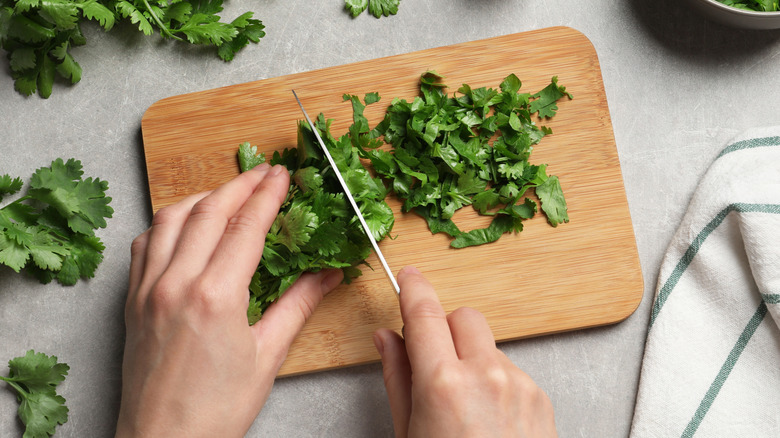
You may already know this, but in case you don't, there's a big difference between using herbs that are fresh versus dried. Generally speaking, using dried herbs will always result in a flavor that's more potent, which is why substituting dried herbs for fresh at a 1:3 ratio usually works best. This means that if a recipe calls for 3 teaspoons of fresh rosemary, you could effectively use only 1 teaspoon of dried rosemary to produce similar results.
Bear in mind, though, that fresh herbs are, well, fresher — as such, you'll generally want to add them at the end of cooking, rather than in the beginning or middle. Some even recommend not using certain dried herbs at all — tarragon and parsley, for example, tend to lose their flavor when dried, and thus, should only be used fresh for best results. Other herbs, including thyme, rosemary, and oregano are perfect for stocking as ready-to-use seasonings in your pantry — you can even dry your fresh herbs in the microwave and store them for later use, if that suits your fancy.
15. 15
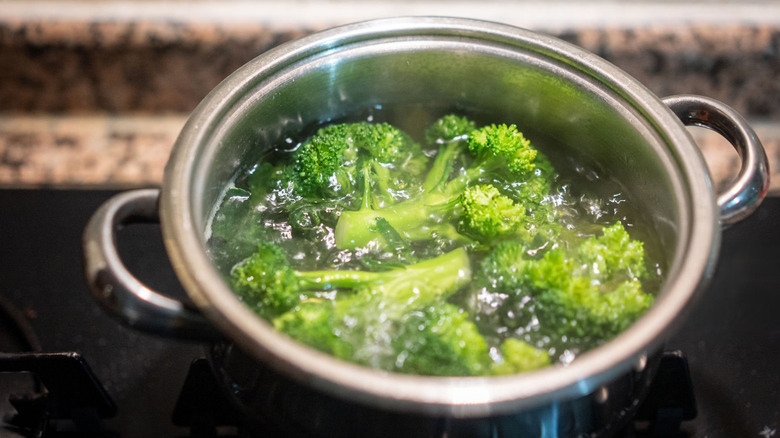
With the exception of potatoes and a few other veggies, 15 minutes should be your go-to when it comes to boiling vegetables. Though it's usually best to steam vegetables for maximum nutrition and flavor, boiling them makes sense for certain recipes. It is for this reason that we recommend memorizing the number 15 — it provides a general guideline that can spare you from the usual guesswork that comes with knowing when your boiled veggies are tender.
Of course, vegetables will vary in terms of exactly how much time each will take to boil. Asparagus, corn, broccoli, and carrots, for example, can cook as little as 5 minutes, while others, like brussels sprouts and squash, may take a bit longer. Some veggies, including cauliflower, beets, and certain root vegetables like potatoes, will take even longer than 15 minutes, so be sure to take this into account before you take on your next recipe.