

How Turkey Breasts Are Turned Into Lunch Meat
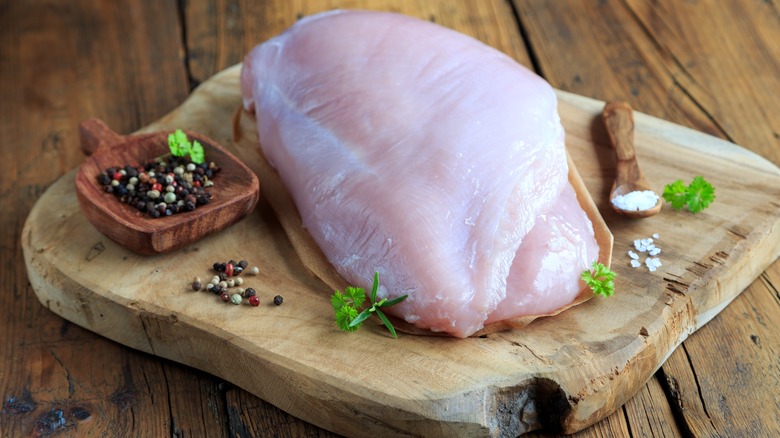
It's obvious that lunch meat goes through a good bit of processing before it hits the deli counter. After all, those large hunks of turkey and roast beef come in perfect loaf shapes so they can be attractively and evenly sliced to put on your wheat or rye bread. If you were to place a deli turkey breast next to one you roasted in the oven yourself, it's easy to see the difference. As it turns out, turning turkey into lunch meat is an involved and pretty fascinating process.
By the time the turkey breasts are ready for processing into lunch meat, they've already been inspected, de-boned, and skinned. Transforming the plain meat into a deli counter staple begins by injecting the breasts with seasoning solution. At deli meat giant Dietz & Watson, several large automated needles do the job with ease. The meat is then left to marinate, after which it is sent to another machine which presses and rolls over the breasts in order to tenderize them. The turkey breasts then go to a kneading machine to further break down any tough fibers.
At this point, the turkey is seasoned on the outside with various herbs, spices, and condiments depending on what type of deli meat is being made. You've probably seen flavors like Cajun, honey-roasted, maple-glazed, and mesquite-smoked turkey breast in grocery stores, which all require different seasonings. The breasts are then rolled and shaped into compact, uniform shapes, placed in plastic bags, and sent to the oven or smoker. Once the meat is cooked, it's unwrapped and drained before being either fried or sent through long, hot convection conveyors to produce an attractive, browned crust. The turkey is packaged for shipping and finally sent to deli counters around the country.
Making turkey deli meat at home is much less complicated

Not all turkey deli meat is processed equally. In reality, if your deli roasts its meat in-house, it's likely minimally processed. To avoid the added preservatives, artificial flavorings, and excessive processing altogether, some people opt to make their own deli meat at home. This can be as simple as purchasing a turkey breast from the store, roasting it in the oven, and slicing it up as needed. Of course, turkey breast can easily dry out in the oven, which can make it tear when you slice it. Not to mention, this might create an unappealing flavor. By dry brining, smoking, and properly resting a turkey breast, you can largely avoid this.
If you don't have a smoker, there's no reason to worry or hastily go buy one. Your oven is just fine as long as you pay attention to the temperature of the meat while it cooks. In other words, get yourself a good meat thermometer and don't overcook the turkey breast. For optimum results, roll up your turkey breast into an even shape and secure it with twine so it holds its shape and cooks evenly while roasting.
Take the time to properly marinate your turkey breast as well. Another great thing about making your own deli meat is that you can flavor it however you want with fresh herbs, rubs, sweet sauces, or even Buffalo spice if you like some heat. Once it's cooked and cooled, slice the turkey however thinly or thickly you'd like.