

Never Use Your Swiffer WetJet If Your Kitchen Has These Types Of Wood Flooring
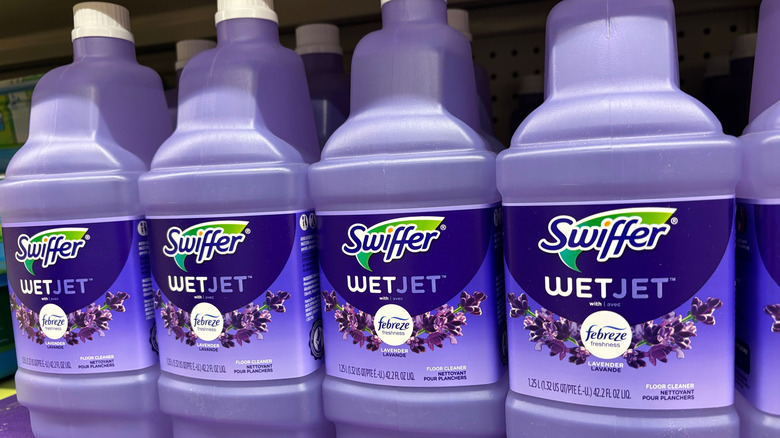
Keeping a tidy home is a serious chore, and floors are one part of your kitchen that you absolutely cannot skip, but they can be tricky. If your floor is tiled, laminate, or sealed wood, it might be easier to clean using a Swiffer WetJet. If you have an untreated wood floor, however, using that Swiffer mop and its cleaning products might end up ruining your flooring permanently.
While wood looks wonderful, it requires a durable finish to remain resilient against regular washing with chemical cleaners. Unsealed wood lacks this quality. So, for the same reasons you should treat your wooden cutting boards carefully, you should be gentle with unfinished wood flooring. Unfinished wood, oiled wood, and waxed wood should never be cleaned with a Swiffer WetJet or any of the liquid products it utilizes. The result can be discoloration and breakdown if it's stripped of natural oils.
Swiffer is upfront about this, too. Labels on its mops, pad refills, and cleaning fluids all advise you to keep them away from unsealed wood. On its website, both the multi-surface cleaner solution and wet mopping pad warn that the products should not be used on unfinished wood flooring, nor on non-sealed tiles and carpet. While you might guess that moisture has a lot to do with how damaging a WetJet can be, there's more to it than just that.
Why some wood floors and WetJets just don't mix
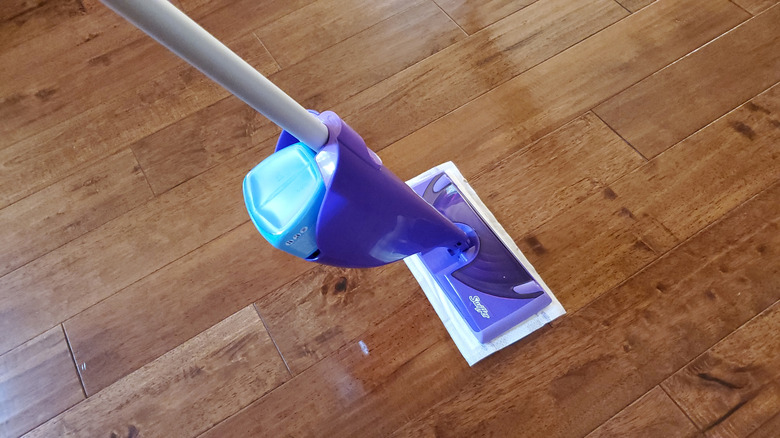
The most obvious issue is that unsealed wood absorbs moisture, and WetJets provide a lot of it. When wood absorbs water, it can develop warping, cracking, and smells. Even simple water can damage oil or wax seals, creating visible spots and wear points. When the seals erode over time, you may end up with dulling and surface etching, especially in bamboo floors, which can be expensive or downright impossible to remove.
Another factor is that the wet mop's cleaning fluid has alkaline, which has a high pH level, and strong chemicals. Oil, wax, and natural unfinished wood are susceptible to damage from alkaline substances, so using a WetJet can cause noticeable deterioration. Never clean these types of floorings with vinegar, bleach, or anything else highly caustic as well. Only cleaners with a more neutral pH level and mild solvents (if any) should be used on unsealed wood. You should even avoid solutions containing alcohol.
Instead, sweep and vacuum floors to remove dust or dirt, and clean up any remaining problem spots by hand. Then, use a homemade mixture of water and a small amount of neutral soap to mop the floor in the direction of the grain. Going with the grain will help stop bits of dirt from getting stuck in crevices. Dry the floor thoroughly to ensure no water gets absorbed. Of course, the best way to keep your natural wood floors looking good is to avoid messes in the first place, so clean spills immediately to prevent stains.