

The Major 2018 Kellogg's Cereal Recall That Landed 30+ Consumers In The ER
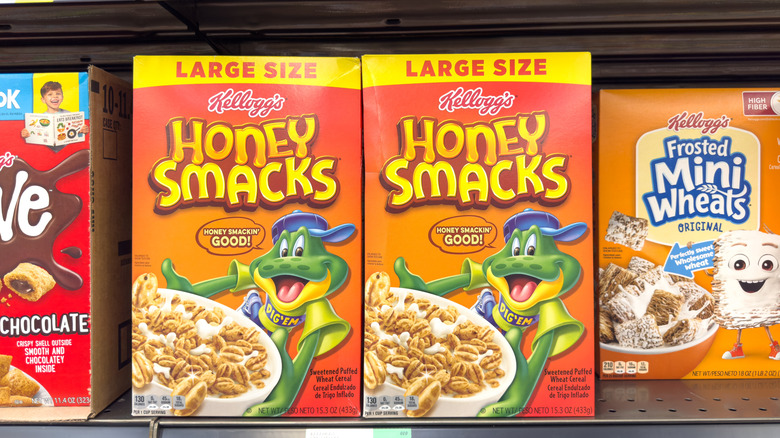
There have been many major food safety scares over the years, including numerous cookie recalls that impacted millions. Many folks think of cereal as a safe food for sensitive tummies and picky eaters, but it isn't exempt from becoming contaminated. One such instance happened in 2018, when Kellogg's recalled Honey Smacks during a Salmonella outbreak that sickened 135 people across 36 states.
After laboratory tests discovered that a box of Honey Smacks found in a California store contained a Salmonella strain, consumers were advised to throw away the product and to wash any containers that came in contact with the cereal. The damage was already done, with 34 people hospitalized with severe symptoms of the bacterial infection. Others infected experienced low fevers, mild cramps, and diarrhea, and there may have been more who never sought medical help.
Although Salmonella outbreaks can be deadly to the elderly and infants, luckily, no one died during the 2018 outbreak. Most who contract Salmonella recover within a week. By the end of the ordeal, the outbreak had led to lawsuits, a major investigation, and even federal charges. The cereal itself was also significantly changed to prevent a similar incident from happening again.
How the cereal food recall happened
The major reasons why many foods are recalled often include how ingredients and packaging are handled in factory settings. Cross-contamination between foods — or the people handling them — can introduce chemicals or bacteria into sealed containers, which may later be consumed by the public. As a federal investigation into the cause of the Salmonella outbreak unfolded, it became obvious that this manufacturer had not only been lax about safety protocols but had actively made choices not to improve them. According to the U.S. Department of Justice (DOJ), employees at the Kerry Inc. facility in Gridley, Illinois — where Honey Smacks were manufactured – did not take steps to correct or prevent problems revealed by positive Salmonella tests.
The revelations didn't stop there. Ravi Chermala was the director of quality assurance at the time and oversaw the sanitation program at the Gridley plant. During the investigation, he admitted to instructing employees at the factory to change the program that monitored pathogens in the food, making it more difficult to detect dangerously unsanitary conditions. The DOJ also concluded that Chermala told his employees to avoid reporting information about the unsafe environment to the Kellogg's company.
How the Kellogg's cereal recall led to big changes
While there have been many deadly food recalls that have swept the United States, they have prompted improvements in food safety and stricter regulations. This one was no different. Ravi Chermala faced three federal misdemeanors, to which he pleaded guilty. Kerry Inc. agreed to pay more than $19.2 million in penalties, one of the largest food safety fines in history. There were also numerous civil lawsuits from those impacted by the Salmonella outbreak, in which victims sought compensation for missed work and pain and suffering. Facing backlash and steep fines, the Gridley factory closed that same year.
This left Kellogg's with a reputation problem and a product it needed to resurrect. First, the company moved production of the breakfast staple to another facility that had operated without problems for decades. Kellogg's also slimmed down the recipe to use fewer, simpler ingredients. The cereal has since managed to stay afloat, even if consumer reviews have not been the best.