

The Sugar Swap Martha Stewart Makes For Smooth Homemade Eggnog
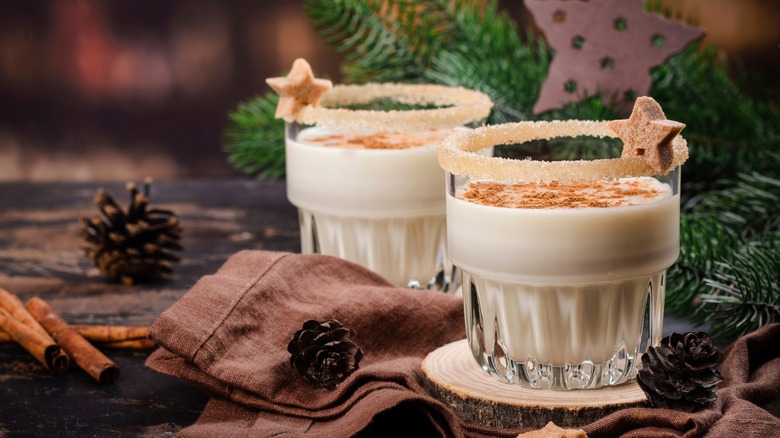
With the holiday season in full swing, candies and bakery-worthy cookies are springing up at festive gatherings all across the country. And while there are plenty of beverage options to wash those goodies down, few embody the spirit of the season like a rich, creamy, homemade eggnog. But before you go searching for the best liquor to spike eggnog with, take a note from the Queen of Thanksgiving, Martha Stewart, and make sure you have the right kind of sugar on hand to sweeten the drink.
One of eggnog's signature qualities is an ultra-smooth mouthfeel. If it's grainy, it's not just wrong; it's somewhat offensive. But here's the rub: Sugar has a hard time dissolving without heat. Because eggnog isn't generally heated when it's made, it can be challenging to get the sweetener to combine with the rest of the ingredients to create a smooth, cohesive consistency.
That is why Martha Stewart only uses superfine sugar when she makes her famous eggnog. It's often listed as baker's sugar in recipes, while in stores it's typically labeled as caster sugar. The granules are significantly smaller than table sugar, allowing them to dissolve into the beverage even without heat, adding sweetness to an eggnog without making it grainy.
What if you don't have caster sugar?
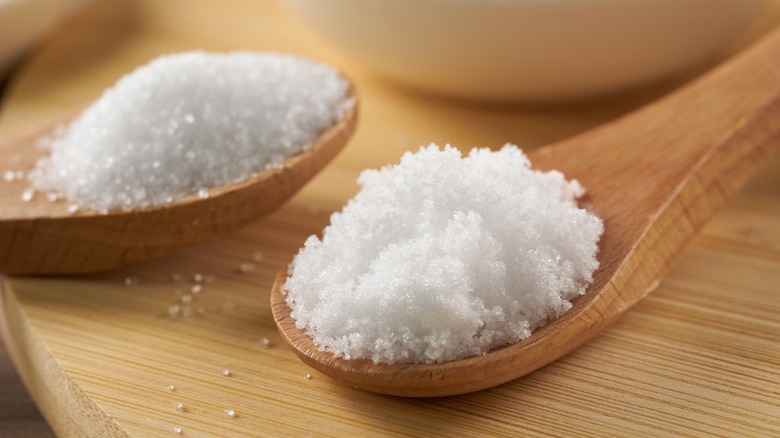
Unless you're an avid baker who enjoys making homemade desserts like meringues and mousses on a regular basis, it's not likely you have caster sugar lying around in the pantry. When sourcing the rest of the ingredients for your eggnog recipe, you'll want to add this sweetener to your grocery list. However, if you already have all the other ingredients and don't want to take a trip to the store solely for caster sugar, there is a way to make traditional table sugar work.
Just as you can turn granulated sugar into powdered sugar, it's also possible to create caster sugar from the regular stuff. Grab a blender or food processor (a clean coffee grinder also works) and pour in enough granules so that the blades are fully submerged. Then simply pulse them until they reach a superfine consistency. If it starts to look powdery, you've pulsed it too much.
Before opening the lid of your mixer, let the sugar settle for a moment (unless you like the idea of a plume of sugar dust wafting into your face). Bear in mind that because the superfine sugar you've made is more compact, you'll need a bit more to fill a measuring cup if you're following a specific eggnog recipe. Once incorporated into the beverage, you should be left with the kind of rich, ultra-smooth, homemade eggnog Martha Stewart would approve of.