

Pound Cake Vs Shortcake: Finally Understand The Difference Between These Treats
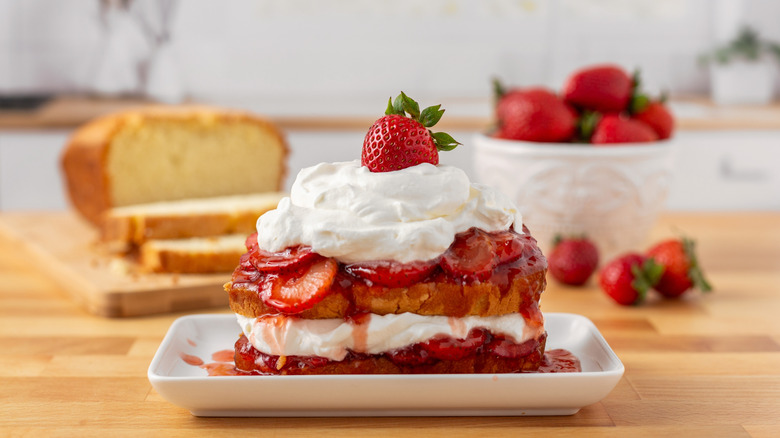
If you're a fan of the "Great British Baking Show" or hang out at Southern baby showers, it's likely you've encountered both shortcake and pound cake. It's easy to confuse them, as both are buttery, sweet, and often served with a seasonal fruit and whipped cream. But despite their similarities, the two desserts are more like buttery cousins rather than sweet siblings. Let's take a dive into the mixing bowl to see how they differ.
It's a common misconception that the name "pound cake" meant that the finished product actually weighed one pound. Close, but not quite. Pound cake gets its name from its original recipe: one pound each of flour, butter, sugar, and eggs. That's right, a whole pound of butter. That formula, dating back to an immensely popular 18th-century cookbook, yields a dense, moist loaf with a fine crumb and a deep, buttery flavor.
For a few decades in history, Crisco became the popular butter substitute because marketing pushed it as "healthier" than lard and cheaper than butter. So if you stumble upon granny's mid-century recipe, don't be surprised if you see a pound of Crisco instead. Since then, modern versions have lightened the texture with baking powder or milk, but the essence remains the same. Pound cake is all about solid slices of richness. Shortcake, by contrast, resembles a sweet biscuit with more in common with scones than pound cake. The two desserts are quite distinct in texture, flavor, and culinary history.
Texture is the biggest giveaway between the two cakes
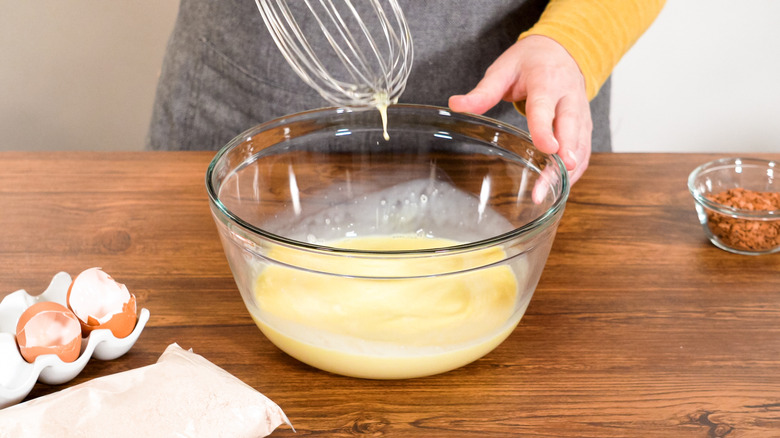
Shortcake is made by combining flour, sugar, baking powder, salt, cold butter, and cream or milk. The "short" in shortcake actually refers to the fat, which is traditionally butter, lard, or shortening. That fat is cut into the flour to create a crumbly, tender texture. Classic strawberry shortcake recipes call for layering these tender biscuits with strawberries and a heavy dollop of whipped cream. The dessert has English origins dating back to at least the 16th century, but it's long been popular in the States, too. While some modern shortcakes use sponge or angel food cake as a base, that's an insult to true strawberry shortcake, which is specifically layered to absorb fruit juices without becoming soggy.
Simply put, texture is the biggest giveaway between the two cakes. Pound cake is smooth, buttery, and slices oh-so-nicely. Shortcake, on the other hand, is crumbly and lightly sweet with a delicate structure. Their uses can differ, too. Pound cake can play many roles — elegant enough for afternoon tea, casual enough for brunch, and simple but richly dense enough to serve with morning coffee. Shortcake is more rustic and seasonal, often associated with fresh fruit, summer gatherings, and (oddly enough) serves as Florida's official state dessert. Both sweet treats are examples of how small changes in ingredients and technique can completely change the character of a dish. And when dessert time rolls around, there's plenty of room on the table for both.