

Old-School Drinks From The 1970s That Are Still Around Today
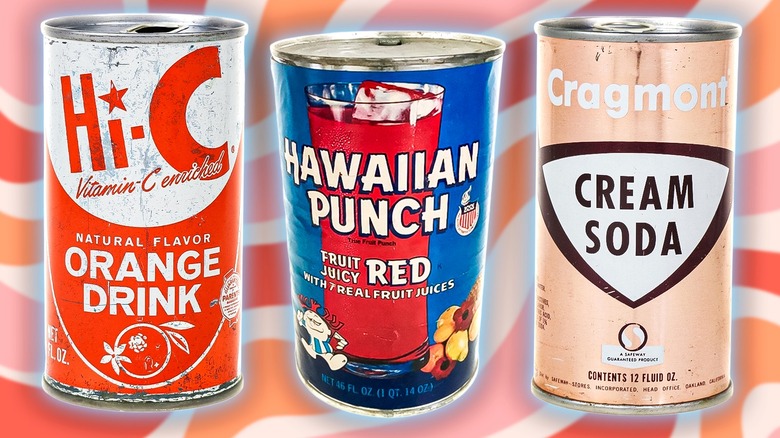
We talk about weird 1970s foods that deserve to be celebrated, but what about drinks? If you grew up in the 1970s, you probably remember when the drink aisle once had more vivid colors and pizazz than a lollapalooza-esque neon lava lamp. Back then, fridges were fully stocked with technicolor tonics, groovy-labeled sodas, and juice blends so bright they practically shouted, "Sip me, baby ... yeahhhhh!" These were the old-school 1970s beverages that laid their claim to lunchboxes, TV trays, and summer afternoons. That is, until sadly, much like a once-spiffy and sparkling soda forgotten on the counter, they went flat and plum fizzled out ... pfffffft.
But oh, the memories. Remember when your favorite 1970s pop was poppin'? Do you recall way back when a twist of a cap meant instant refreshment, and you could hear that crisp "pssssst" echo across the kitchen like a fizzy fanfare? It feels nice, right? Until, of course, you mention it today and some wide-eyed whippersnapper squints at you and says, "Huh? What? Never heard of it."
But don't let that get to you. Those kiddos don't know what they're missing. And plenty of us do remember when the old-school 1970s drinks were dang good. So, grab your car-bonated keys and join us as we take a sweet, sparkling trip down memory lane. We're diving deep into the drinks that may have faded from store shelves, but still live rent-free in our hearts and memories, and to us, will always be the real OG gulps.
Hawaiian Punch
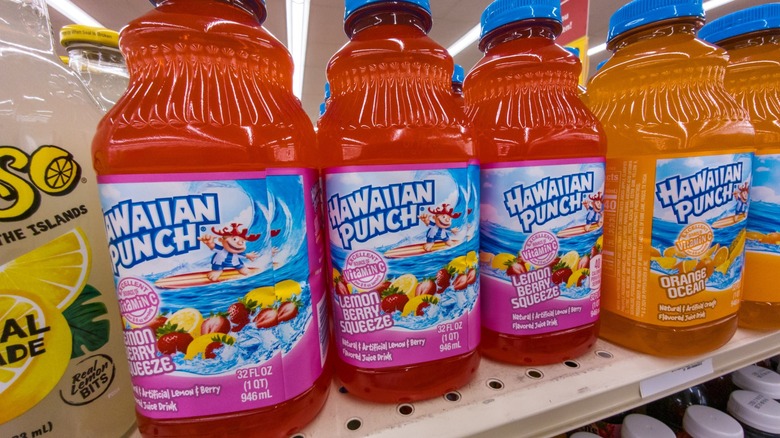
Before juice boxes were jivin' in every lunch box, there was one fruit drink that ruled. Hawaiian Punch, a fruity beverage that leaned in hard to the tropical island imagery, could safely be considered the OG "surf's-up" sip. In the '70s, this stuff had a solid run as the sweet sip every household seemed to reach for. Countless comments fill forums online, with individuals remembering fondly their parents grabbing for that iconic metal can (the one you had to open with that triangular can-opener that lowkey looked like a weapon).
Two holes had to be punched (one at each end of the tin lid), or it wouldn't pour right. If you close your eyes and mine your memory, chances are you can practically still hear that metallic ping and the letting of air, all preparing for that anticipated pour . And who could forget Punchy? You know, that little straw-hatted troublemaker who asked "Hey! How 'bout a nice Hawaiian Punch?" ... right before KERPOW-ing his poor buddy Oaf into next week (via YouTube). Somehow, this violent fruit diplomacy made all of us thirsty, and we drank it up, literally. Ahh, the 1970s.
Sure, Hawaiian Punch still exists, but the original taste? That formula, sadly, is a relic. You can still hang ten with Hawaiian Punch where it can be found, just don't expect the ride on that flavor wave to be the same.
RC Cola
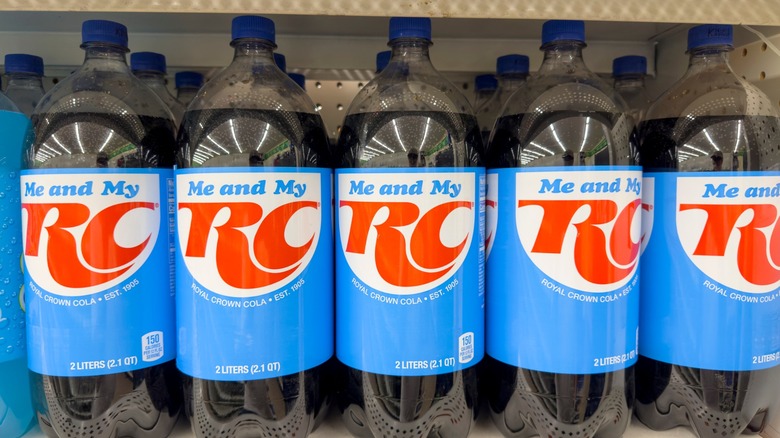
Before cola wars were won with billion-dollar ads, Oscar-worthy animation, and celebrity star power-infused endorsements, RC Cola was holding its own in the soda world, winning hearts and dollars from wallets with only pure charm and a flavor profile smoother than a 1970s jazz vinyl. Back then, RC wasn't just "the other cola" besides Coke or Pepsi. It had utterly devoted fans (dare we say loyalists?), especially across the South, where an RC and a Moon Pie was the dynamic duo everybody and their neighbor knew was the OOTD.
As many of you may remember, this scrappy soda invented half the cola trends we take for granted now. First soda pop in cans to be distributed nationwide? That would be RC. First diet cola to delight all the calorie counters still seeking their fizzy fix? You guessed it ... RC. And how about that first caffeine-free cola? Yup. RC again. But as the soda competition started to heat up, RC got stuck in the crossfire. While the big dogs were launching high-dollar marketing, RC was trying to stretch its budget like a pair of '70s polyester pants after Thanksgiving dinner. Distribution shrank. Shelf space shrank. And by the '90s, most stores were basically saying, "RC? Never heard of it."
But those of us who do remember? We can still recall the blue-and-white cans chilling in coolers at birthday parties, softball games, and even lining the shelves of dusty country stores where the AC might never worked, but the soda sure stayed ice cold.
Donald Duck orange juice
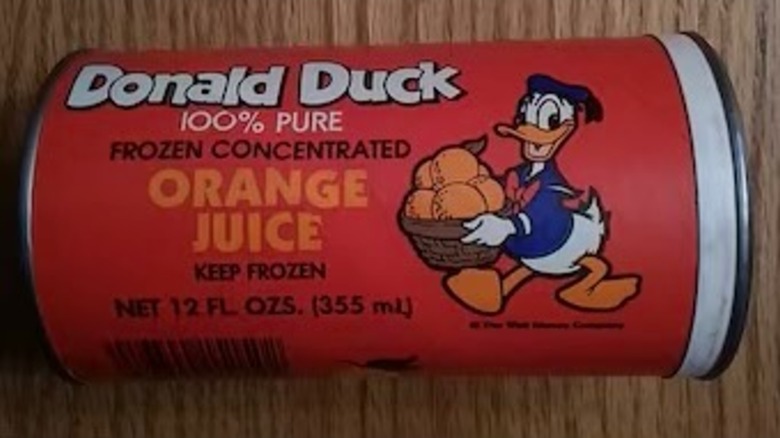
If you were a 1970s kid, you probably remember the Donald Duck Orange Juice can of concentrated neon orange goo in the freezer. It was icy, lowkey slimy, and frozen solid like a citrus hockey puck. And that sound it made? That unforgettable sliiiiiiiide ... plunk! as the concentrate slid out of the can like an icy orange brick before belly-flopping into the pitcher? Classic. Kids today stir powder into water, but we were the real ones, risking frostbite for our morning vitamin C.
This juice (at least before cartoons hit the scene) made you work for it. You'd add water, stir it with mom's wooden spoon until your arm near fell off, then pause to taste it, only to inevitably realize it needed more water. Or less. Or maybe you just ate it with a spoon, mmmm.
Back then, Donald wasn't just shouting quacks in cartoons. He was the same duck schlepping tons of goods, from cheese "quackers" to soda, and even broccoli. But the OJ was the true icon. It had that perfect "not quite orange juice, but definitely not Sunny D" tang to it that made your lips pucker just so. Today the Donald Duck juice brand still exists at places like the Dollar Tree and more but the era of the frozen-brick breakfast has cleared out, like Saturday morning classic cartoons. At least in our memories, Donald Duck will always be the brightest bird in the OJ flock.
Hi-C
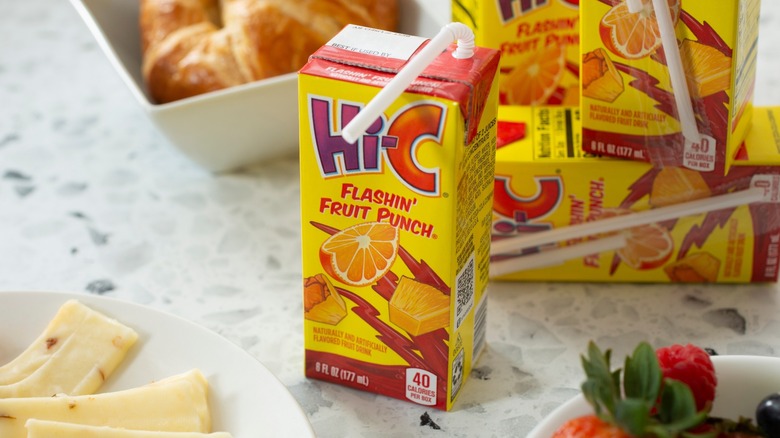
If the 1970s had an official sip that kept the kiddos smiling, Hi-C would be a guaranteed frontrunner. This fruity drink was everywhere. Lunchboxes. Picnics. Even fast food counters (looking at you, Mickey D's). And yes, this beloved fruity nectar was initially brought to us in those glorious metal cans you had to pierce with that "church key" can opener. Piercing them felt important somehow, like getting it wrong would ruin every pour. Two ideally placed holes, or the universe would collapse. Dramatic? Maybe. But them's memories.
Hi-C started with just orange flavor, but by the time the 1970s rolled in and the brand had reached its heyday, it had more flavors. Peachy this, punchy that, even rhyming jingles declaring everything is peachy. And who could forget those commercials? The one where a random roadside man hands a stranded family a cup of lemonade-from-powder, like some wandering juice wizard. Only in the 1970s would we trust a stranger handing out mystery beverages in the desert. But we did, and we drank that schizzle up.
It eventually evolved and later became synonymous with Ecto Cooler, Macaulay Culkin's favorite nostalgic drink, in the 1980s and beyond. But it's Hi-C's 1970s heyday that was pure juice-box magic. Today it's harder to find in certain places, pushed aside by trendier sips, but for us? Hi-C remains our Hi-5 stars sip.
Ovaltine
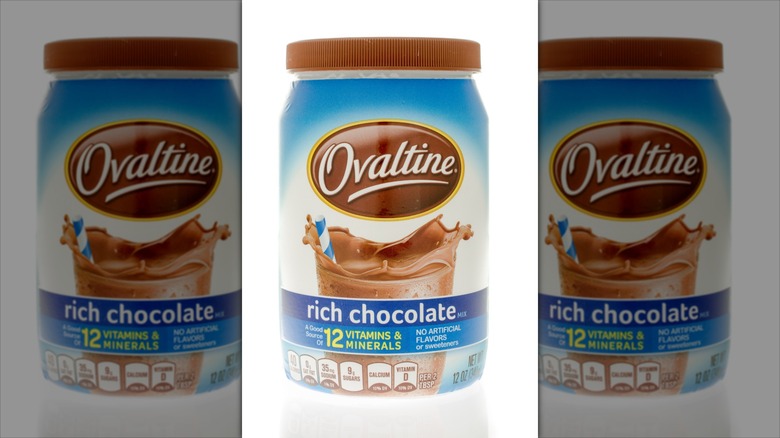
Before energy drinks promised to boost you and protein shakes tried to power you, there was Ovaltine, the original malted milk MVP. What many may not know is Ovaltine's origin story, tracing back to Switzerland, and a whole different identity. Born in 1904 as Ovomaltine, this creamy concoction was actually designed to nourish malnourished kids.
For many Americans, we sought more nourishment for our souls from this stuff as kiddos. Remember that warm mug of Ovaltine on a chilly night? Maybe even sneaking a heaping (taboo!) spoonful straight from the tin? Classic comfort, with a side of cheeky rebellion. If you grew up in the '70s, you probably remember the real, OG Ovaltine. Adults today swear the jars on shelves in stores today is not the same Ovaltine. As for kids today? They sip fancy chocolate milks and flavored protein shakes, completely unaware that there was once a world where Ovaltine commercials ruled the radio, decoder rings were the ultimate prize, and Little Orphan Annie sold you on drinking your vitamins.
Whether you had the powder mixed into milk, crunched on Ovalteenies, or nursed a cup of it on a wintry eve, Ovaltine was the drink that somehow checked both boxes: dessert, and a health-conscious parent's nod of approval. And when today's whippersnappers squint at you and say, "Ovaltine? What's that?" The joke's on them, for missing out on this malted magic.
Wink
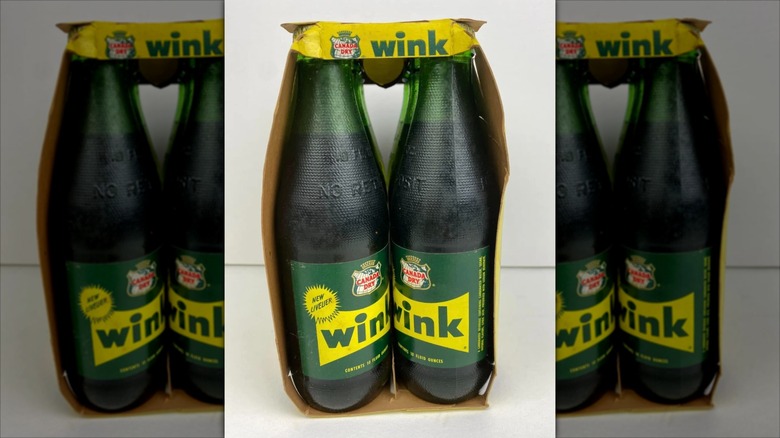
While Wink might not have made our list of retro foods that completely flopped, it just might get a nod (or wink?) as a honorable mention, at least if longevity is considered. Wink started out strong, cornering the market as that grapefruit soda that didn't just fizz, crackle, and pop, but also sass-ed. No, really, that is what the slogan said. Long before citrus sodas tried to go to the cool extremes or tap into the diet craze with zero sugar varieties, Wink was already ahead of that game, complete with a cheeky tagline to boot: "The Sassy One from Canada Dry" (via YouTube).
So, what happened to this sassy soda pop with confidence in spades? Well, it was introduced in 1965 and beloved all the way through the 1970s. Customers love that it was the rare non-dark cola star, refreshing bringing to the table a lighter, citrusy sip. And speaking of citrus, some of us still remember those green glass bottles glinting in the store coolers like citrus spotlights. Others remember the pseudo-Dr. Seussy mascot, the Wink Gink. What a strange little creature that was!
Today? Sadly, Wink has fizzled into near-myth. You can still find it in a few pockets of the country, but chances are you mention it to anyone under 30, and they'll blink at you like you're speaking an entirely different language. But for us? We still down to "get sassy" any day.
Orange Julius
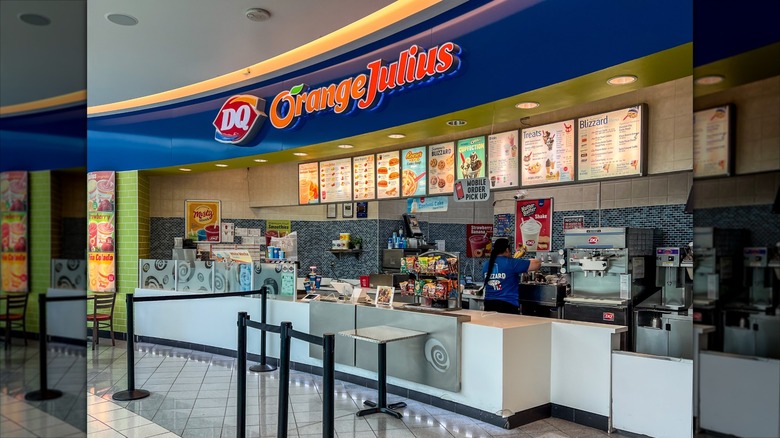
Before smoothies went all health-guru haywire and put on the ritz with uber-protein-packed add-ins, there was the good old Orange Julius. You remember? That creamy, frothy, sunshine-in-a-cup classic that turned every trip to the mall into a mini tropical vacation? It was part orange juice, part sweet syrup, and absolutely all citrus deliciousness. Ask its almost cult-like fan base, and they would classify that taste like an orange creamsicle, but elevated to frothy fruity fantasia status. And no, we do not think this is an exaggeration.
Born in 1926 in Los Angeles, this drink went from being handed to customers from a humble juice stand to being slung across counters by the bazillions (or what felt like it) via hundreds of locations by the 1960s. Later, by the 1970s and 1980s, Orange Julius stands were basically mall royalty, with mall rats being hard pressed to find one shopping center without the telltale glowing orange signs, long lines, and giant frothy servings of citrus bliss that became synonymous with Orange Julius.
Today? You might find an Orange Julius hiding inside a Dairy Queen, but it's rarer than stumbling across a movie theater floor that isn't sticky. Alas, many DQs have quietly phased it out, leaving only a handful of Treat Centers, where the legend still pours on.
Cragmont soda
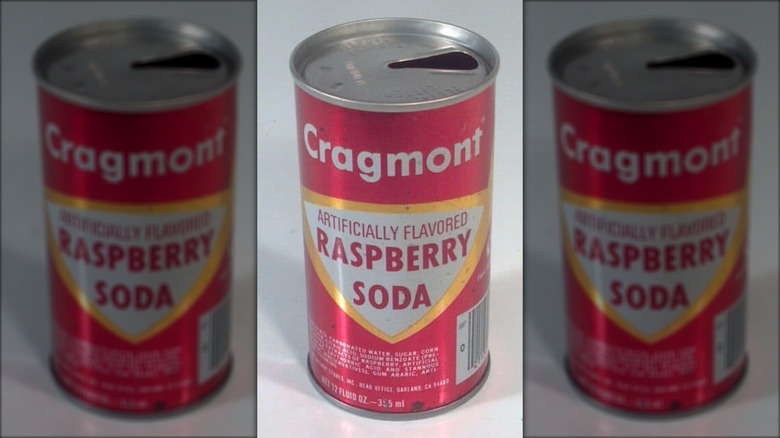
There are many highly anticipated soda flavors and brands everyone will be drinking in 2026, but sadly, it's safe to say that Cragmont will not be among them. While more than a few fancy craft sodas fill that lofty 2026 list, back in the 1970s, Cragmont was the rocking simplicity in the soda aisle. And that soda aisle was distinctly located in Safeway, as Cragmont was the grocery chain's in-house brand of bubbly bliss. And shoppers drank it up, maybe because of the taste, but more so because it was a steal.
Yep, these off-brand cola consumers knew a deal when they saw one. At one time, Cragmont was 10 cents a can, featured bold flavors, came in pretty dang huge glass bottles, and packed enough carbonation to (almost) curl your hair and knock your socks off. If your family lived on a budget (and whose didn't?), Cragmont was basically the house brand hero that kept every birthday and backyard barbecue popping, without breaking the bank. Cragmont came in all the greatest hits, just like regular, fancy pants brands, kinda like cola clones in every flavor of the rainbow. Orange, strawberry, black cherry, lemon-lime, and cola — these Cragmont sips were some seriously tasty (and economical) clones.
Kids today may see store-brand soda and turn up their noses. Meanwhile, 1970s babies grew up thriving on Cragmont, guzzling those giant glass bottles and colorful cans with zero fuggs given. Ah, those were the days.
Shasta
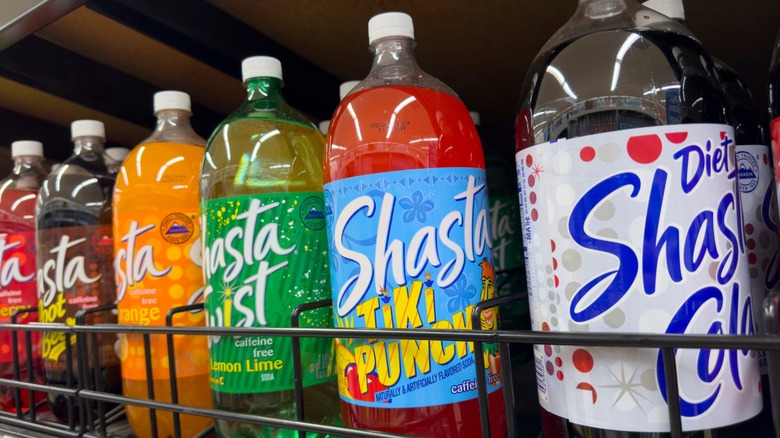
If you grew up in the 1970s, chances are Shasta was a central foundation to the sips that define your social life. This was the fun, preferred pop you cracked open at the roller rink before going another round of the chicken dance, the fizz fueling every summer pool party, and the can you reached for while riding your banana-seat bike home after a long day of hell-raisin'.
Maybe it really was the taste that made Shasta so popular. But it sure didn't hurt to have Greg Brady himself peddling the stuff, sending viewers swooning, then racing to the store shelves to snap up whatever it was he was selling. When Shasta was born in 1889 at the base of Mt. Shasta, the company started with mineral water, then dipped its toes into ginger ale, then ... boom! It became the first ever to put soda in cans. And if that wasn't enough, Shasta also was an early pioneer of low-calorie and sugar-free sodas. Before "diet" drinks were cool, Shasta was already slimming down your sip.
But what people really remember is those crazy flavors, like Tiki Punch, Grapefruit Zazz, Bubble Gum, Horchata, even Super Mario Bros. sodas. You could say Shasta wasn't afraid to get weird, cranking out more than 30 flavors like a mad soda scientist. And with shout-outs from Beastie Boys and cameos in "Seinfeld," Shasta not only quenched thirst, but also managed to cement itself in pop-culture history. What else can we say? "It hasta be Shasta" (via YouTube.)
Tang
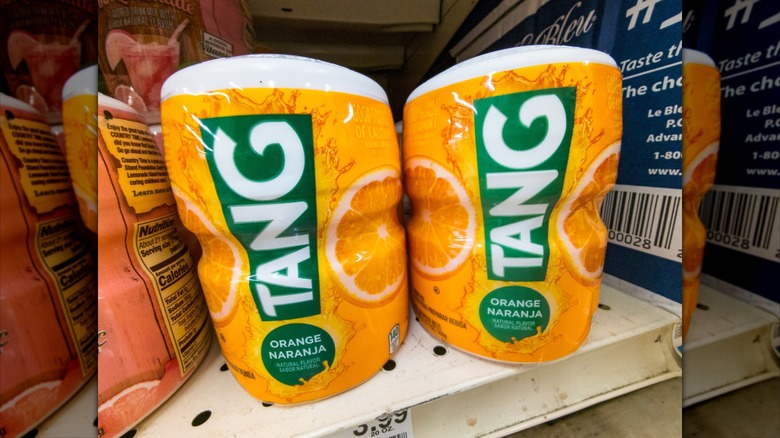
You could say this next pick is out of this world. We are talking about Tang. Do you guys remember all the buzz (Aldrin) about astronauts drinking Tang in space? It was a thing. A big thing. And we guess if there's one drink that can instantly launch you back to the 1970s, it just might be that neon-orange, mix-it-yourself miracle powder that turned every kid into their own kitchen astronaut. Basically, like "just add water and blast off!"
And man, did its marketing have lift-off. When NASA (yes, NASA) started packing Tang on space missions, that orange zing rocketed to a whole different stratosphere of legendary status. Parents bought it because astronauts drank it and they could justify it as juice. Kids drank it because it tasted like orange candy in powdered form. With commercials featuring gravity-defying gulping and space-age swagger, Tang didn't just quench kiddos thirst. It made you feel like a junior Buzz Aldrin, and that feeling was electric.
Skyrocketed to elite drink category thanks to NASA and celebrity crew, Tang lowkey became the universal drink of childhood, poured by the gallon in houses across America. It was a massive hit — that is until health-conscious parents started side-eyeing that equally massive sugar content, then stepping off the Tang train (dragging their progeny with them). Soon, many Americans said goodbye to their morning ritual of vitamin-C-ish orange dust. But overseas? Tang never fell back to Earth. It still thrives internationally, beloved across the Middle East, Latin America, and Asia.
Five Alive
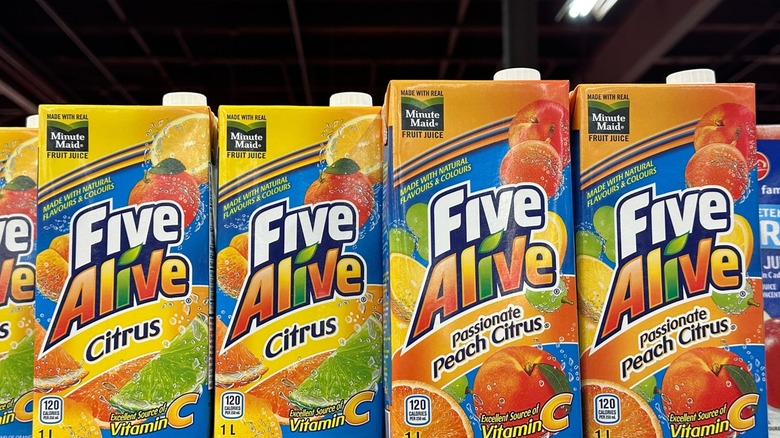
Before juice aisles were overflowing with coolers and shelves sticked with "cold-pressed" and "organic" beverages, there was a 1970s citrus superstar that filled the fridge. We are talking about Five Alive. This interesting blend of orange, lemon, lime, grapefruit, and tangerine was like if individual seeded wonders got together and formed a fruity, citrus supergroup.
Launched in the late 1970s, Five Alive came in many forms, from frozen concentrate to cartons, and eventually arrived on the scene in juice boxes to the joy of many a kiddo sipping noontime at school. It tasted like orange juice, but with far more flair and flavor-packed panache. Sadly, like many great beverages of yesteryear, although Five Alive was flying off the shelves in the 1970s, sales eventually fizzled in the U.S., and the brand had all but disappeared by the late '90s. Ill-received reformulations (looking at you, artificial sweeteners), changing tastes, rising prices, and dwindling advertising pushed it toward the shadows of the beverage aisle, and by the time most people stopped to wonder, "Hey, whatever happened to...?" Five Alive was gone.
But not everywhere. Canada and other countries abroad still keep the Five Alive ... alive, stocking it proudly while American fans are forced to scour Amazon or beg traveling friends for a contraband carton from wherever the heck corner they can be found. Regardless, our 1970s nostalgic love for Five Alive will never, never die.