

The Freezer Organization Trick That Most People Don't Bother With
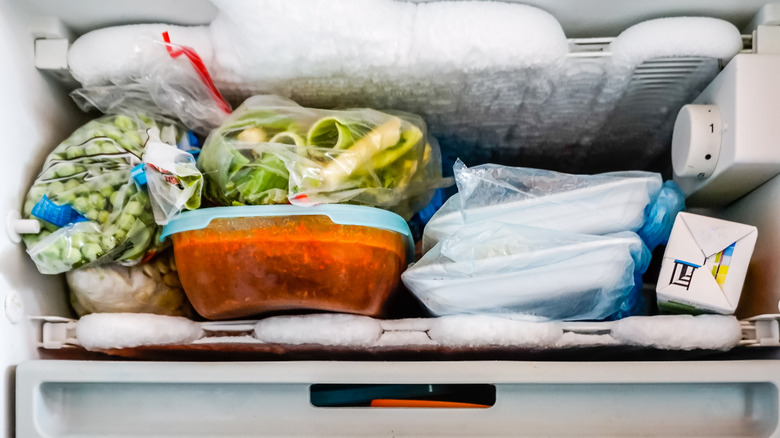
Your freezer can be a hot zone of chaos: Food freezes oddly in packages that then refuse to sit flat. You don't see what you have so you buy food that will only go to waste. You can't find that bag of frozen corn you swore you bought last week but haven't used yet. No matter how big or small your freezer, it is possible to keep it organized. My biggest suggestion is to use designated zones so you know where everything is.
The first thing you want to do, though, is purge your freezer. Pull everything out, give the interior a good scrub, throw away old food, and see what you can make that night for dinner. Then, you'll categorize, label, and date your food so you know what's what, and how long it's good for. (Not labeling and dating foods is a food storage mistake you should avoid.)
Once you have your food categorized and labeled, it's time to designate zones so you know where everything goes. Think of a section each for fruit, veggies, meals, desserts, breads, ingredients, and meat. If you know where to look, and what you have to work with, you can put everything back in the same spot and reliably know where to find it next time.
More freezer organization tips
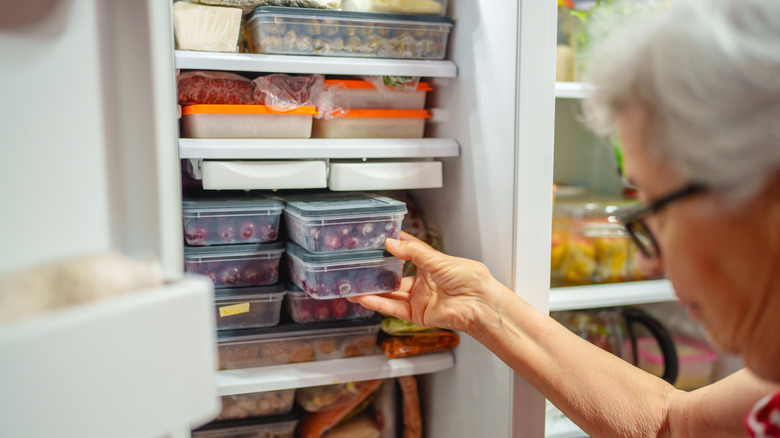
Other freezer organization strategies include buying silicone containers and a vacuum sealer to neatly stack your food without excess air and misshapen containers taking up valuable space. If you're a baker, storing cookie dough in ice cube trays is a game-changing hack.
Round plastic deli containers are one of our favorite food storage containers for every kitchen task for a reason: they're safe to use in the dishwasher and microwave, and they stack neatly in the freezer. They also have plenty of surface area for you to label your food, using masking tape on the top and the side.
Additionally, The New York Times guide to freezing any type of food includes how long specific foods can be frozen for. Once you have your freezer organized, you'll be ready to tackle your next kitchen project.