

Here's Why Pasta Always Tastes Better When You Dine Out
Food often seems to taste better when someone else cooks it. Part of that is because there's a mystery in each bite. At home, you've tasted your dish as you cook to adjust seasonings, so you know exactly what went into it. Unless it's something like a pie or a casserole, your first bite is usually exactly what you expected.
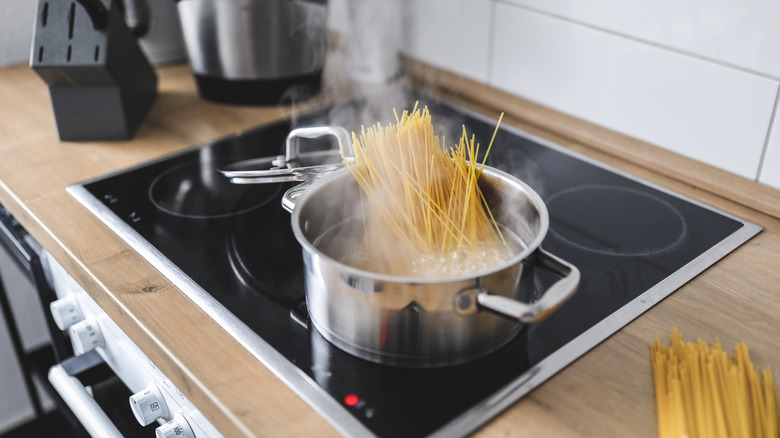
When you're out to eat and order pasta, this effect can be even stronger. The best restaurant kitchens have perfected their pasta routine. They've got the right equipment, no one's cramming an entire box of dry pasta into a pot that's half the size it needs to be, and their water is salted properly with the correct kind of salt. Something as simple as seasoning the water can make or break your pasta. One common Italian cooking hack is to season pasta water until it tastes like the ocean — salty enough to flavor the noodles completely. All that salt doesn't just improve the flavor of the pasta; it helps with the texture by keeping each noodle from clinging to the ones around it. A flaky sea salt works best, since its larger crystals dissolve evenly as the pasta cooks, unlike finer table salt, which is better for seasoning your food after it's cooked.
The perfect restaurant-style pasta
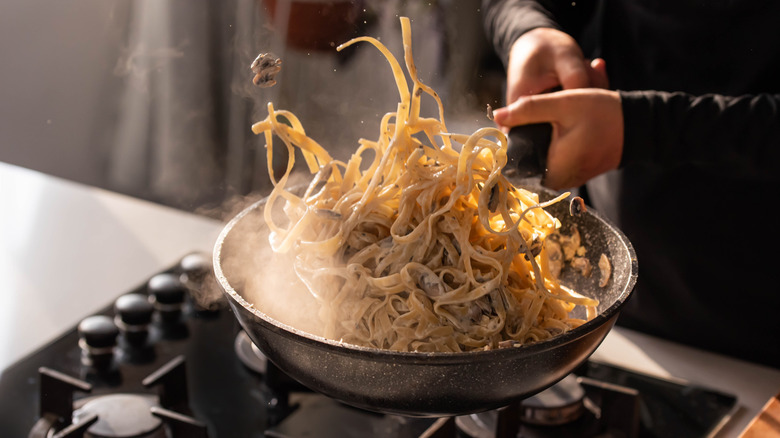
You'll never see a chef toss a spaghetti noodle against the wall to check if it's done. While it can be fun to toss noodles for tradition's sake, tasting pasta after about five minutes of boiling is a far better way to test doneness. At restaurants, they'll pull the pasta when it's a little undercooked and still has a slight bite, then finish it in the sauce so everything is well-coated. That's also why you should save some of your pasta water at home and not send it all down the drain through the colander. It's the starch you're after that makes the sauce cling to each piece of pasta. That's true whether you're working with fresh or choosing a quality store-bought pasta.
When you're cooking at home, it's easy to be stingy with salt, olive oil, butter, and the high-quality parmesan you splurged on. At restaurants, chefs aren't rationing the good stuff — they layer in salt, butter, and cheese until the dish tastes just right. That extra richness, along with each small professional step that came before it, is why a simple bowl of pasta from a restaurant is so hard to replicate.