

The Overlooked Step In Cooking That's Secretly Sabotaging Your Meals
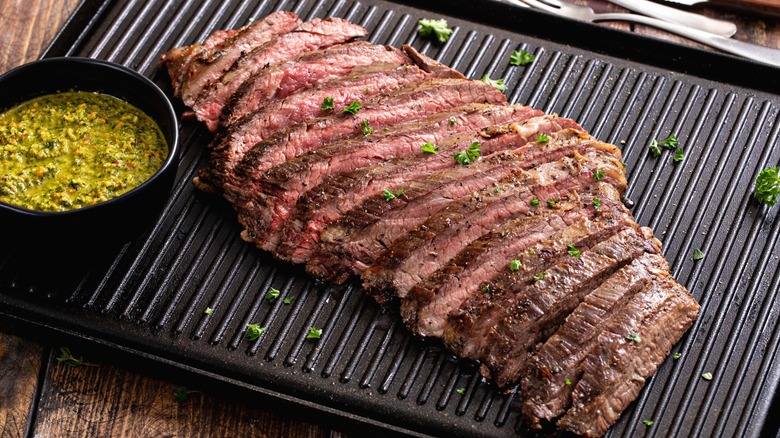
You did everything right. You got a nice piece of meat — a delicious and affordable bavette steak, perhaps, or a whole bird for Ina Garten's simple roast chicken — and you cooked it to its exact proper internal temperature. But when you cut into it, expecting to see a perfectly cooked interior, you find that it's disappointingly dry and overcooked. How could this happen after all your hard work? (And who can you sue?) Well, don't worry: you simply forgot to account for carryover cooking, and a minor adjustment is all you need to get it right next time.
You may have heard of something called the second law of thermodynamics, which holds that heat will always flow from hotter areas to colder ones. When you crack open a cold can of beer and leave it on your patio on a hot summer's day, that beer is only going to get warmer as time goes by. That's sort of what happens with carryover cooking. When you take your meat out of the oven, or off of the grill, the outside is much hotter than the inside, and that heat travels inward over the next 10 or 20 minutes. Depending on the size and thickness of the cut, the temperature can rise by 10 or 15 degrees Fahrenheit — which is a problem if you want your meat cooked to medium, only to get stuck with medium-well.
When to take your meat off the heat
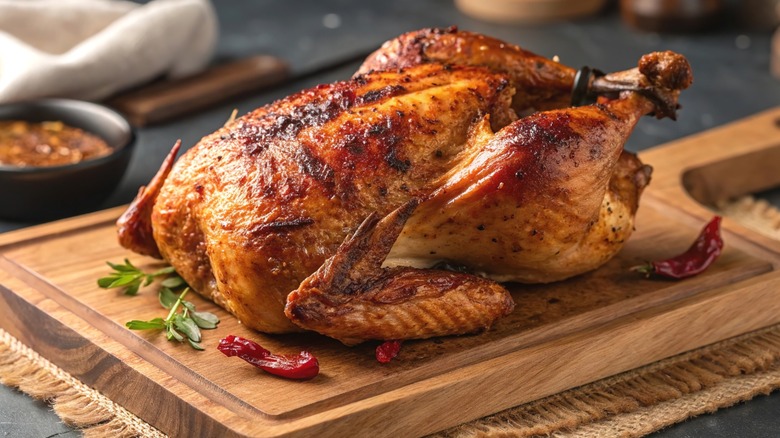
Luckily, you can use carryover cooking to your advantage. Instead of taking meat off the heat source once an instant read thermometer says it's hit your ideal temperature, take it off the heat about 10 degrees earlier. Then, when you set it aside and let it rest for 15 minutes, the carryover cooking will finish at precisely the right temperature. This way, you'll never have to deal with stringy beef or mushy chicken again — as long as you cook it properly in the first place.
Mind you, however, carryover cooking doesn't work the same for every single piece of meat. If you assume that a prime rib roast and a regular ol' boneless skinless chicken breast will carry over the same, you're sorely mistaken. There are a few different variables to keep in mind, including the cooking temperature (Higher heat means more carryover cooking) and the size of the cut of meat (With more mass, carryover cooking increases). If you're working off of a recipe, this will usually be taken into account for you. But if you're freestyling on your own, you may find that you'll have to do a little trial and error. Still, though, we'd say that perfectly cooked meat is worth precision testing.