

Why Walmart's Great Value Milk Is So Cheap
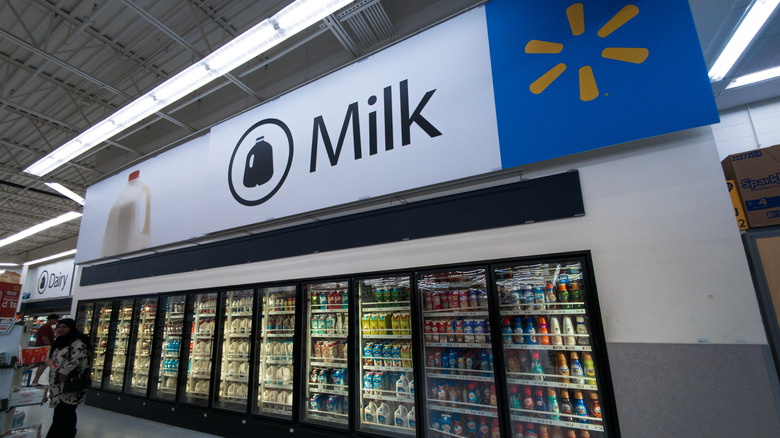
Whether it's your favorite or least favorite grocery store, Walmart has made itself one of the best grocery store chains for budget shoppers — especially with modern grocery prices changing the way we shop. The milk you once only got from your favorite local grocer now costs twice as much as Walmart's Great Value brand, which may make you head to Walmart just to save some money. Walmart can maintain low milk costs in a high-cost world because the company began opening its own milk processing facilities in 2018. The first facility opened in Indiana and produces half-gallon, gallon, whole milk, 2%, 1%, skim plain, and chocolate milk. Each is processed to be sold under the Great Value label.
Since the Indiana facility, Walmart has opened another one in Georgia, and one in Texas is set to open in 2026. The facilities will purchase the milk from a few dozen local farms within a range of a few hundred miles from the plant. Each processing plant will employ around 200 people and contract around 100 truck drivers. While the cost of Walmart-owned processing facilities sounds expensive, it actually benefits Walmart in a lot of ways through large state-provided tax breaks and the ability to cut out middlemen entirely. These cost savings allow Walmart to slash the prices on Great Value milk enough to bring customers into the store who are likely to purchase more than just milk during their visit.
What's behind the curtain?
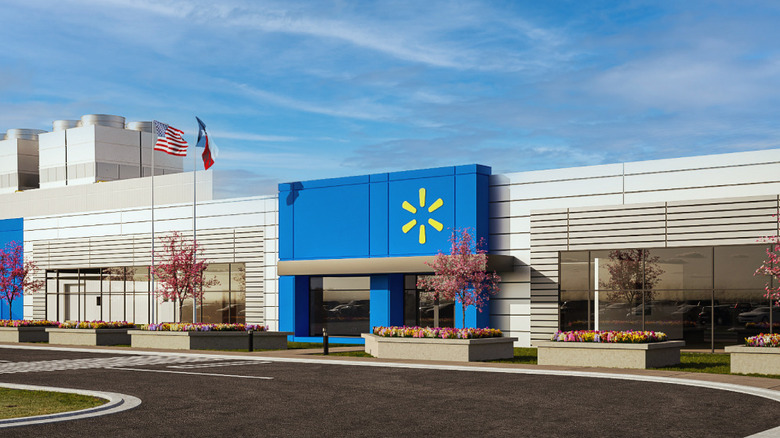
Saving a few dollars on a gallon of milk and the processing facilities bringing in a few hundred jobs sound delightful when you don't look into anything beyond that. But behind the curtain, the milk wars are raging, and everyone might not be benefiting from Walmart's milk processing plants. When the milk processing facility went up in Indiana, it forced another bottler, Dean Foods, to end contracts with around 100 farmers in the area, as the company couldn't compete with Walmart's production costs. Only 30 farms and cooperatives in the area were then contracted with the mega corporation.
Walmart's aim to cut out all middlemen impacts more than just farms, as all pieces of the puzzle will be employed by the grocery chain. Local food processors, packagers, wholesalers, and distributors might feel the strain as farmers either sign contracts with Walmart or stop being able to continue their work. Lower dairy sales in the United States, combined with corporations taking control over the industry, mean that more small, local dairy producers face being pushed out altogether. For the consumer, this presents a challenge of wanting to support local businesses while being forced to tighten their budgets amid high grocery costs.