

13 Dinners Middle Class Families Ate On Repeat In The '60s
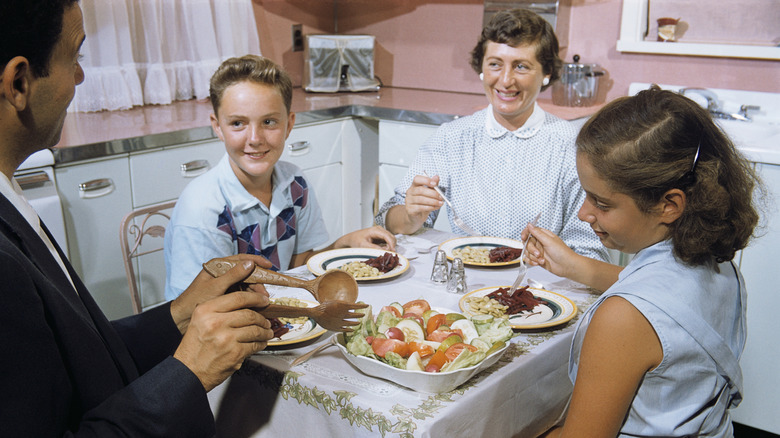
When you imagine food from the 1960s, what do you envision? If you didn't actually live through the decade, your mind might conjure up images of TV dinners and Jell-O molds, fondue and casseroles. However, the food of the 1960s was a bit more varied than you might think.
Yes, there were TV dinners, keying in to the growing need for convenience in the kitchen. More women were entering the workforce, and the growing popularity of television sets meant more families were spending their evenings gathered around it to watch the latest episodes of their favorite shows together. Yes, fondue parties were all the rage, and casseroles — which gained popularity in the prior decade — remained a staple. Meanwhile, other forces were at play that brought in international fare and slightly fancier dishes — such as, for example, Julia Child's sweeping entrance into the American food scene, with both her television series, "The French Chef," and her now-iconic cookbook, "Mastering the Art of French Cooking," debuting in the earlier part of the decade.
Let's take a look at some of the dinners that middle-class families would've enjoyed in the 1960s. Whether they were looking for something suitable for a busy weeknight, or something a bit more upscale to serve at a dinner party, these dishes likely ended up in the rotation.
Spaghetti
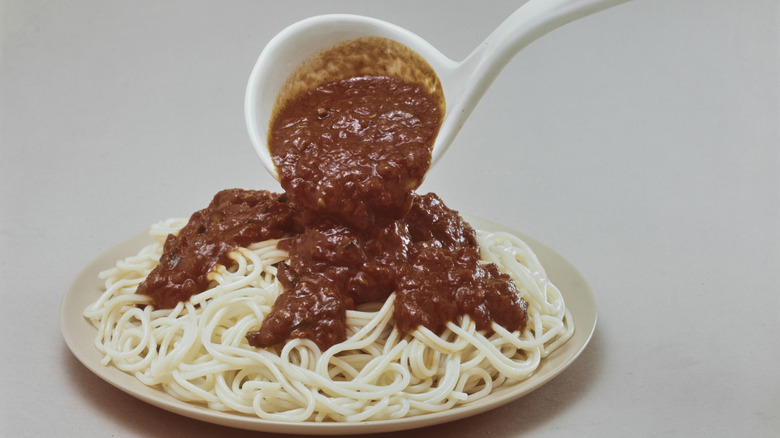
Spaghetti is such a simple staple today that you might take it for granted, or, assume it's just always been around. At its most basic, all you have to do is boil a box of pasta and open a jar of sauce: Dinner is served. However, spaghetti wasn't always a top meal for American families.
A version of what we now know as dry pasta appeared in Italy in the 13th century. Pasta in general was a part of the United States' culinary tradition from the country's beginnings (Founding Father Thomas Jefferson was inspired to design a machine to make pasta after his 1789 visit to France as ambassador). With dry pasta and meal kits like Chef Boyardee, which debuted in 1928, being readily available on grocery shelves, American households could whip up Italian-inspired food quickly, and inexpensively.
So all that said, spaghetti certainly wasn't anything new for American families in the 1960s — but it did become more popular nationwide during this decade. The reason? After soldiers returned home from serving in European countries in World War II, they also brought some of the influences of the cultures, including food. Furthermore, cinema and other pop culture influences caused Americans to romanticize the perceived Italian lifestyle, and with it, the meals that Americans thought Italians might be eating. Add on spaghetti's simplicity, and you had a winner for middle-class families who wanted something that could be thrown together with little effort, but that still felt a little nice.
Tuna casserole
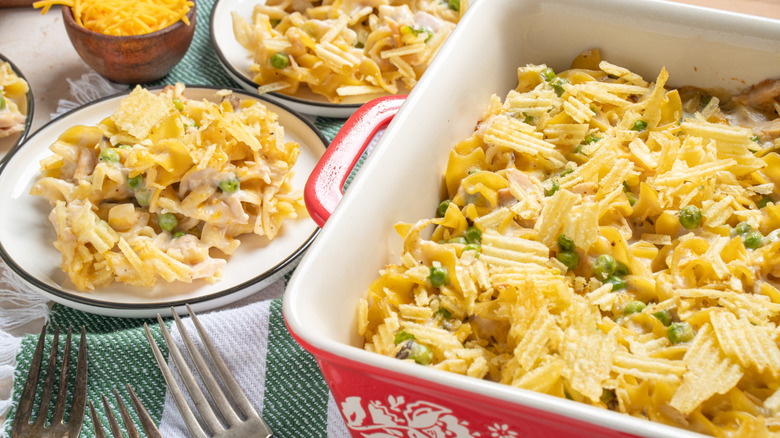
It's hard to deny that tuna casserole is a dish that is rib-sticking, comforting goodness — and, something you can put together on a stretched budget. The dish was not invented in the 1960s; instead, the first evidence of a recipe for the dish comes from the 1930s. And over the next few decades, the casserole grew in popularity, thanks to a few factors.
For one, Campbell's cream of mushroom soup had hit the shelves in 1934, the soup being a key ingredient in tuna casserole. Also, as American kitchens faced restraints during World War II, the dish became something one could reliably make — even when short on time, money, and skill. Once the 1960s rolled around, canned foods were even more readily available on store shelves, and convenience was even more important to the average home cook. As such, tuna casserole easily cemented itself as a staple in the dinner rotation of middle-class families.
Meatloaf
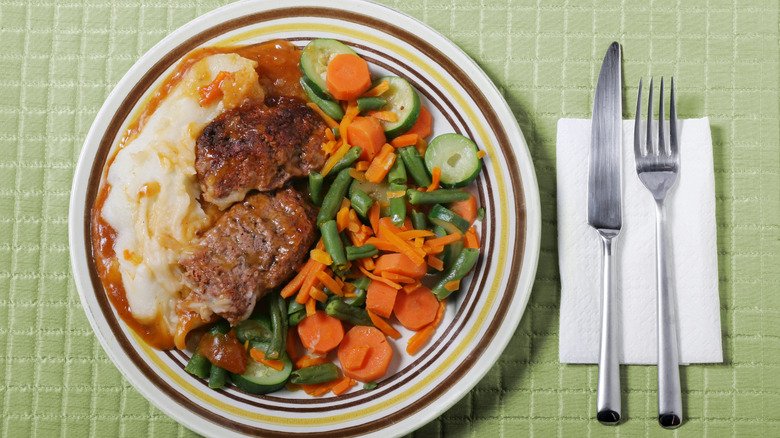
Meatloaf is a budget-friendly, versatile, filling dish that has become extremely ingrained within the idea of what the middle-class American family was eating throughout the mid-century. Meatloaf, though, was hardly a 1960s invention.
The origins of meatloaf can be traced all the way back to the 1800s, when cooks used up leftovers to make a loaf they would serve for breakfast. Even then, it fulfilled the same purpose as it does now — serving as a cheap, nourishing, and easy meal. No wonder it was a go-to during the Great Depression and World War II, too.
Once the 1950s and 1960s rolled around, meatloaf had become so popular that one could find it all across cookbooks and restaurants. That said, not even meatloaf — as simple and straightforward as it usually is (most recipes just require beef, binding ingredients, seasonings, plus sauce for the top) — could escape the mid-century culinary slant toward experimentation unscathed. For example, one 1960s recipe from Parade magazine called for three ingredients: beef, soup mix, and evaporated milk. We like to think there are better ingredients to add to your meatloaf, if you want to improve it.
Sloppy joes
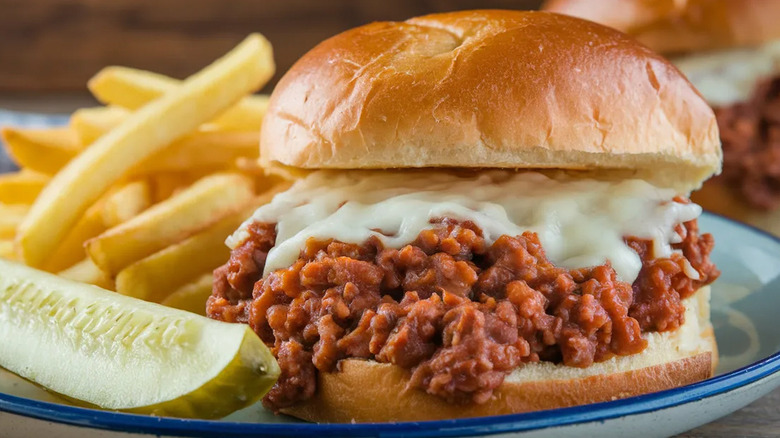
Sloppy joes are another meal that grew to popularity during the 20th century because it ticked so many important boxes for home cooks — and, honestly, the sandwich is ticking those same boxes today. When you're looking for a meal that's fast, easy, affordable, and simple, sloppy joes come to the rescue. They're easy to upgrade, too, whether you're melting some cheese on top or mixing in some extra condiments for a little "oomph."
Supposedly, the Joe behind the sloppy joe was actually named José, and he invented the sandwich in Havana, Cuba. Then, apparently Ernest Hemingway, who loved the sandwich, brought it to Key West when a friend opened a bar and Hemingway convinced them to pick up the recipe.
In 1969, Manwich came on the scene. While it's not hard at all to make your own sloppy joe sauce from scratch, the appearance of the canned sauce showed how important it was for home cooks to prioritize convenience.
Swedish meatballs
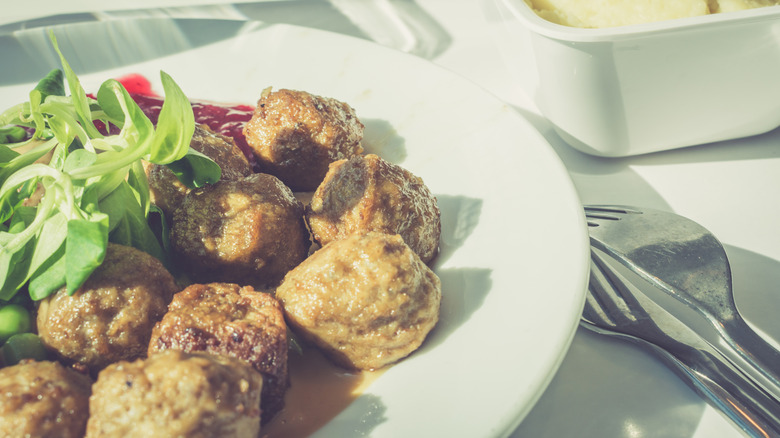
Just like Americans were attracted to the idea of the Italian lifestyle during the 1960s, they also found themselves drawn to other European cultures during this decade as well — such as what they might find in Sweden. Enter Swedish meatballs.
It's easy to see why. Swedish meatballs gave homemakers that worldly, European vibe that made things feel just a tad more sophisticated. They were great for both regular dinners and special occasions such as dinner parties — and, they were convenient, easy, and cheap. Making the meatballs was just a little more difficult than making a meatloaf. You could go the from-scratch route, and spend extra time on rolling the meatballs by hand and making the gravy. But, you could also bring in some shortcut ingredients to do the heavy lifting: such as instant gravy, canned soup, or soup mix. Serve the meatballs over rice, and you had a meal that families ending up loving, for generations to come.
Fondue
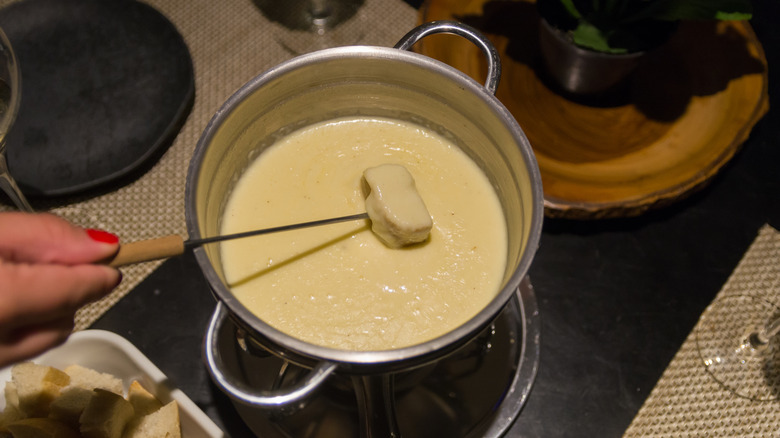
Fondue just feels old-school. Do you own a fondue pot? Have you ever had it at home? Maybe the last time you ate fondue was when you visited a specialty restaurant like The Melting Pot.
However, in the late 1960s and 1970s, fondue and fondue pots were a kitchen must-have. Like other popular dishes of this time period, fondue was impressive and felt worldly and sophisticated, but it was also incredibly easy to throw together and could actually be quite cheap. It's also a great dish for a party, with everyone enjoying a shared meal from the same pot.
A post on Reddit asked if users remembered their parents ever throwing fondue parties throughout the 1960s and '70s, and many chimed in with memories, as well as affirmations that it's a tradition they still stick to — because, after all, who wouldn't want a meal that's basically just dipping things in melted cheese?
Chicken a la king
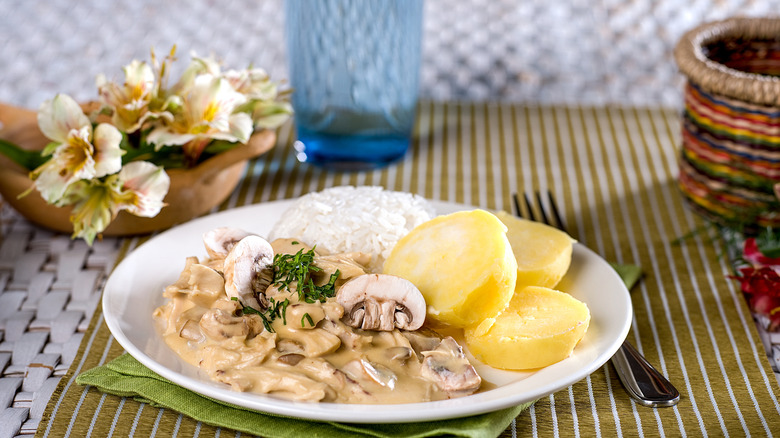
There are a lot of older recipes that have fancy names that don't really tell you what's going on underneath the hood. For instance, what exactly is chicken a la king? If you didn't know, you might be surprised to find out that it's actually just chicken cooked in a cream-based sauce with mushrooms, peas, and pimentos.
Chicken a la king is a dish that can be dressed up, or served as a comfort food favorite, depending on how you present it. For instance, if you make it inside a puff pastry shell, you have something that looks decidedly fancy. However, throw it on top of a piece of toast or some rice or noodles, and you have a dish that feels very much like middle-class comfort food.
It's no surprise that this dish (which actually got its start at a hotel restaurant, though the actual hotel of origin is up for debate) was popular with 1960s cooks. It was versatile and easy, but could also be impressive (including the name). If you try this 1960s favorite for yourself, consider giving it a modern upgrade: Make chicken a la king heroes, for example, for a sub sandwich with style.
Chicken kiev
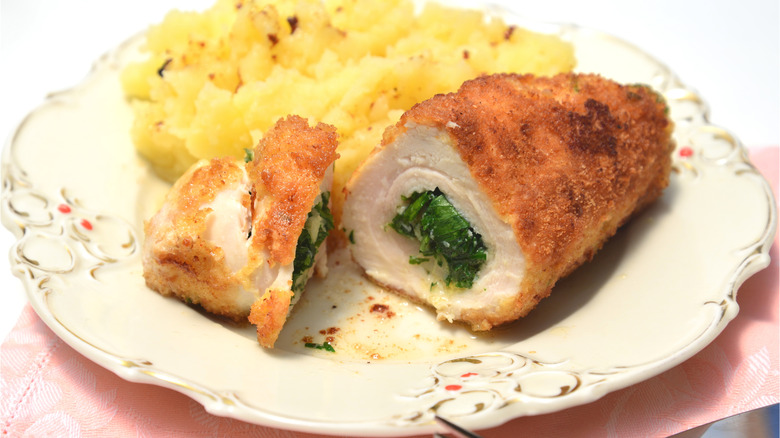
Here we have another chicken dish that feels fancy, and in this case it's not only because there's the name of a European city attached. (Really, it seems like 1960s home cooks loved any dish that made them feel a bit European.)
Chicken kiev, though, does not have Ukrainian roots — despite its name. The dish was originally created by the French, and eventually made its way to Russia via Russian chefs who trained in France. In the United States, post-World War II chefs turned it into a fine dining dish, with its popularity growing into the 1960s.
Back to the fanciness factor — this wasn't an easy, convenient meal like a lot of the popular options on this list. Preparing chicken kiev is not as easy as opening up a few cans and throwing things into a casserole dish. You have to flatten some chicken breasts, wrap them around an herb and butter mixture, and then bread the breasts before frying them. It's labor-intensive. Still, this dish gained status among 1960s home cooks in part because it could impress, making it the perfect thing for displaying at that oh-so-important dinner party.
Steak Diane
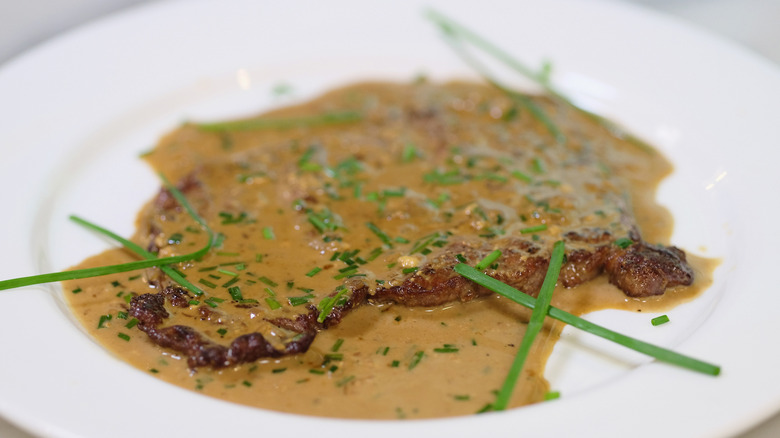
Steak Diane supposedly first appeared in fine dining restaurants in London in the 1930s, before it became something that people were really into in 1960s America. So, what exactly is steak Diane? It's basically steak with a sauce made with butter, cream, mustard, and Worcestershire. Tomake things even more special, the steak might even be finished off with a bit of tableside flambé while eating out, depending on the dining establishment.
Theories about where this steak got its name differ. However, many think that the name comes from the Roman deity Diana, the goddess of the hunt. Whatever the case, this is a dish that sounds impressive, and yet, it's relatively easy to pull off. As long as you can pan-fry a steak and make a sauce from the juices, you can make steak Diane and serve it to your dinner party guests (though the at-home flambéing is optional).
Beef stroganoff
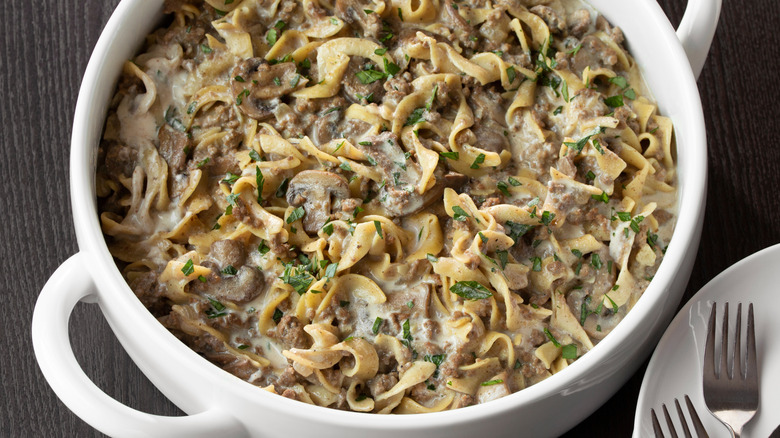
Another dish that started off in Europe and found its way to American dinner tables in the 1960s, beef stroganoff was named after the Stroganovs, a wealthy 19th century Russian family. Like chicken kiev, beef stroganoff blended Russian and French culinary approaches — it was the Stroganov's French chef who created the dish for a family member. As Russians emigrated from their country following the Russian Revolution, the dish traveled, too. It wasn't long before home cooks in other countries picked up on making the satisfying meal.
Beef stroganoff was a staple of the 1960s among middle-class American families for a few reasons. First, there was that easy convenience factor. Then, there was the international influence element that was so popular with home cooks of the time. With just some beef, onions, mushrooms, sour cream, and a few other items, you could put together a dish that was as filling and comforting as it was delicious.
TV dinners
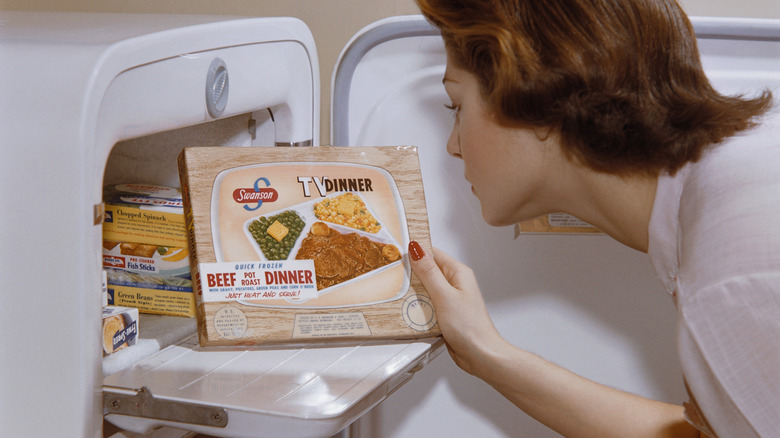
Not every dinner that middle-class families ate on repeat in the 1960s was made by a home cook standing at the stovetop. Sometimes, a busy parent could simply reach into the freezer and find a (mostly, after a little heating) ready-to-eat meal waiting in a box. We're talking, of course, about the TV dinner.
Swanson — a brand that you're probably already familiar with — is given the credit for launching the TV dinner into American culture during the mid-20th century. The brand started by offering turkey-focused holiday meals in a tray, and by 1954, had sold more than 10 million TV dinners. Through the following years, other brands followed Swanson's lead; and, more televisions ended up in American homes. The type of TV dinners one could buy expanded to everything from fried chicken meals to pot pies, pot roast to Mexican fare. By the 1960s and 1970s, TV dinners were more or less de rigueur in American households.
Boeuf bourguignon
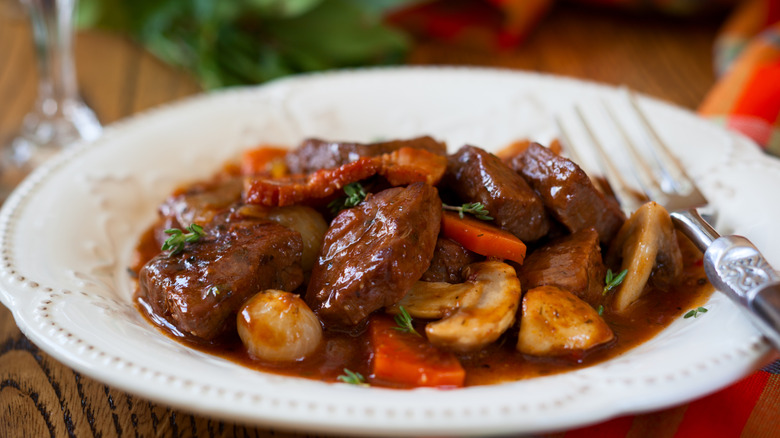
If there's any famous celebrity chef who influenced 1960s home cooks, and whose influence is still felt today, it would be Julia Child. And if we're going to narrow Child's influence down to a specific dish, it would be boeuf bourguignon, with its notable increase in popularity during the decade.
If you're not familiar with boeuf bourguignon, it's relatively straightforward. It's French beef stew, more or less. However, as you could probably guess by now, this dish appealed to American home cooks in the 1960s because it was not only comforting and relatively familiar — it also came with European flair.
It was Julia Child, though, that brought the dish to the greater public's attention, when her landmark cookbook, "Mastering the Art of French Cooking," was published in 1961. The popularity only increased after Child made the same dish on her televised show, "The French Chef," in 1963. Admittedly, this dish wasn't one that was quite as easy as spaghetti or tuna casserole — but it's one that had a certain rustic appeal that American cooks could latch onto.
Teppanyaki
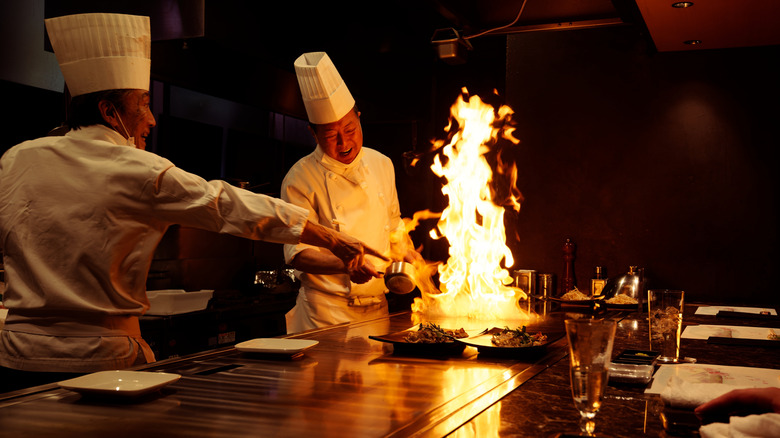
Teppanyaki, the Japanese cooking style featuring chefs cooking on a grill right in front of you, started to become popular in the United States in the 1960s. If you call this hibachi, you're not alone. The two styles are different in several ways, but a lot of Americans use the terms interchangeably.
While the history of hibachi-style restaurants goes back centuries, it's assumed that the first teppanyaki restaurant in America was Benihana, opened in 1964 in New York City. Yes, that's right. The same Benihana that you may have very well visited on your own is responsible for bringing this entire cooking style to the United States.
That first Benihana received great reviews, and other restaurants began adopting its methods. The restaurant concept spread, and now, you can probably very easily find such an eatery within your own neighborhood. But in the 1960s, this was a brand new and exciting concept, making it one that 1960s families were eager to try out.