

The Fancy French Dish John Wayne's Third Wife Made Him All The Time
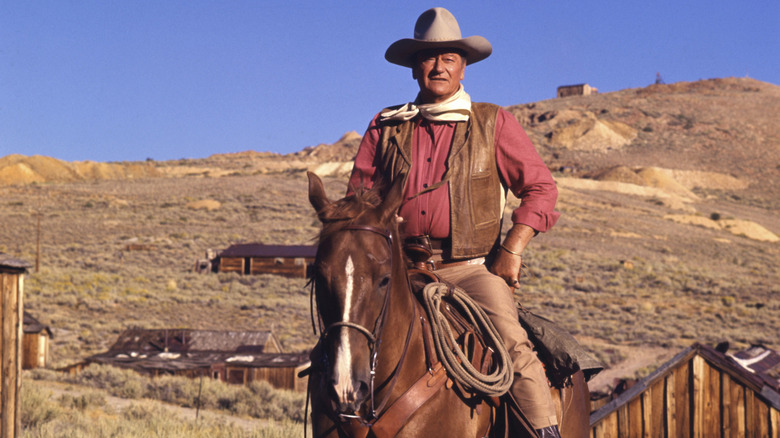
John Wayne was a cowboy. Something of a tough guy. He was fearless on horseback, had a manly stride, looked great in a Stetson, and chewed tobacco he wasn't afraid to spit out. And he was never above a good barroom brawl — at least on the silver screen. But John Wayne (aka Duke) also had a softer side: He loved a good soufflé.
Wayne's third wife, Pilar, had a special recipe for a soufflé that she used to make him when he was shooting movies on location (which would have been often since he acted in 175 different movies during his long career). Made with eggs, cheese, green chilies, milk, onions, and sometimes tomatoes; this dish was French with influences of New Mexico — the American Southwest meets Par-ee.
Rumor has it that Wayne first ate the soufflé while brunching with the then-president of Mexico, Miguel Alemán Valdés. He enjoyed it so much that Pilar later made a habit of regularly making him this favorite dish. Eating soufflé gave Wayne so much joie de vivre that he kept the recipe on him so that he or anyone with a little cooking savoir-faire could whip up a batch wherever he traveled (perhaps with a little Abba-Zaba candy for dessert). Today, this soufflé is so connected to John Wayne that many recipes now use the name Duke's Soufflé.
What is a soufflé, anyway?
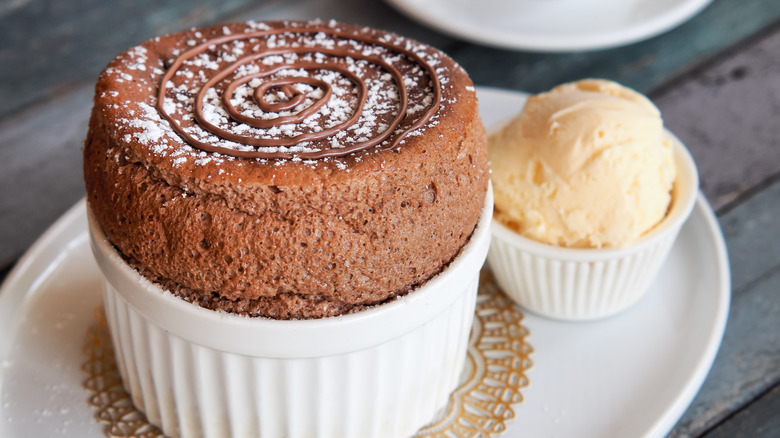
The French do many things très bien. They are leaders in fashion (scarves, anyone?), they make the world's best croissants (which only the truly uncouth would dare to butter), and they are known for all things puffy: puff pastry, crème puffs, and John Wayne's favorite puffery, the soufflé. But what exactly is a soufflé and how did it come to be?
Soufflés come in many flavors and varieties, from sweet to salty and fruity to cheesy. The main flavoring ingredients (meat, cheese, chocolate, etc.) are mixed with a base made of butter, eggs, and flour, then everything has to be delicately combined with beaten egg whites and a whole lot of air as it's baked. The hot oven causes the egg whites to expand and rise, and that is what makes a soufflé all puffed up. A soufflé wouldn't be a soufflé without that light, buoyant texture and height.
The soufflé dates back to the 1700s in France, though it became more mainstream in 1815 thanks to a famous cookbook published that year by Marie-Antoine Carême (considered the originator of fancy French cooking). Soufflés have changed over the centuries, but their upward trajectory continues. It can be challenging to make a soufflé, especially one that has puffed up nice and evenly, but with a little practice, determination, and some helpful soufflé-baking hacks you can also rise to the occasion.