

The Gelatinous Old-School Dessert That You Either Love Or Hate

Containers of Kozy Shack brand tapioca pudding were a fixture in our fridge when I was a kid, but I don't recall being a fan. At best, it was as if the pudding was infiltrated with floaters — like small bits of pudding had congealed and solidified, suspended in the rest of the pudding. Sort of like when your cheese dip gets all sticky and gummy around the edge of the container, and little blobs flake off and fall down into the good part. Or, like really mushy, saturated Cheerios floating in a bowl of thickened milk. And at worst, tapioca was like someone had snuck a stash of boogers into the pudding cups.
I am not alone in my tapioca tentativeness. Social media is overflowing with posts expressing opinions on both sides of this great pudding divide. Some people praise it for its sweet flavor. Or they love it because it invokes nostalgia, reminiscent of family recipes and childhood desserts with Grandma. Others savor the sensation of tapioca pearls sliding down their throat.
On the other hand, the tapioca haters think the pudding looks weird and can't get past the texture. One Redditor said their husband thinks it's "slimy." Some say it looks like fish eyes. A Reddit user likened it to "snot balls in glue." Someone else called it "frog spawn." And there is no shortage of vomiting and gagging memes being posted on the topic. The proof is in the pudding, after all.
But what is tapioca?
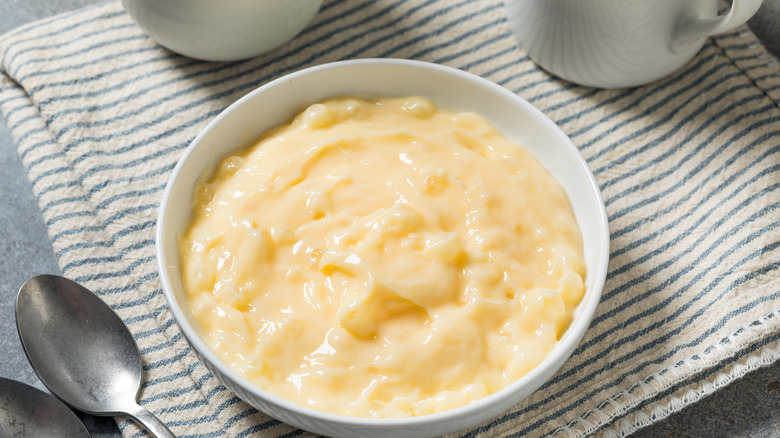
So what exactly is that gummy, chewy substance in your pudding and bubble tea? Tapioca comes from the cassava (a.k.a. yucca) plant, a starchy root vegetable that grows in tropical areas of the world. It is a pulpy substance that is extracted from the plant's roots. When this pulp is dried and ground up, it becomes tapioca flour, which is often used in both cooking and baking. An added bonus is that tapioca flour can stand in for cornstarch and wheat-based flour to make gluten-free recipes.
If small pieces of tapioca flour are steeped in water before being boiled, they thicken into globs, forming little balls ranging in size. Those are the tapioca pearls that boba tea and pudding have become famous for. Besides just tasting good or gross, depending on who you ask, tapioca pearls can also be useful for helping to stiffen clothes or bind scents when used as a laundry starch.
There are a few downsides of tapioca, however, that go beyond the slimy feel or consistency similar to frog eggs. For one thing, it is mostly empty carbs without a whole lot of redeeming nutritional value. But what's more, tapioca contains cyanide — or, at least, linamarin, which is converted to cyanide once you eat it. You should never eat tapioca raw. The good news is that in this country, tapioca has usually been properly processed and rarely has enough cyanide to cause any trouble. So the worst you'll have to worry about is whether or not you can handle the gelatinous texture.