

If You Live In These States, Your Trader Joe's Still Doesn't Sell Alcohol
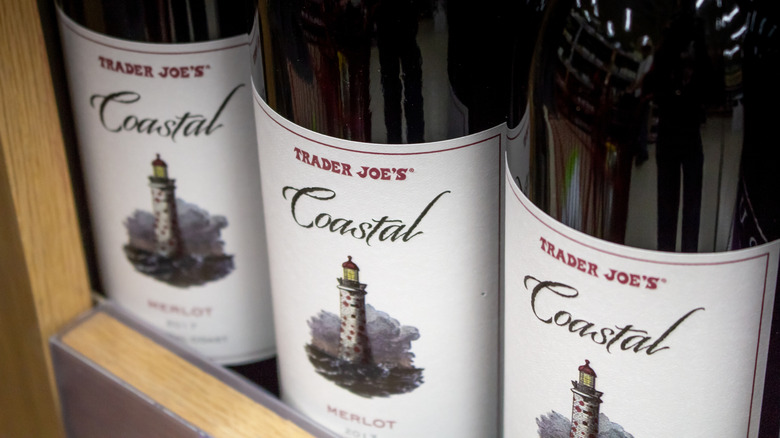
Fans of Trader Joe's have their reasons for remaining true to TJ's. Some appreciate the competitive pricing, the impressive cheese selection, or the where-else-are-you-gonna-find-it items, such as Thai coconut cakes, cherry pie-flavored cookies, and granola butter. In fact, Trader Joe's has such a following that it even created a Hall of Fame to glorify its most popular products. But if you're going there to grab a bottle of chardonnay to go with that triple-crème brie you're stocking up on, you might be out of luck depending on what state you live in.
If you happen to reside in Delaware, Maryland, Pennsylvania, or Rhode Island, Trader Joe's sells no booze of any sort. In New Jersey, only two of the 21 stores in the state sell alcohol, and one of those two stores has limited hours for alcohol sales. Massachusetts is hit or miss, but most of the roughly 25 store locations abstain from alcohol sales.
So, that means you can buy booze in 38 states (Trader Joe's only has locations in 42 states), but even these stores don't always make purchasing alcohol a given. For example, Connecticut, New York, and Utah Trader Joe's only sell beer. And in some states, Trader Joe's limits the hours it sells alcohol on Sunday or doesn't sell alcohol on Sundays at all.
Why do only some Trader Joe's locations sell alcohol?
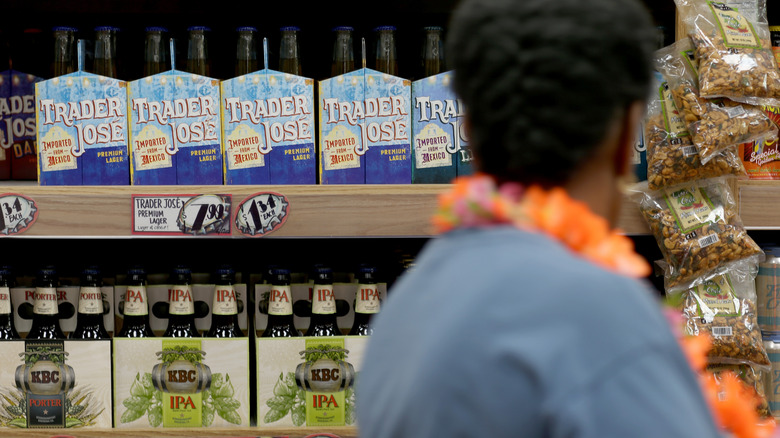
So, why is it that some Trader Joe's stores sell alcohol and others stay dry? For the most part, these variations are due to state liquor laws. These laws help explain why some states don't sell alcohol at all and why some have limited hours for alcohol sales on Sunday or don't sell alcohol at all that day. When a state regulates alcohol sales on Sunday, these are known as blue laws (aka Sunday laws), which have historic and religious roots.
However, whether to serve or sell alcohol can also be affected by city or county law. That's why some TJ's locations in Massachusetts are able to stock and hawk hooch and others aren't. Laws can also regulate what sort of alcohol can be sold (as in, beer, wine, or liquor). Many state and local governments regulate alcohol products differently based on the alcohol by volume (otherwise known as proof), with some states eliminating the sale of higher-percentage alcohol outside of designated stores. This mostly affects liquor, but a few states also rule out grocery store wine.