

The Olive Garden You Grew Up Going To Looks Way Different Today

Ever since the first location opened in Orlando, Florida in 1982, Olive Garden has been a pasta lover's dream. Today it's a challenge to find anyone who hasn't eaten at Olive Garden, but once upon a time it was a new chain restaurant that people were dying to try once they realized the all-you-can-eat soup, salad, and breadsticks rumor was true. The breadsticks are still abundant and the Olive Garden experience continues to delight us, but the decor has certainly changed in the decades since opening. Originally, the sought-after ambience was that of an Italian garden.
In those early days, the restaurant donned large plants in baskets hanging from seemingly any free ceiling space alongside tall potted trees with large green leaves beckoning guests to grab a seat and beg their server to leave the cheese grater at the table (they won't). Red and white umbrella fixtures hung over the tabletops, and instead of the familiar Tuscan atmosphere of today's establishments, the walls were left white, making the dining area feel spacious. Olive Garden doesn't see menu changes frequently, so when it does happen it's newsworthy, like when the company recently decided to add a "Lighter Portions" menu. Meanwhile, the aesthetics of the chain have been updated several times throughout the years.
Olive Garden is no stranger to changes in decor
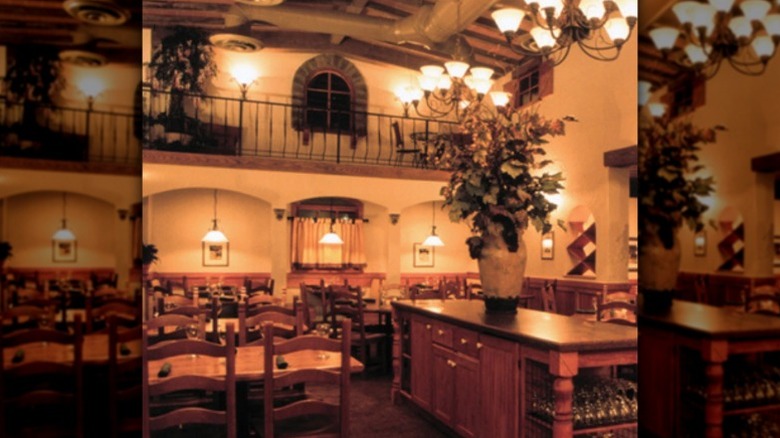
By the late 1980s, Olive Garden was already a family-favorite dining spot with over 100 locations nationwide. Despite the brand fully catching on, Olive Garden received an all-black logo update geared toward sophistication in 1989. Then in 1998, the logo changed once more to one that many are familiar with today: A green script garnished with grapes as a nod to the intimate Tuscan farmhouse atmosphere of the interior. This change fed into the idea that Olive Garden was a more upscale chain restaurant that called for a glass of wine with your Tour of Italy entree. This theme didn't last either, as Olive Garden again redesigned the interior to be more open and bright in the 2010s.
Even with a successful menu, restaurants like Olive Garden undergo remodels and aesthetic changes in order to stay relevant. Keeping up to date with the latest trends while still maintaining the brand's identity is a challenge all companies face at one point or another. Not keeping up to date with evolving styles would leave Olive Garden looking like a trendy early 2000s kitchen — which some might actually be happy about. Restaurant overhauls are also an important part of general maintenance. The oldest chain restaurants that are still up and running might not be so if no furniture was ever replaced. Dining chairs, decor, and tables lose their charm when they've got years of wear and tear from countless customers and staff. Each Olive Garden revamp creates an atmosphere for a new generation to remember, even as older generations remain nostalgic for an era more catered to them.