

Where McDonald's Burger Buns Actually Come From
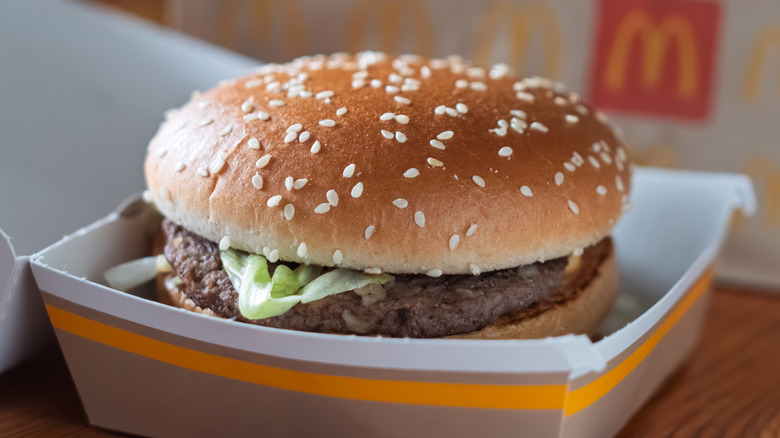
As a kid, I loved watching the hundreds of doughnuts rolling through my local Krispy Kreme's conveyor-belt system, going from vats of mushy dough to glazed, golden-brown doughnuts. Kid-me knew that, unlike my local Krispy Kreme's doughnuts, McDonald's burger buns certainly weren't made in-house. Maybe they grew on trees? Or in laboratory test tubes? While McDonald's doesn't make its burger buns in-house, there's nothing bizarre or nefarious about the process.
Just as McDonald's sources its beef from a network of suppliers, the buns come from a range of industrial bakers. The Pacific Northwest Baking Co. in Sumner, WA supplies roughly 600 McDonald's locations across Washington, Oregon, Montana, California, and Idaho. To keep up with demand, the bakery spits out around 1 million buns per day. That might seem like a lot, but those numbers look quaint compared to other McDonald's suppliers.
New Horizons Baking Co., a Norwalk, Ohio-based family-owned company, serves 5,000 quick-serve restaurants, including McDonald's. Swiss baking giant Aryzta serves McDonald's locations worldwide, from New Zealand to California. But while McDonald's sources ingredients from many different sources, the chain holds all of its suppliers to strict professional standards to ensure consistency.
What's it like to be a McDonald's supplier?
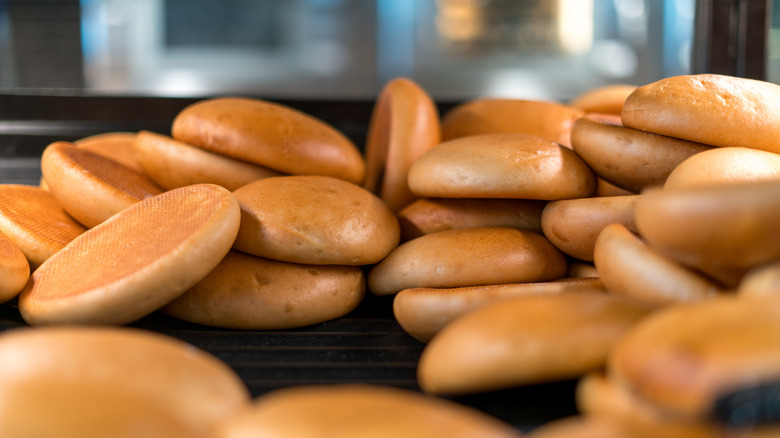
Baking McDonald's buns isn't easy. Each bun takes between six and eight hours to make, including proofing and a four-hour bulk fermentation. Inevitably, bakers end up with duds. At The Pacific Northwest Baking Co., substandard buns get sent off to be made into animal feed.
Aside from producing quality buns, McDonald's suppliers also keep up with the chain's changing needs. McDonald's is constantly tweaking its burgers in hopes of giving customers a better dining experience: In 2023, when McDonald's changed its burgers, improvements included more "pillowy" buns. Customers may barely notice, but each change means that suppliers have to adapt their recipes and techniques. When customers swarmed to drive-thru restaurants during the height of COVID-19, bakers had to rush to cover increased demand — while managing tricky supply chain logistics.
Bakers need to adhere to McDonald's standards for safety and sourcing, too. The chain conducts several rounds of audits per year, and bakers are expected to keep tabs on their own suppliers. McDonald's even has rules dictating where packaging fiber is sourced.
Hoping to get your hands on McDonald's buns for your next barbecue? Your best bet is to check with your local McDonald's location, not a supplier. While industrial bakeries don't typically sell to individuals, you can order buns from McDonald's restaurants.