

Is Monster Stronger Than Coffee? Here's How The Caffeine Compares
Caffeine is the pick-me-up you need for those late-night study sessions, long drives, or simply to kickstart your day. It's the boost you reach for when you're feeling a little tuckered out, burned out, or worn out. But how much caffeine is enough to do the trick, and what are the best sources to get it from? Perhaps more importantly, how much caffeine is too much?
A no-frills 8-ounce cup of brewed black coffee has an average of 96 milligrams of caffeine, but keep in mind that most people don't limit themselves to just 8 ounces. A Starbucks Venti, for example, holds 20 ounces, meaning you're bringing in roughly 240 milligrams of caffeine in one go.
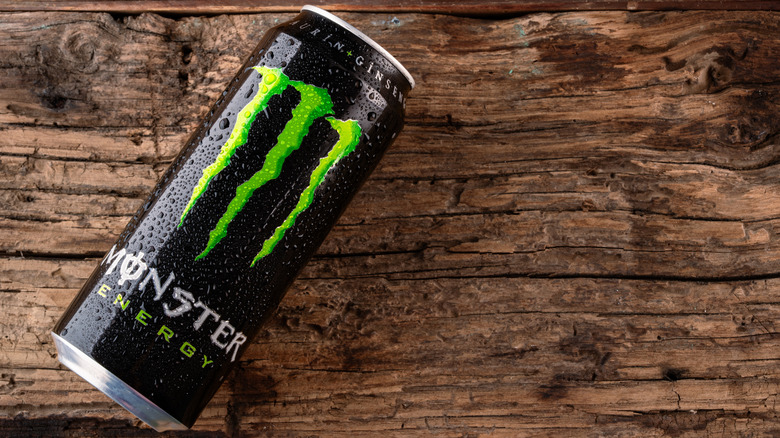
By comparison, a 16-ounce can of the Original Green Monster has 160 milligrams of caffeine, which is 66% more caffeine in exactly twice as much liquid. If you do the math: 16 ounces of coffee averages at 192 milligrams of caffeine while Monster has 160 milligrams, so coffee still comes out as the undisputed king of caffeine. It follows, then, that when coffee and Monster combine forces (as they do in the Monster Coffee "Coffee + Energy" series of Monster drinks) you'll have the biggest caffeine kick. And indeed you do, with an energizing 200 milligrams of caffeine in a 15-ounce can of the beverage.
The FDA recommends you don't go overboard on caffeine consumption, with a recommended max intake of 400 milligrams daily. That translates to two Monster Coffee drinks of non-gargantuan stature or four servings of 8-ounce coffee. The majority of people will feel the effects of caffeine at 200 milligrams or less.
How do coffee and Monster compare in other ways?
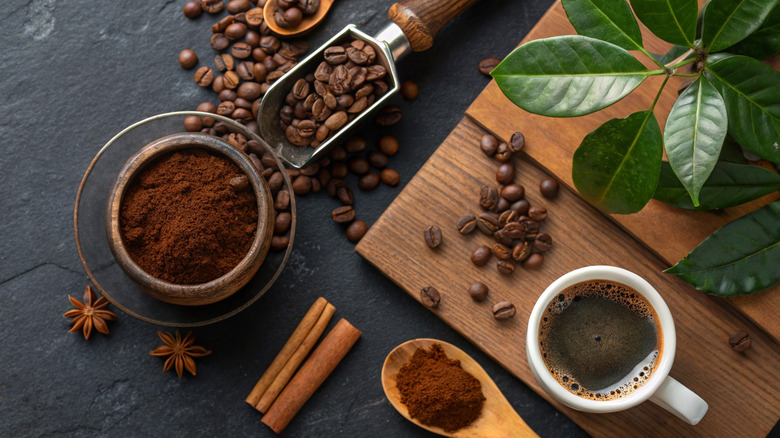
Each day, around 90% of people living in North America eat or drink something with caffeine in it. Most folks choose to get a jolt from their java or some energy from an energy drink, but caffeine's not the only thing in coffee. It also packs 116 milligrams of potassium (about ¼ as much as a banana), 7 grams of magnesium, and 5 grams of calcium per 8-ounce cup. Black coffee has no sugar, but if you're the type to rip open seven sugar packets for every mug or regularly hit the Dunkin' drive-thru for an iced macchiato with extra whip, your coffee can also contain 45 grams of sugar or more.
On the Monster side, the company boasts that its energy drinks contain taurine, a nutrient that helps your muscles work and which can be found in other foods, including meat. In addition, Monster energy drinks contain l-carnitine, inositol, and B vitamins; all of which are said to aid in converting food to energy (the better to burn those 230 calories with).
The OG Monster also comes with 58 grams of carbs, 54 milligrams of sodium, and 54 grams of sugar per 16-ounce can. To give you an idea, that equals around 13 teaspoons of sugar. That's more sugar than what you get in one of Crumbl's giant chocolate chip cookies!
Overall, coffee seems to be the clear-cut winner over Monster in terms of popularity. Monster reports that people have guzzled over 22 billion cans of its product over the past 18 years, but more than 2.25 billion cups of coffee are downed every single day.