

11 Self-Checkout Customer Habits Store Employees Hate

We've shared before about the customer behaviors that grocery store employees hate most, and we've even written about the self-checkout problems that cause many customers to also hate it. But, what about a hybrid category? Where we explore the specific self-checkout gripes that employees have regarding customer behaviors? Well, buckle up, because in the world of retail and grocery stores everywhere, it's becoming more like the Wild West, where no holds barred customers are running hog wild at times. And, employees? They've had it.
For shoppers, self-checkout may feel synonymous with speed, autonomy, even a pleasant reprieve from social norms like (gasp) small talk. And, valid. But for employees? According to countless online threads, confessionals, and retail-worker rants, it's also a line that leads straight to some deeply irritating customer behavior. We dove deep, wading through those online employee rants to uncover the habits workers say drive them absolutely up the wall. From customers who abandon entire transactions mid-scan to people who summon assistance every seven seconds, these harried laborers didn't hold back about the unseemly behavior that nearly breaks them.
So before you scan your shopping cart packed to the gills with PLU-laden produce, forget that you only have cash to pay (at your CARD ONLY queue), then leave a blinking register behind for someone else to clean up, take a look at these self-checkout behaviors employees say they secretly (and sometimes even publicly) hate the most.
1. Bringing a full cart
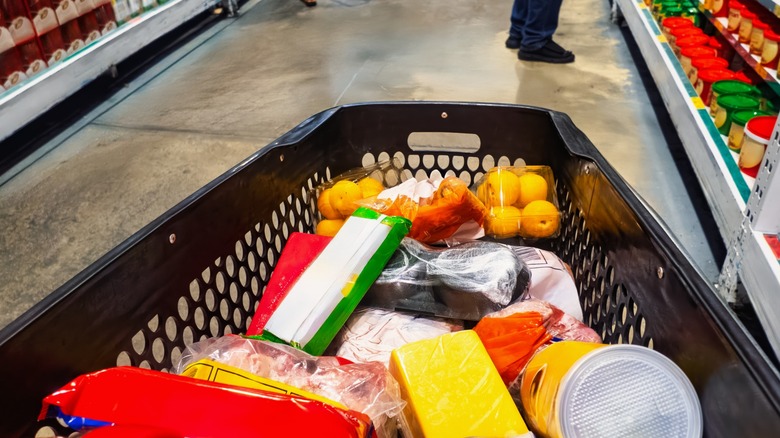
In an ideal world (the one filled with rainbows and unicorns, maybe even a four-leaf clover or two), self-checkout is an easy, breezy route to get in and out of the store quickly. But, what was created to be a stress-free alternative for customers to scan a few things, bag them up, and disappear into the parking lot in a snap, well ... let's just say it didn't quite go according to that exact plan. The issue? Customers bringing far more than a few items to ring up, and subsequently, taking far more than a few seconds to complete that sales transaction.
Employees online unleashed their annoyance over this particular behavior on their keyboards, banging out rants revealing how customers repeatedly wheel up carts packed to the gills, then proceed to ring up their abundance of items, one by one, for what feels like eons. The issue isn't just the extra time such a product-heavy load takes, but also that self-checkout stations physically aren't built for such giant hauls. There's barely enough room for a couple bags, much less your bazillion-plus items.
A vast majority of online employees have what seems to be a standard rule of thumb, viewing self-checkout as the modern replacement for the old express lane. Translation? If your shopping cart total requires much more than your fingers and toes to count, employees are silently begging you to consider just using a regular manned register instead.
2. Leaving the screen on error and walking away
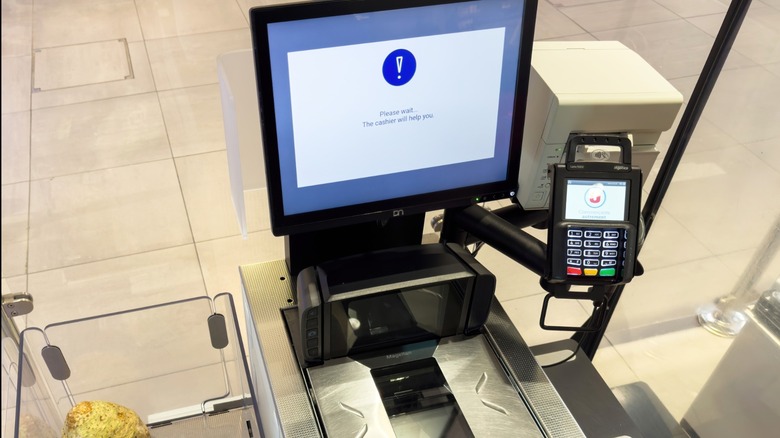
On a grocery store etiquette poll discussing the bad behaviors of customers, this next employee gripe should definitely land on that list. Retail worker commentary online backs this up, with employees confirming that few things spark near-instant self-checkout ire quicker than the customer who triggers an error message, only to then walk away without a care.
The common scenario goes as such: A shopper scans something incorrectly, freezing the register, then gets impatient waiting for assistance. No biggie, right? Well, if the tale ended there, perhaps. But, in this dramatic scene, instead of notifying an employee and waiting for them to come remedy the situation, these customers abandon the machine entirely, or maybe migrate to a different kiosk to start over on a brand new machine. And, that is the big deal, where unfortunately, the original register doesn't magically reset itself. It just sits there flashing warnings, beeping endlessly, and holding up the line until a worker manually comes to clear it.
Employees say this behavior becomes especially brutal during busy rushes. One retail worker described customers freezing multiple kiosks in succession, while ignoring repeated explanations. By the time management finally intervened, several machines were completely locked up, creating a domino effect of delays for everyone. To employees, such kiosk hopping clogs multiple registers at once, turning one solvable issue into a store-wide nuisance. Retail workers say most problems can be fixed quickly if customers simply stay put and let someone help.
3. Ignoring Card Only signs
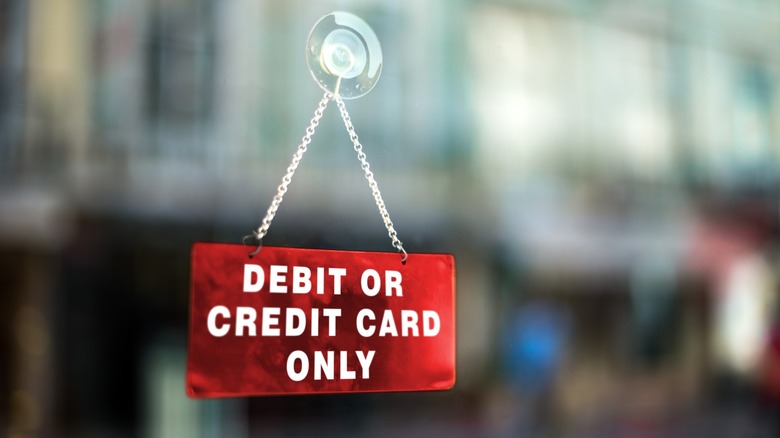
From card only restaurants to card only self-checkout kiosks at grocery stores, these electronic only setups can really throw a kink in the system, especially when customers fail to see (much less prepare for) the signs warning them that their cash is no good here. Retail workers online have reached a conclusion regarding this frustrating phenomenon, deciding that the second some customers enter a store, they apparently (at least temporarily) lose all ability to read. For proof of this passing illiteracy? Look no further than the ongoing self-checkout battle taking place at "CARD ONLY" kiosks.
Employees point to problematic shoppers, who routinely walk up to self-checkout machines covered in gigantic warning signs announcing that cash is not accepted ... only to still attempt to soldier on anyway. This happens so often, workers are barely even surprised anymore. Customers scan an entire order, arrive at the payment screen, pull out cash, and suddenly act shocked that the machine specifically labeled "NO CASH" does not, in fact, take cash. Employees say many customers then panic, demand assistance, abandon the transaction entirely, or insist the machine itself is malfunctioning.
The real frustration stems from how avoidable the situation is. Card-only kiosks are usually well-marked, yet shoppers ignore every single clue until checkout suddenly turns into (what they deem) a dramatic emergency. Social media has fully embraced the absurdity too, with memes joking that no number of signs will ever overcome the average shopper's determination to not read instructions.
4. Total tech incompetence
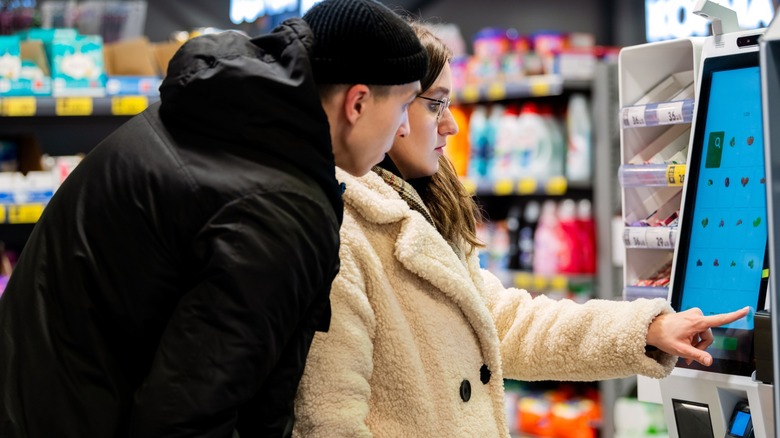
Well, here we are in 2026, and even though self-checkout technology has now existed long enough that most people should reasonably be able to wield a barcode scanner with some semblance of accuracy, according to retail employees online, some shoppers still approach these automated kiosks like caveman-era dinosaurs.
Workers admit that one of their biggest frustrations is customers who voluntarily choose self-checkout, only to immediately require near-constant assistance with every single step. Employees describe shoppers who even freeze at the "Tap Here to Begin" screen, while others stare blankly at giant on-screen instructions, or summon help before they've even attempted to scan an item. Some offenders wave employees over within seconds, only to ask questions like where to place groceries, how to insert a card, or why the machine hasn't magically charged them when they never pressed "Pay Now."
Retail workers especially vent about customers who somehow manage to struggle, even when the machines are intentionally simplified to the point of practically giving kindergarten-level instructions. Scan item. Place in bagging area. Insert card. How can it be that hard? Still, workers regret admitting how shoppers seem incapable of locating even the most obvious things directly in front of them. This isn't strictly an age issue, either, to be fair, as plenty of older shoppers breeze through self-checkout with zero problems. It's more about people entering self-checkout fully committed to not reading (much less comprehending) anything whatsoever.
5. Purchasers with loads of produce

If there's one particular category of grocery item that workers seem universally exhausted by at self-checkout, it's produce. Why? Workers point to the main offense of all things apples, pears, peaches-plus as being those pesky PLUs (produce codes). Simply put, customers attempting to scan a cart full of loose fruits and veggies themselves (having to insert all those numbers and codes) can instantly turn the checkout process into a puzzle-solving mission that's much more than anyone bargained for.
It's just common sense that self-checkout works best when customers have mostly pre-barcoded items that scan quickly. In direct contrast, the second someone rolls up with a bunch of bananas, a handful of jalapeños, or a fistful of cherries with with no labels, there is a wrench thrown into the entire system. Suddenly, the customer is frantically pawing through endless produce menus trying to remember whether the tomatoes they picked up were Roma or vine, or whether that apple they nabbed was organic or the store-brand (forget about the actual variety among the bazillion represented, from Honey Crisp to Golden Delicious).
Experienced cashiers often memorize produce codes through repetition, making their ringing up process exponentially easier (and faster) than the average self-checkout shopper. The weighing systems don't help either, with produce triggering scale warnings, bagging errors, and more. Case in point: Produce-heavy self-checkout trips usually create slower lines, confused customers, and uber-frustrated employees.
6. Using coupons
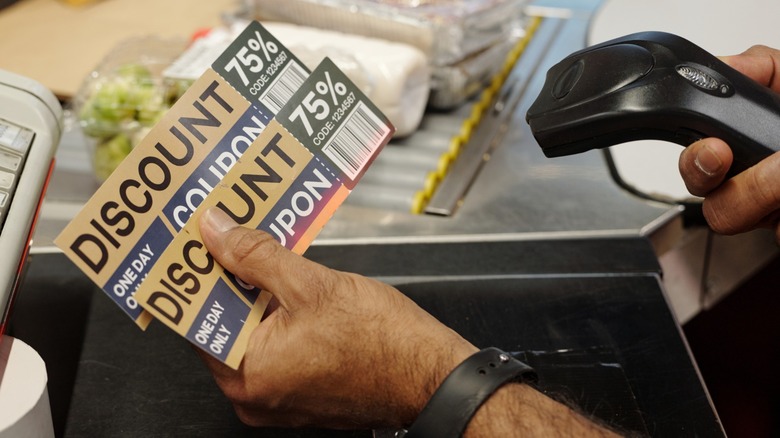
Who doesn't love a coupon? Well, according to store employees, they are not huge fans, especially when it comes to the combination of coupons and self-checkout kiosks. While it would seem the process would be pretty simple (scan grocery products, apply your discounts, save some pennies, voila!), in reality, coupons can really make self-checkout messy.
According to employees, coupon-heavy self-checkout transactions can quickly turn into chaotic standstills that bring the entire lane to a grinding halt. Shoppers arrive armed with everything from apps to screenshots for savings, as well as loyalty rewards, paper coupons, digital vouchers, store promotions, and more, all to get to the final stage of payment and be rendered stunned when the machine needs employee approval to complete the sale (if they even get that far).
Employees vent about shoppers who refuse to accept that some discounts only work through store apps or loyalty accounts, describing customers angrily insisting they deserve sale prices despite ignoring every sign explaining how the promotion actually works. The biggest frustration is that self-checkout is designed for speed. The moment someone begins troubleshooting a gaggle of digital coupons, that speed vanishes into thin air. And, while employees may understand people wanting to save money, the bad customer attitude is what really wears them down.
7. Customers complaining about doing an employee's job

While not everyone hates grocery store self-checkout, it definitely has its fair share of opposers, among them being customers that feel almost offended when asked to scan and bag their own groceries. Many of them even resort to airing their grievances quite vocally, leaving employees faced with their hems, haws, and guffaws. This, in turn, annoys employees, who list this among the most irritating of self-checkout behaviors.
Picture customers loudly announcing they shouldn't have to "do an employee's job" while scanning their own groceries. Sadly, this self-entitled, self-checkout speech happens more often than one might imagine, according to employees, who recall customers dramatically declaring themselves retail store martyrs, hands flailing while practically sobbing through snide commentary like, "Guess I work here now," or demanding an "employee discount" because they had to (gasp) scan a whole gallon of milk themselves.
What particularly frustrates workers is that these complaints are directed at employees who have no control over whether self-checkout even exists in the first place. Imagine just trying to get through your shift, then getting lambasted for corporate decisions. Talk about dealing with problems above your pay grade. While retail workers don't seem to usually mind helping polite customers who genuinely need assistance, resentment can edge in when forced to deal with shoppers who turn every self-checkout trip into a dramatic performance (one-man protest?), complete with sighing, muttering, and lengthy, irate speeches about deserving compensation for scanning a can of split peas.
8. Buying age-restricted items
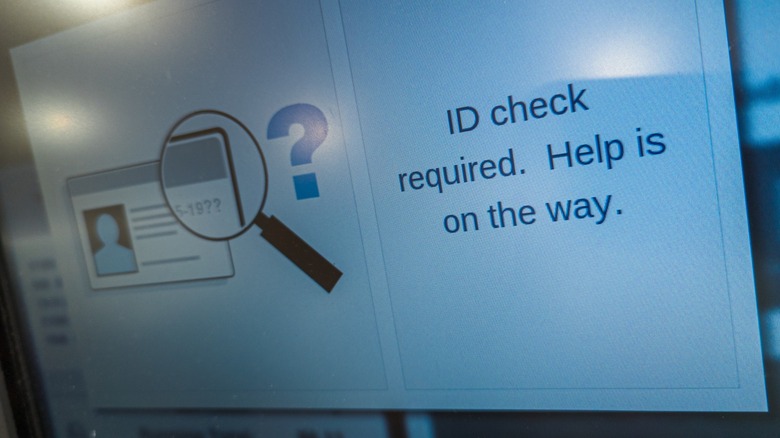
Retail employees say one of the strangest (and most maddening) self-checkout behaviors is customers bringing alcohol, cold medicine, or various other age-restricted items into the lane, only to react with absolute and utter bewilderment when the machine pauses for ID verification.
Workers online, while admitting to how much this actually occurs, are both bemused and baffled by these customer antics. Shoppers will scan a bottle of wine or case of beer, immediately trigger the required approval screen, then begin aggressively summoning workers as though the machine has personally punched them. Some store staffers say customers can become quite irritated the instant they're forced to wait even a few seconds for an employee to walk over and confirm their ID. The fact is that employees legally have no choice in this matter. The machine literally is setup to block the transaction until someone verifies the purchase. It's not optional, personal, or part of a conspiracy to ruin a customer's whole day.
Many retail workers genuinely don't understand why customers expecting a quick, uninterrupted self-checkout experience choose that lane while purchasing restricted items in the first place, noting that regular cashier lanes are often faster for alcohol purchases specifically because the ID check happens naturally during the transaction instead of freezing the kiosk mid-process. Here, common sense would go so far.
9. Scanning items faster than the scale can register
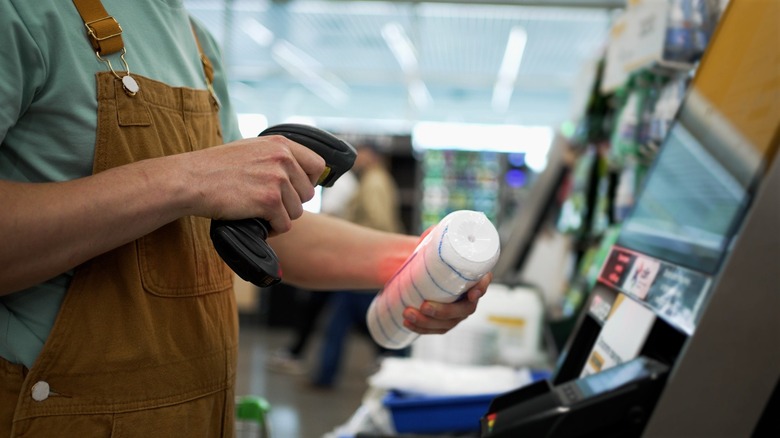
We all have days when we're in a hurry and have places to be. But, the way some shoppers approach the self-checkout kiosks at stores (at least according to employees)? Those speeds should be criminal. Like, straight to jail type of illegal. Retail workers say these speed demons often create complete chaos, their breakneck pace unleashing havoc on the machine, which panics in response, locks up, and creates a scenario where everybody loses.
According to employees, one of the most common self-checkout mistakes is customers scanning items faster than the system can process them. The kiosks rely on the barcode scanner and the bagging-area scale working together. The exact process should be simple and straightforward: Scan the item, place it down, let the machine acknowledge that weight, then continue. But, many shoppers apparently decide they'd rather channel their inner Dale Earnhardt and race to the finished sale.
Workers bemoan shoppers grabbing scanned items too quickly, tossing them directly into carts, or speeding through duplicates before the system has time to update the weight. The result? Frozen screens, flashing warnings, mistaken theft alerts, and attendants having to rush over to clear errors. Employees also note that modern self-checkouts are beginning to use cameras and AI systems designed to detect suspicious scanning behavior. That means rapid-fire motions or repeatedly scanning identical items can trigger anti-theft systems even when customers are completely innocent. What to do? Simple. Just slow down slightly, and follow the prompts.
10. Stealing
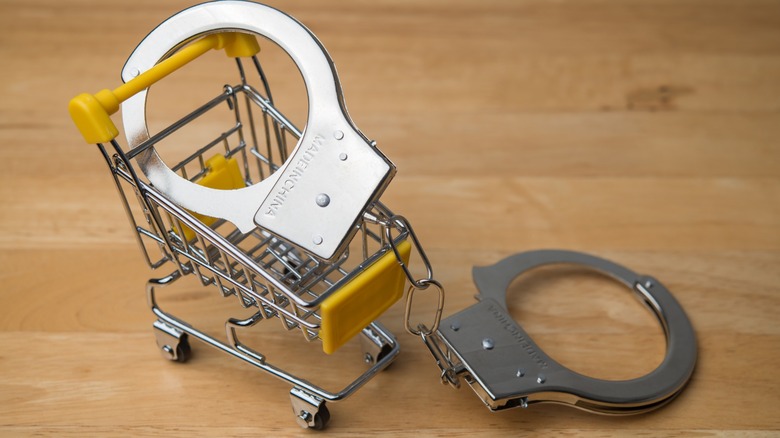
An area where self-checkout has created an entirely new category of awkward workplace interaction is the one that leaves poor store employees struggling to determine whether a shopper made an honest mistake ... or is actually trying to scam the system. Workers online complain about customers scanning one inexpensive item, while tossing something completely different into the bagging area. Sometimes it's accidental. Sometimes ... employees seem significantly less convinced this is actually a bonafide snafu. Either way, the machine almost always notices, and chaos erupts via dings, alerts, and employee annoyance.
This chaos is inevitable, as modern self-checkout systems are increasingly relying on cameras, weight sensors, and AI monitoring designed to compare scanned items against what actually lands in the bagging area. That means when a shopper scans a banana, but drops a package of wagyu steak into their cart, the kiosk is going to ping.
Retail employees can find these situations deeply uncomfortable, as they have no idea whether the customer genuinely made a mistake or intentionally tried to steal. Meanwhile, as the machine is loudly demanding assistance, other customers are beginning to gawk, and the tensions only escalate from there. Workers also complain that the newer AI systems trigger even during legitimate purchases, adding an entirely new layer to the conundrum. In fact, some workers have become so exhausted by nonstop alarms that they simply clear the warning without fully investigating. Sadly, actual stealing has become increasingly common as grocery prices rise and stores expand self-checkout.
11. Letting young children ring things up

While there may be many merits and positive points to making your kids help you do the grocery shopping alongside you, when it comes to arriving at the end of that market outing, employees often wish you'd take the reins back from the kiddos and leave handling the self-checkout routine to the adults. In fact, perhaps one of the fastest ways to turn a smooth checkout process into complete chaos is handing the scanner to an overexcited child and hoping for the best. Extra rambunctious kids can inevitably start waving products randomly across the scanner, double-scanning items, missing scans entirely, or enthusiastically slamming groceries into the bagging area.
Retail workers probably understand why parents do it (children love pressing buttons, hearing beeps, and feeling helpful, especially when they're praised for it). But, the issue is that self-checkout machines are extremely sensitive and not especially forgiving when tiny humans start free-styling the checkout process with near-feral levels of full-volume energy.
According to some retail horror stories, the problems occasionally go beyond checkout errors. Think kids throwing merchandise, grabbing random items near registers, or generally creating tiny tornadoes of destruction willy nilly. Retail staff don't necessarily mind polite children learning how stores work. What they do mind? When self-checkout transforms into daycare, turning employees into babysitters versus cashier clerks.