

13 Genius Ways To Reuse Plastic Grocery Bags
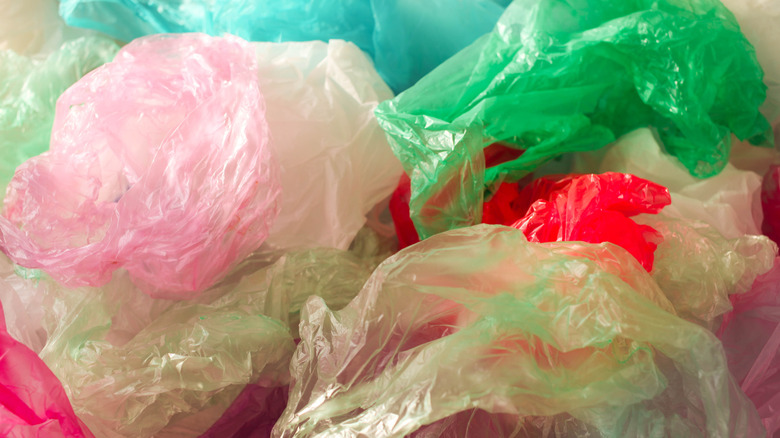
One of the main story elements of the "Epic of Gilgamesh" is King Gilgamesh's quest for immortality. Someone should have told him that he didn't have to go through an entire epic for that. He could have just made himself out of plastic. Plastic is immortal –- practically immortal, anyway. The synthetic polymer can take up to half a millennium to actually decompose and leave this planet. This means that the waste we create via plastic is going to be hanging around long after any of us are gone (super reassuring).
There are ways to reuse and repurpose this omnipresent material in our lives, especially when it comes to the little fellows that seem to be hanging around our pantries, under our kitchen sinks, and (sometimes, weirdly) empty in our fridges. That would be the plastic grocery bags that wreck our environment when not properly reused.
Even with the increase in shopping bags made of durable, non-waste material, the plastic grocery bag is still around. Sure, you can just throw the whole leftover bunch in the recycling bin and call it a day. But where's the fun (or eco-friendliness) in that? Here are 13 ways to reuse plastic grocery bags. (They include solving a bear problem, if you have one.)
1. Protect your bicycle seat from those pesky elements
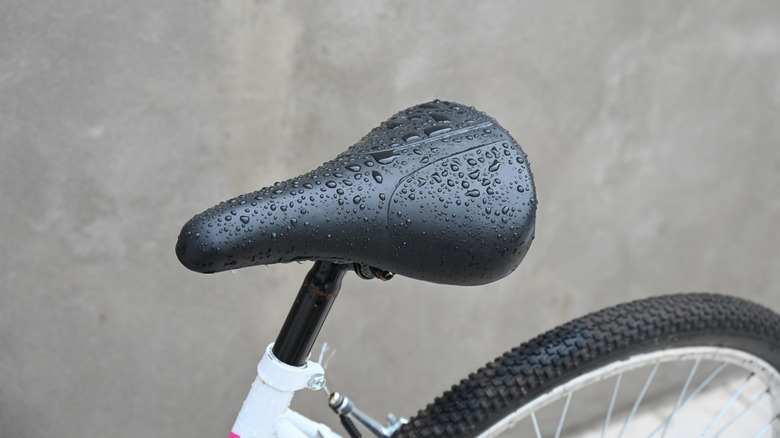
Bicycling as a way of life for people in the U.S. has increased dramatically in the last decade or so. More people than ever rode bikes in 2024, and the move toward healthy living and increased mobility within cities continues to drive an upsurge in two-wheeled travel. The benefits of cycling over driving are many: There are no costs tied to gas, insurance, tolls, or mechanic visits; and there is less opportunity for road rage (not that a peeved cyclist can't pitch a proper fit).
There is one big disadvantage that bikes have over cars, however: weather. Come rain, sleet, or snow, the driver of a car can remain safely tucked away behind their steering wheel, blasting '90s R & B, cackling at the elements slapping impotently against their moving vessel. But the cyclist is just out there, getting pattered upon. And one thing they don't want — because it would definitely make matters worse — is a wet seat, otherwise known as the saddle. Wet saddles make for wet butts.
The solution? Those extra plastic bags, of course. Grab one, tie it around your seat, remove it when it's time to ride, and voilà — you've got a dry derrière. You can leave your makeshift cover on overnight or during an interim when your bike is parked outside. It's a cheap protectant against any inclement goings-on.
2. Weatherproof your feet
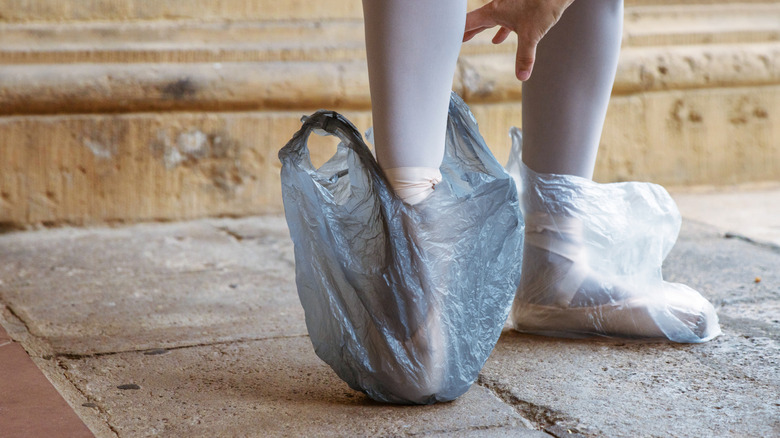
This one might be a bit of a throwback for some folks. In some parts of the country, using plastic bags to insulate the insides of your shoes during rough weather is nothing new. The bags in question have even been referred to as "snow socks" by those in the know. And although at least one Instagram user utilized empty Wonder Bread packaging for this purpose, and more than one commenter corroborated the move, we say that a grocery store plastic bag can easily do the same job.
Though this is not the kind of warmth you'd get from actual waterproof fabric, the plastic can help stave off moisture while you're out galumphing through piles of slush. The plastic bags can even help maintain some warmth, according to a Redditor who swears by taking things a step further and straight-up tying the plastic bags fully over your socks to really fortify your feet. The feeling might take some getting used to at first, but it shouldn't take long. After all, your body's probably pretty used to microplastics, given that you likely eat some of the foods that contain the most plastic pollution.
3. Create a makeshift dog poo bag dispenser

This one is a two-fold hack that doubles up the plastic reuse, so you can give yourself an extra eco-pat on the back. What's more, it helps remedy a neighborhood scourge that we can all relate to: un-cleaned-up dog poop on the street. Literally everyone hates it — and frustratingly, people are rarely caught in the act or held accountable. (Sure, sometimes people just forget, and are not actively trying to ruin someone's day. But that's only sometimes.)
For this entry, let's give dog walkers the benefit of the doubt and assume that many do have a slip of the mind. Neighborhood hero, come forth. Simply take an empty 2-liter bottle of soda or seltzer, cut off the bottom half, and tie it upside down onto a tree or pole on your block. Then, grab a bunch of the plastic grocery bags that you have lying around and stuff them into it through the open end, leaving a little bit out of the bottle top so people can pull one out. That way, there's no excuse for any neighbor to leave their pup leavings on the sidewalk. (At the very least, you can now narrow it down to the dog walkers who really are just inconsiderate.)
4. Keep out hornets
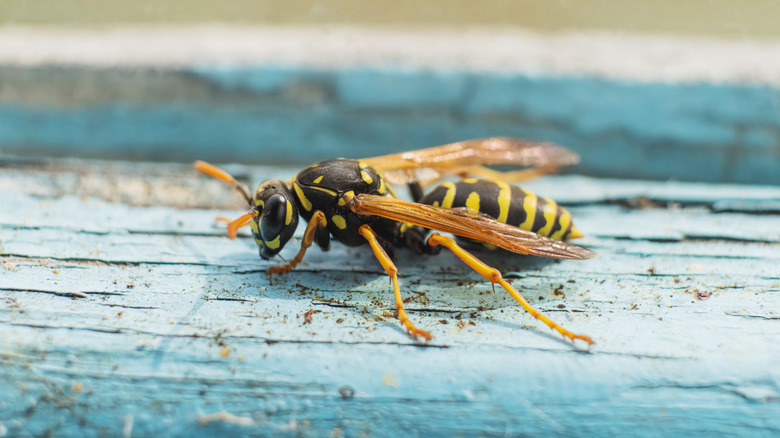
Hornets: Nobody wants them around — not in the entire world or anything; like their bee cousins, they are important pollinators. But no one wants the big, buzzing, angry insects hovering around their homes and yards. They sting, after all. And some of their stings can be quite nasty, especially if you have an allergy; that's a trip to the ER.
These dudes are especially ornery if they build a nest on your property. Hornets are highly territorial when it comes to their nest areas. They don't care how many years you've lived in your house or what the Zillow value of it is. If hornets build a nest there, it's their house, period.
So, how to prevent a hornet's nest on the cheap? Well, to beat the hornet you must be the hornet — literally, kind of. Even hornets know how ferocious a nesting hornet can be, and they want no part of it. You can make a fake hornet's nest to fool and deter real hornets from making their own. To do this, just take a brown paper bag, and stuff it with those spare plastic grocery bags of yours until it's good and bulbous. Tie up the top, and attach it with a rubber band to something in your yard, like a tree or fence. Hornets will see that your property has already been claimed, and move onto the next.
5. Always have a wet umbrella bag ready
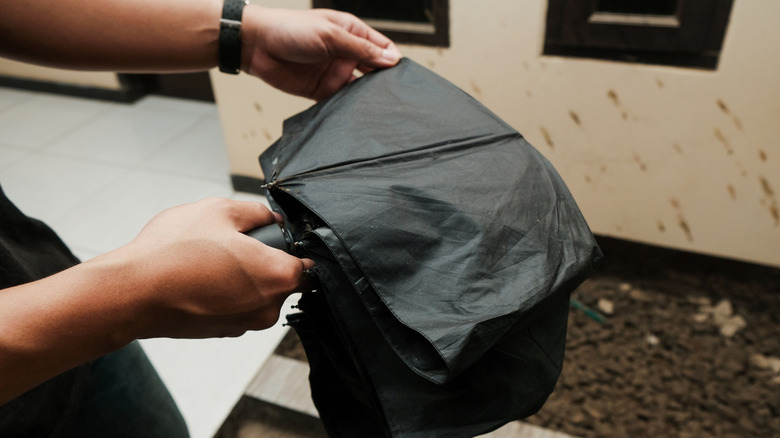
As we're seeing on this list, plastic bags can come in very handy when dealing with the tempestuous outdoors. Umbrellas are also great when you're stuck in yucky weather. It's once you step inside with them that they immediately become a nuisance. Closing one up and holding it out so that it gets nothing wet — while still somehow managing to get everything wet — is not fun.
The solution is simple, and it doesn't necessarily require you to make any new purchases. Instead, you can take a couple of different approaches to how you use plastic bags. One way would be to take a small receptacle, like a bathroom garbage can, and remove the top. Line it with a plastic grocery bag, and then just keep it by your door for immediate wet umbrella storage.
Alternatively, you could stuff a bunch of plastic bags into one plastic bag, and leave that hanging on a coat hook. Enter with a wet umbrella, pull out a bag, place the umbrella inside of said bag, and then just set it down anywhere. Dryness mastery achieved.
6. Cushion your package (mail package, that is)

Sure, we might be mailing care packages to loved ones. But many of us also have our own businesses, side hustles, and hobbies that require us to pack parcels and send them out into the world. Nobody wants to go out and buy a bunch of Styrofoam (which is arguably even worse for the environment than plastic bags). And who wants to say goodbye to old clothes or rags as package filler? (For that matter, who wants to say hello to that?)
Cushion the contents of your packages with leftover plastic bags instead. A Redditor who's made thousands of dollars selling products from their home attests to the secure nature of this method: nothing broken, zero complaints, years of effectiveness. (Granted, this is one person, and no doubt there have been folks who didn't utilize enough bags to properly insulate whatever materials they're sending out. That could be a costly mistake.)
As long as you have enough plastic bags to create a solid buffer, your mailed contents should be good. Okay, yeah, you're somewhat passing on the plastic to the receiver. But they can use it for the same purposes — and you can call it regifting reusability.
7. Keep plants alive when travelling
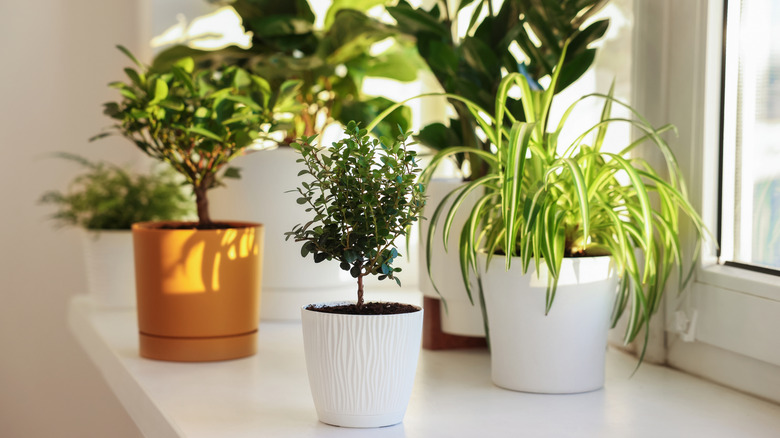
One of the most annoying things about traveling for some time is the caretaking of plants. Unless you have roommates, or someone you trust who has no problem taking time out of their day to enter your home and water your babies, the plants are just sitting there, slowly dying, as you're off seeing the world (or, you know, Orlando). One solution: Create your own greenhouse.
Does that sound daunting? Well, it would be, if you didn't already have a ton of plastic grocery bags (or at least the same number as the plants in your home) lying around. Here's what to do: Before you leave on a trip, water your plants like you normally would. Then take a bag and completely cover your entire plant, pot included. Some people suggest adding stakes into the soil first, so that the plastic doesn't come in contact with the plant itself.
Place your bagged plant where there's indirect light, as direct sunlight may speed up the plant's demise inside the bag. Once that's situated, the bag should capture the evaporating water and return it down into the soil. Genius.
8. Gain a garden helper
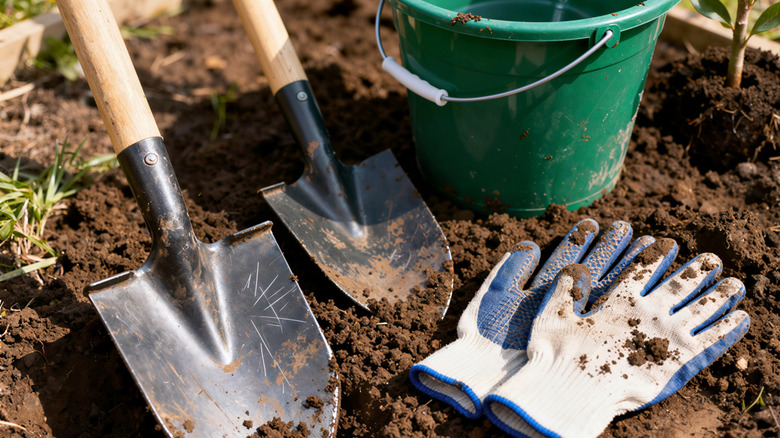
You've got that green thumb — or, at least, you're trying to get that green thumb. Either way, you're spending time in your garden, or a community green space, getting down and dirty, digging, raking, collecting, seeding, and so on. One of the most handy things to keep with you while going about this: plastic bags.
Where to put all the debris? In plastic grocery bags. How to transport compost to the compost bin? In plastic grocery bags. What happens if you have to protect a plant from a sudden overnight frost? Cover it in a plastic grocery bag. Maybe you even need a temporary plant pot until you get your hands on a real one. What can you use? Say it with us: a plastic grocery bag.
By some estimation, over half of American households have an active garden, which works out to about 180 million people burrowing their hands in the soil on a regular basis. It's a wonderful pastime, especially once you've read up on the many reasons to grow your own food. Plus, it greens up the environment. What better way to utilize an anti-environmental material like plastic for eco-good?
9. Finally organize your freezer
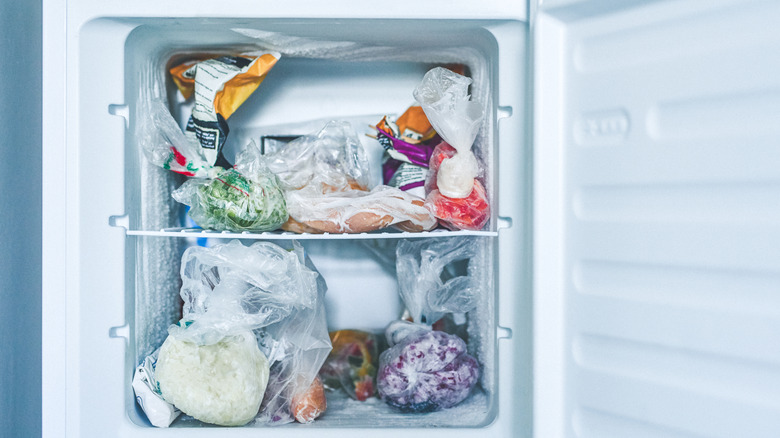
Listen, we all wish we had the biggest freezer in the world. But even those of us with a large freezer or an extra one in the garage seem to constantly run out of room due to the mysterious, cosmic laws of having-more-space-means-it-inevitably-gets-filled (or HMSMIIGF, which will never catch on as an acronym). This is historically when people have turned to the humble, plastic grocery bag to get their frozen compartments in order.
Yes, using silicone containers and vacuum-sealed packs are great ways to organize your freezer. But in a pinch, when neither of those is at your disposal, whip out the plastic grocery bags. The advantages to using plastic grocery bags include the transparency that allows you to see exactly what the food is, the lack of space they take up as they conform completely to the item inside, and the ease of removal. They accomplish all of this while keeping things fairly delineated. Now, your freezer space is maximized and you're aided in the battle against HMSMI — ah, forget it.
10. Make your own cheerleading pom-pom

You've got team spirit — check. You love to do arts and crafts — check. You have an excess of plastic grocery bags — check. Congratulations, you are the perfect candidate to make DIY cheerleading pom-poms. And the great thing is, DIY pom-poms are essentially no different than non-DIY pom-poms, really. They're both fluttering strings of plastic that put fear into the hearts of opponents everywhere, one call-and-response letter at a time.
How to go about this, you ask from the top of a cheerleader pyramid? Simple (via Jo's Art Journal on YouTube). Take a reusable plastic bag. Fold it tightly, horizontally, then cut off the ends to shorten it. Pull what's left apart, then fold that once more horizontally. Form it into a circle, or a ring, then staple it together. That's your pom-pom handle.
Take the remaining, cut parts of the plastic bag if they're big enough to make the pom-pom you want. If they're not, get an entirely new plastic bag, and begin cutting it into long, thin strips. When you have a lot, work them through the ring, then place a tie (ideally another piece of plastic bag) around the strips by the ring to fasten them all together. Make one more big cut of all the strips to the desired length. Cheer on.
11. Scare off bears
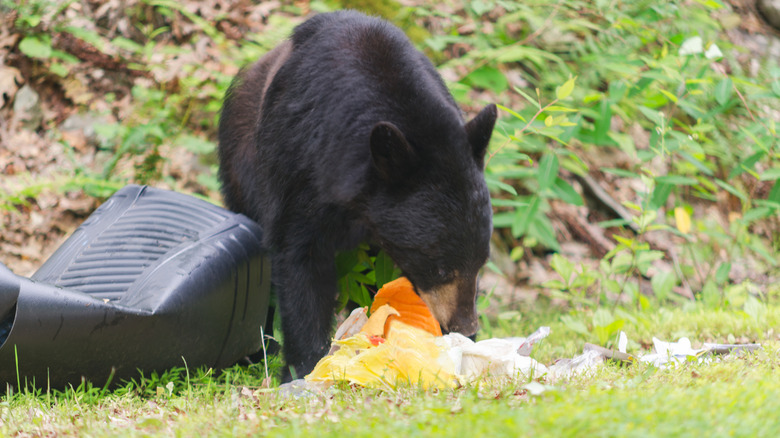
For some reason, the idea of a bear trespassing onto your property is not a pleasant one. It probably has something to do with the primal fear caused by close proximity to a giant, carnivorous beast. But as is often the case, that huge, fearsome mammal can easily be scared off under the right circumstances. One of the things that really puts a fright into a bear is (you guessed it) plastic.
As it turns out, bears –- or at least the ones often encroaching on our suburbs and country houses –- hate the sound of plastic. They hate it so much that even the noise of plastic bags flapping in the breeze can send the big fellas elsewhere. That's according to a commenter on Facebook, who claims she ties plastic grocery bags to the outskirts of her deck and onto proximate tree branches to thwart any unwanted ursine visitors.
Now, we're not suggesting that you approach a bear with aggressive plastic bag hands. Something tells us that will not end well. In fact, it bears (groan) repeating: Stay away from hungry bears, please. Stick to the more passive method outlined above — but with a caveat, per the aforementioned commenter: This tactic has no effect on either moose or eagles. You'll just have to negotiate something with those animals instead.
12. Clean your showerhead
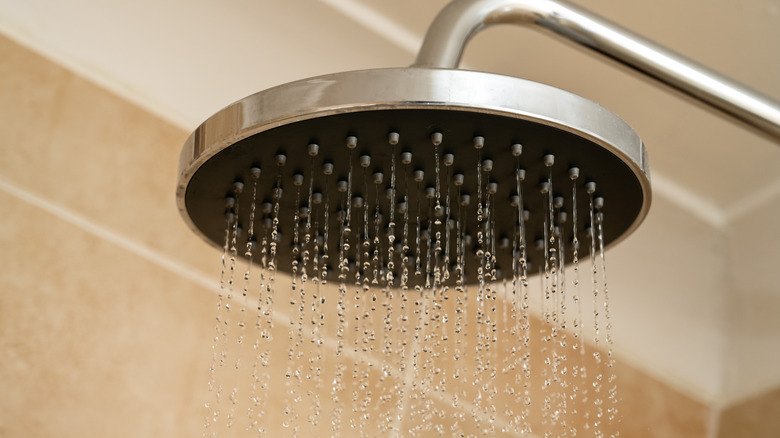
There are some things we probably wouldn't want to take a microscope to: toothbrushes, the baby's chew toy, motel bed sheets. An addition to this list would be your shower head. Yes, the source of the water that runs down your entire body can go neglected, or at least half-assed cleaned, and therefore become pretty nasty. Thankfully, your plastic grocery bags can be very useful in this regard.
How to disinfect your shower head with a plastic bag? First, fill one with vinegar. The classic choice would be distilled white, which is a great vinegar for cooking or cleaning. Once it's filled, take the bag and tie it tightly around the shower head, making sure that the vinegar is immersing the shower head.
Allow the shower head to soak in the vinegar overnight. When you wake up, remove the bag and scrub the shower head with a cleaning brush, then rinse it well with water. Now you won't have frightening daydreams about what's actually hitting your face in the shower.
13. Craft DIY fabric

Here's another one for the craft-heads: You can take your plastic grocery store bags and turn them into fabric. That's right, fabric. As in ... fabric.
Admittedly, this takes a little bit of patience, several tools, and ideally some level of ventilation. In other words, it's the perfect craft project. Start by cutting plastic bags into flat sheets, removing the seams and handles, then create a stack of anywhere from two to six layers, depending on how strong or flexible you want the material to be. Take a piece of tracing paper or parchment paper cut to a size larger than the plastic, and set it on an ironing surface (pad or board; pad is better). Set the stack of plastic bags on top of the paper, then use another layer of tracing paper to sandwich the plastic sheets.
Once this is all secure on the ironing pad, grab an iron and set it to low. Iron the tracing paper sandwich, always keeping the hot iron moving to avoid melting the plastic. Periodically lift the tracing paper to check on the plastic. In quick order, the plastic should fuse together. And there you have it: fabric to utilize however you wish.