

Why French Olive Oils Are Harder To Find, Yet Worth Picking Up
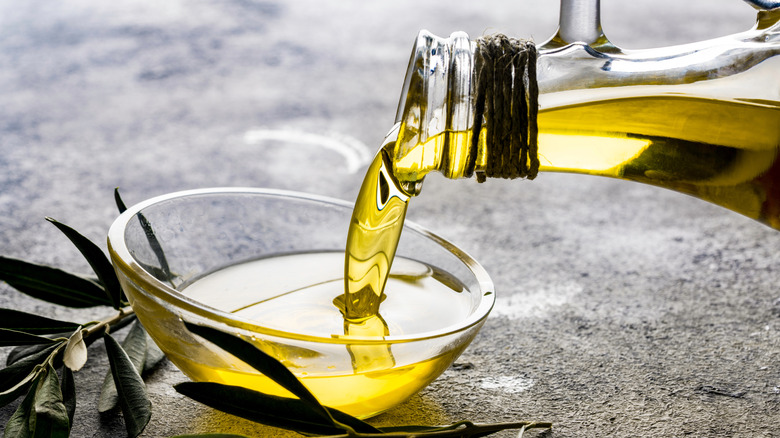
Though you may think first of Italy when you think of olive oil, followed by countries like Spain and Greece, the product is also made in the south of France. This shouldn't come as a surprise — it makes sense logically that France would produce olive oil. These countries all make up the Mediterranean, sharing many geographic similarities. They also use many of the same ingredients in their cuisines, such as olives; herbs like thyme, basil, and rosemary; tomatoes; seafood; and chickpeas. So why do we hear so little about French olive oil?
To get to the bottom of it, I visited the olive farm Moulin St. Jean on a Viking river cruise and spoke with one of its owners. There, I learned what it takes farmers in the South of France to get the olive oil from the orchard to your bottle.
Only a few farms in the south of France — mostly around the Provence region — are A.O.C certified to make olive oil, which you must be to legally sell the product. In total, the country only makes 3% of the world's olive oil. Out of 190 varieties worldwide, only four types of olives grow in France: three green and one black. It takes about five kilos of olives to produce one liter of olive oil.
Folks who enjoy light olive oils with little bitterness will find French olive oils to be a cut above those produced in other countries. Though much more of a challenge to find, it's worth giving French olive oils a try to experience the unique, lively flavor that the region produces.
There are quite a few standards farmers must adhere to for producing French olive oil
Originally created in 1935 to protect the integrity of French wines, A.O.C. stands for Appellation d'Origine Contrôlée. Anything you purchase that has been A.O.C. certified is guaranteed to have come from exactly where it claims to have come from. A board of inspectors checks to make sure anyone creating products with this certification are playing by the rules and not cutting corners or diluting the product.
For olive oil, there are a few regulations that farmers must adhere to for their product to be certified by the A.O.C:
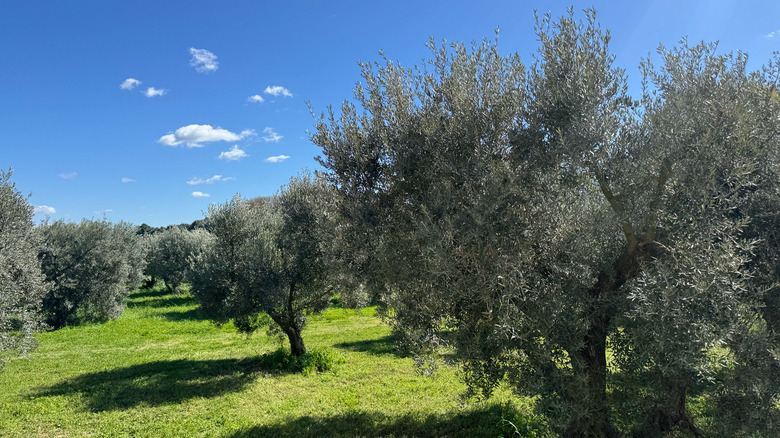
- The olives must be grown in one of three specific regions of France: Nyons, Vallée des Baux-de-Provence, and Provence.
- Trees can only be so close to one another, as overcrowding produces less desirable harvests. These trees must also be regularly maintained to hold up to the standard expected from the A.O.C.
- Yields from the trees max out at 2.4 metric tons per acre (that's roughly 5,291 pounds).
- The olives must be cold crushed (temperatures cannot exceed 80.6 degrees Fahrenheit) and they must be crushed within the region they are grown. That means no shipping the olives out to regions or countries with lower wages to cut costs.
- A sample of the final product must pass judges' inspection for quality. During this process, the A.O.C. checks for things like acidity levels (which cannot go beyond .8%) as well as measuring other factors that indicate good quality olive oil.
How French olive oil compares to other countries'
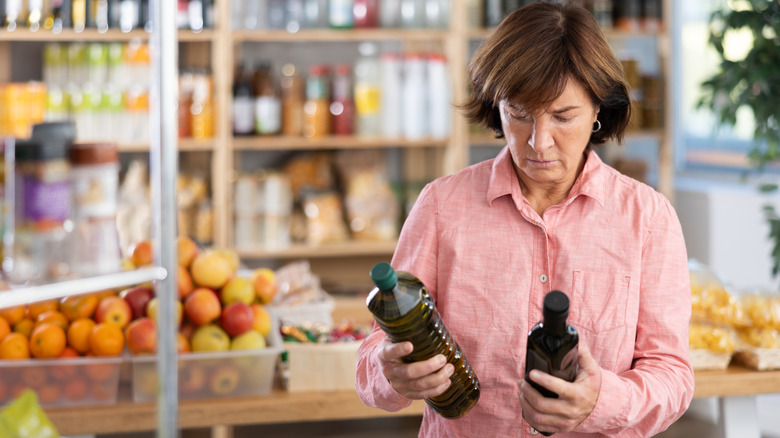
With French olive oil, the time when the olives are harvested matters as much as the type of olive or the area it comes from. Early harvest oils (fruité vert or green fruit) are characterized by light, peppery herb and grass notes. In the middle of the season, as fruits begin to ripen further (classified as fruité mûr, or ripe fruit), flavors move in a more floral direction. Late harvest fruits (fruité noir, or black fruit) start to become even more robust, featuring tasting notes such as mushroom and candied fruit. Olives are picked from October through December, and each farm can choose how to blend its oils.
Compared to oils from Italy, Greece, and Spain, olive oils from the south of France tend to be lighter and pepperier, with a vibrant gold color. You can find oils made with late harvest fruits if you're looking for something more earthy, but still mild. Any olive oil fan should try French olive oil at least once to see how it differs from the stuff made by higher-volume producers.