

How To Read Price Tags At The Grocery Store
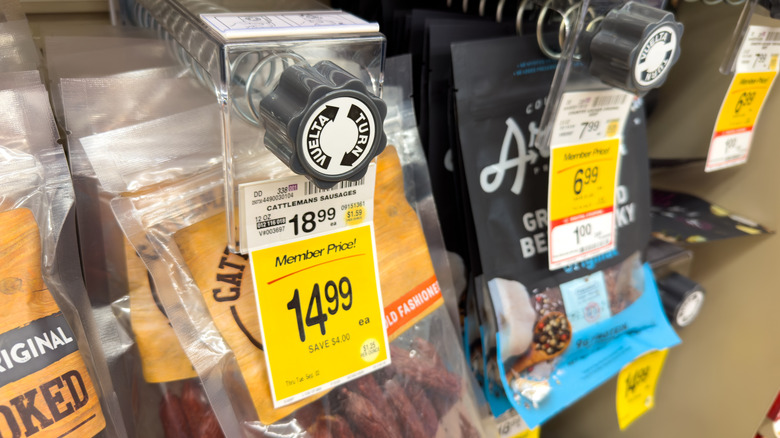
Grocery store price tags do more than just display the retail price; they tell a story about the product. Each code and color signifies something about the items on the shelves, and if you learn how to read the tags you'll uncover a lot more product information. Retail price, unit price, and PLU codes are the three main numbers you'll see. The former two mean the same thing in most grocery stores. You can look for the price look-up code (PLU code) on produce price tags to learn how the fruits and veggies were grown. A 4-digit PLU code signifies produce grown conventionally, while 5-digit codes (usually with a 9 at the front) identify it as the generally more expensive organic produce.
The unit pricing is displayed in the bottom corner of the tag — it breaks down the cost by unit measure, like per pound or per ounce (items sold in larger amounts usually have lower unit prices). Not checking the unit price is one of the big bulk buying mistakes costing you money. The numbers in retail prices have meanings as well, though it isn't the same in every store. Prices ending in .97 at Costco means the item is on clearance, for example, while the letters on the Sam's Club price tags indicate inventory status.
Price tag colors also have meanings that are usually the same in every grocery store (check your own store for unique color coding). In general, white means an item is regular price, while yellow and red indicate a sale. Green can indicate newer items or price drops and blue means an item is seasonal.
The transition to digital price tags in grocery stores
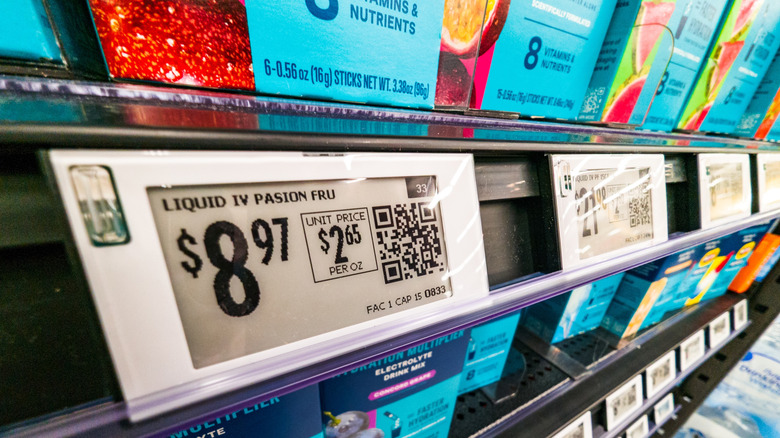
Price tags are going digital in grocery stores all over the United States, with paper tags being replaced by electronic shelf labels that display the cost of items instead. Knowing how to read a traditional paper price tag will be a huge help in understanding the new system. As more stores jump on board, you'll start seeing small screens displaying prices all over the store. They're basically just price tags that are equipped with Wi-Fi and tiny computers.
You'll use the same concepts to read digital price tags that apply to the paper versions since the tags still have information on retail price, unit price, and PLU codes. You may have to whip out your phone to access that information, though. Most digital price tags contain QR codes or an NFC chip that will provide in-depth information on each product when scanned. The technology allows for a whole lot more information to be shared about each product on the shelf, like the product's source and whether it is allergen-free. A digital tag means you have the opportunity to take a deep dive into the source of the frozen seafood at Walmart, the beef selection at Costco, or the German company behind Aldi's coffee brands and learn a little more than you would have with a paper price tag.