

What Chipotle Does With Its Leftover Food
Chipotle Mexican Grill is among the biggest restaurant companies in the United States, despite having fewer than 4,000 locations nationwide. That's a substantially smaller number of locations than McDonald's, which operates more than 13,800 restaurants in the country. Both companies, however, have systems in place to handle their leftover food. McDonald's strategy for excess food ensures that it only produces less than 1% of edible food waste. But Chipotle's menu is served fresh, and therefore is more perishable than McDonald's items. So what does the Tex-Mex giant do with its leftovers? The company mostly donates them.
Chipotle donates its excess food to shelters and local communities where individuals are struggling to make ends meet. However, given the nature of the brand's products, only those that are still edible and safe for consumption are handed over to partner organizations. Chipotle has been following this practice since 2007, when it joined the Food Donation Connection's Harvest Program. In its 2020 sustainability report, the company noted that since partnering with Harvest Program, it had donated approximately 11,844,049 meals. It also donated 405,000 pounds of surplus food in 2024 alone, based on its sustainability report from that year. As for its non-edible leftovers, Chipotle takes care of them through a composting program instead of tossing them into landfills.
How Chipotle minimizes its leftovers
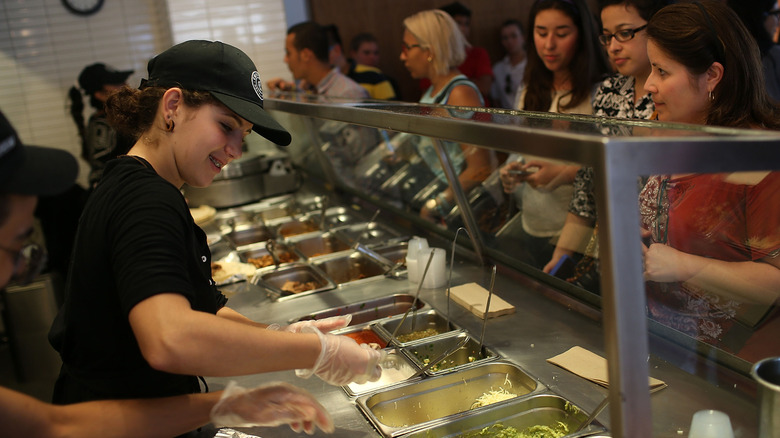
Chipotle is a fast-casual restaurant (not fast food — there's a difference) that serves meals requiring assembly, such as tacos, burritos, salads, and bowls. One of the biggest challenges Chipotle faces every day is how to keep its food waste to a minimum, which the chain overcomes through its mindful preparation of fresh ingredients and add-ons. "Employees are trained to prepare fresh food in small batches throughout the day, ensuring optimal quality while minimizing overproduction," Chipotle's Chief Corporate Affairs and Food Safety Officer, Laurie Schalow, tells Tasting Table. By preparing only what is needed, Chipotle restaurants can prevent excessive leftover amounts of pre-made guacamole, veggies, and meat from remaining on the assembly line at closing time.
Mindful preparation also guarantees customers that their orders are always served fresh, as workers only prepare new batches whenever they run out of fresh ingredients. But while the practice may seem straightforward and easy, it actually involves a lot of careful planning. "Precise inventory management and meticulous forecasting help us purchase only what is needed for each restaurant," explains Schalow.
Chipotle looks at annual data from its kitchens to spot sales trends of key ingredients; that helps determine a baseline for specific orders from suppliers and prevents overbuying of ingredients that are unlikely to be used before their expiry. All of this reinforces the company's goal of minimizing unnecessary food waste from the back of the kitchen.
Static Media owns and operates The Takeout and Tasting Table.