

Should You Always Core Your Apples Before Making Cider?
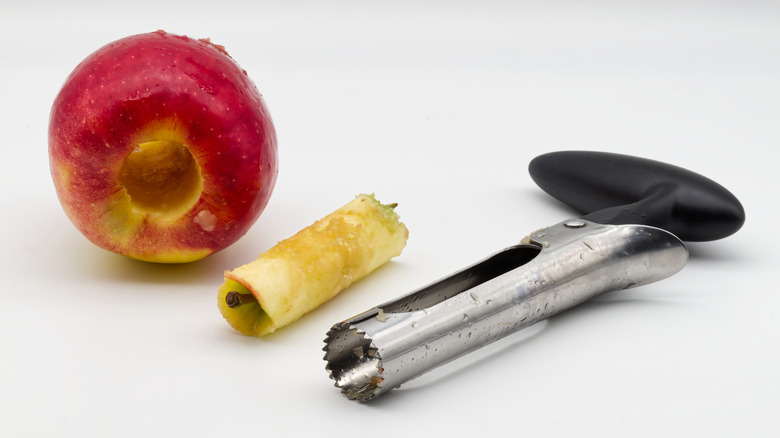
The average apple pie might take half a dozen apples to make, all of which will need to be peeled and cored. If, however, you turn your apple efforts toward making homemade cider, whether sweet or hard, then you can spare yourself some effort. According to Amy Nassisi of Curran Apple Orchard in University Place, Washington, coring isn't strictly necessary. "Farmhouse ciders were historically made with crushed whole apples and tend to be a little more cloudy with funky tannic flavors," she informed us. This means you can start your cider by simply cutting up your apples (being sure to remove any bruised bits), then crushing them to a pulp before squeezing out the juice (to be followed by fermenting if you prefer your cider to be alcoholic).
Of course, some people still choose to core the apples they use to make cider if they want the end results to look clearer. As Nassisi explained, " ... the cores can start to soften as apples age, and coring eliminates any of this soft flesh and bacteria that might make the cider cloudier. [...] Apple cider that is made with cored apples tends to be a little less cloudy and more fruity."
Leaving the cores in isn't the least bit dangerous
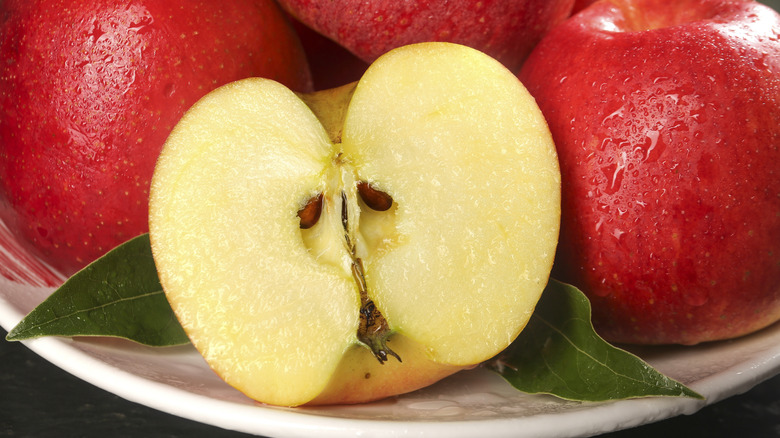
There is another reason why some people may choose to core their cider apples, and that is out of an abundance of caution. No cores = no seeds, and there is a perception that apple seeds are dangerous to eat. While there are numerous ways that food can kill you, apple seeds are an unlikely culprit unless you eat an enormous amount of them. "Apple seeds do contain trace amounts of cyanide that is only exposed when the seeds are crushed and their inner compounds are exposed to stomach acid," Amy Nassisi admitted. "But there simply isn't enough cyanide in cider to cause a concern, so it is generally accepted to crush apples whole for cider, and then strain the seeds quickly."
To put this in context, you'd need to consume at least 150 apple seeds at one time to do yourself serious harm, and the average apple contains eight seeds (or fewer), so you'll be perfectly fine if you're indulging in less than 19. (A gallon of cider can be made with just 10 apples.) In fact, Nassisi noted that the seeds may even do your cider some good, saying, "Many cider makers actually prize the slightly almond taste that a small amount of apple seed from whole apples imparts in their cider."