

11 Iconic Foods And Drinks That Were Created In Texas
You've heard the saying, "Everything is bigger in Texas," and when it comes to great flavor, the Lone Star State has an impressively hefty host of signature dishes that are absolutely delish. The coolest thing is that so many of these dishes that are iconic and directly linked to Texan cuisine were actually "born" in Texas.
What makes Texas food so unique is its eclectic mix of influences. Texas is where the bold and spicy tastes of Mexican cuisine come right alongside Southern comfort cooking. Add to that a generous serving of cowboy panache and European immigrant inventions, and you have one stellar backstory for just how Texas cuisine got to be so good. In a state where food traditions run deep, innovative ideas and out-of.the-box thinking has always been welcomed, and rewarded. And, once some of these ideas are in their noggins, you better bet Texans are never going to attempt anything halfway.
If there is a new dish that is going to be invented under this Big Texas sky, chances are it is going to be full-on, flavorful, and fabulous. From county fair foods and sparkling sodas to beer and ice cream brands, here are 11 iconic foods and drinks that were born in the Lone Star State, and have been shining bright ever since.
1. Corn dogs
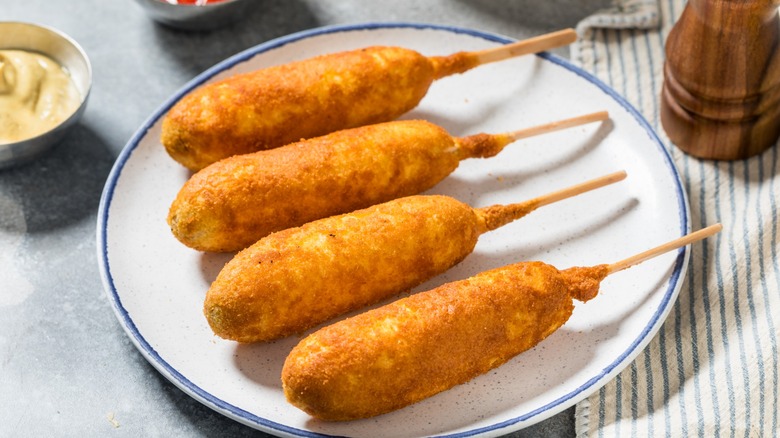
Ever wondered about what led to the creation of the beloved corn dog? Well, it is a Texas food to its core, practically screaming "Texas fairgrounds" from its stick to its batter-wrapped hot dog. Now, while there are indeed accounts of sausage dipped in batter existing before, what we now know as the corn dog on a stick was first created, and perfected, by the dynamic duo of brothers Neil and Carl Fletcher. It all happened at the State Fair of Texas, which was held in Dallas in 1942. The brothers' creation, which they called the "Corny Dog," skyrocketed nearly immediately to the top of the must-try list at the fair, thus cementing it as a tried-and-true Texas original food.
It seems like such a simple staple: A basic hot dog, mounted on a stick, then dipped in batter before being fried to golden, crispy goodness. What really might be what sealed the deal, setting it apart from its sausage in batter predecessor, is that stick itself. Talk about upping the convenience factor, making it easy to carry while wandering about at the fair.
And, while corn dog copycats have popped up around America ever since, the Fletcher brothers' version of the origin story is the one that stuck. In fact, to this day, the "Corny Dog" remains a Texas favorite, sticking out among snack foods as a time-honored classic treat.
2. Fritos
Let's talk about Fritos, the snack food chips we all know and love. While these fan favorite, crispy treats may be found nationwide in practically every grocery store snack aisle today, their initial rise to fame all started back in Texas. It all happened back in 1932, when Charles Elmer Doolin, a San Antonio entrepreneur, bought a recipe for fried corn chips from a vendor at an area gas station. And, while the concept of Fritos admittedly traces its origins back to Mexico, it was Doolin who saw the potential to take that idea and work to refine it, produce it, and share it on a super large scale. This is where the Texas part of the story really kicks off.
Doolin began experimenting with the purchased recipe, focusing on creating a chip that was able to stay fresh, and crunchy. As this was in the midst of the Great Depression era, this brand of affordable, long-lasting, yet satisfying, snack was exactly what Americans were craving.
With this in mind, Doolin not only made chips, but actually figured out how to make them efficiently and economically, which allowed him to get them into the eager, awaiting hands of everyday people. And, while discovering how to mass-produce these specialties now has them selling world-wide, being the birthplace of Fritos chips will always be a bragging right belonging to Texas.
3. Texas toast
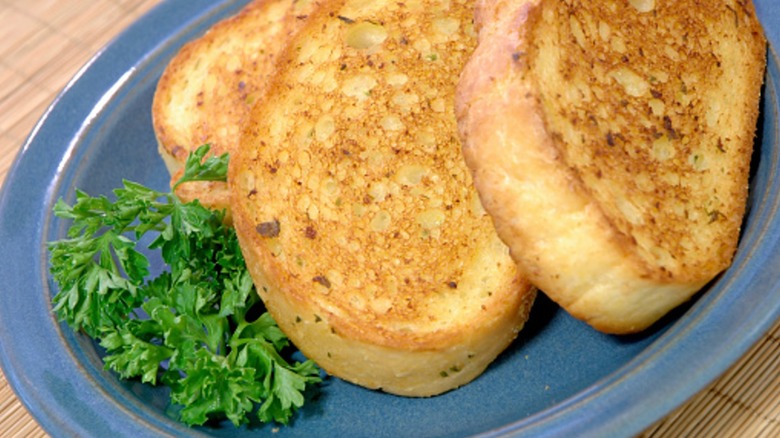
Many diners have dug into a hulking slice of Texas toast, but have you ever known exactly how that first golden, buttery serving of goodness was initially created? Good news! Here is your official account of how Texas got its' very own toast. Texas toast is one of the food creations from the Lone Star State that really does prove that aforementioned saying "Everything really is bigger in Texas." This toast is not your average, weenie Wonder Bread with just a scant dab of dairy slathered onto it. No sir. Texas toast is thick-cut and buttered generously before being crisped up to golden brown deliciousness.
This toast was born from a problem situation at The Pig Stand restaurant in Beaumont in 1941. The manager, Royce Hailey, wanted heartier, more satisfying slices of bread to serve with his meals, so he asked for thicker cuts. Sounds simple, except these new-and-improved, greater-girthed slabs wouldn't fit in the toaster.
But, instead of giving up on the idea, he came up with a pretty genius (and delicious) solution by buttering the bread on both sides, then grilling the slices on a flat-top in lieu of using a toaster. This clever workaround is what we now know as Texas toast, and it's the exact kind of buttery, rich, comfort food that locals from the Lone Star State, and beyond, crave. It also happens to be an ideal accompaniment to all things Texan cuisine (think Texan barbecue, chicken-fried steak, and more).
4. Condensed milk
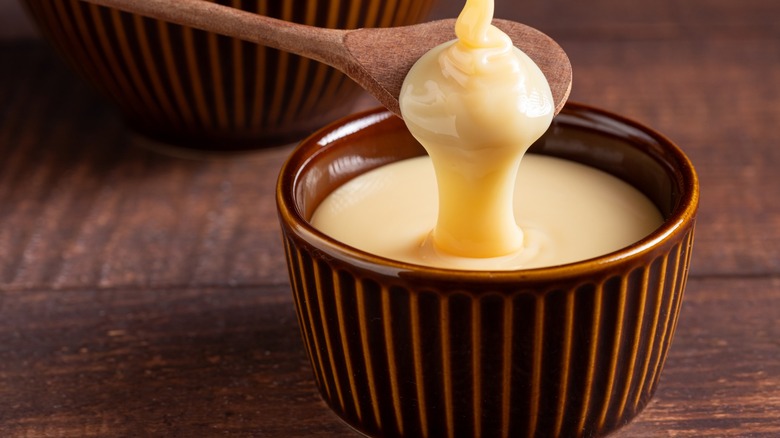
Unlike Texas toast, hearing the name condensed milk won't immediately bring the Lone Star State to mind. Yet, surprisingly, this ultra-rich and indulgent condiment can directly trace its origin story to the Bluebonnet State. We can thank Gail Borden Jr. for this magical addition to the Texan creation rubicon, as the prolific inventor first dreamt it up while living in Galveston and Houston way back in the 1850s. Specifically, Borden developed the first successful commercial process for condensing milk, and in doing so, revolutionized the way people preserved food (this was way before refrigeration was a regular thing).
The idea first started after Borden kept encountering serious problems with spoiled milk during travel, so he focused on finding a way to make milk safer and longer-lasting. His solution was to remove much of the water content, which created the shelf-stable condensed milk product we know today.
This ingenious creation made waves, and condensed milk quickly became nearly invaluable for travelers, households, and even the military. Borden's product provided a reliable source of nutrition at a time when fresh milk wasn't always available (or safe). In a place as large and spread out as the Armadillo State, that made a real impact. Today, sweetened condensed milk is used in everything from desserts to drinks around the world, but its beginning belongs solely to Texas.
5. Blue Bell Ice Cream
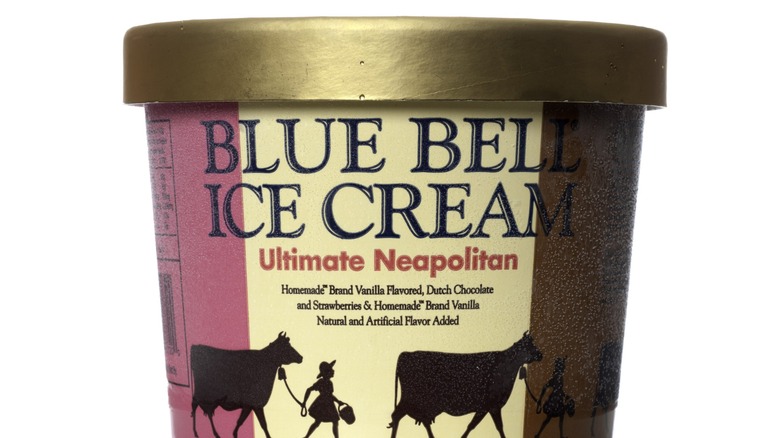
While the Blue Bell brand claims to have invented cookies and cream ice cream, the origin of this brand includes the interesting fact that it hails from the Lone Star State. If you ask any true Texan, they'll likely wax eloquent about the brand, insisting that Blue Bell isn't just any ice cream product, but a time-honored Texas tradition. This brand began as a tiny co-op creamery in 1907 (called Brenham Creamery Company), in the bucolic community of Brenham, Texas.
From those humble beginnings, the since renamed Blue Bell brand has grown to become among the most beloved ice creams in the nation. The name itself comes from the Texas bluebell wildflower, which feels a fitting nod to its roots. Fun fact: Blue Bell was first solely focused on using leftover cream from local dairy farmers to make butter. But, after a few years, in 1911, someone had the genius idea to start making ice cream, too (a brainstorm moment Texans, then all Americans, have been grateful for ever since).
Back in those initial days in the early 1900s, it was old school prep (think only a handful of gallons of ice cream produced each day, which were all cranked by hand, then delivered by horse and wagon). Blue Bell has definitely come a long way since then (mass production, shipping nationwide, and goodbye Mr. Ed and buggy). But, that same Texas homemade taste has remained.
6. German chocolate cake
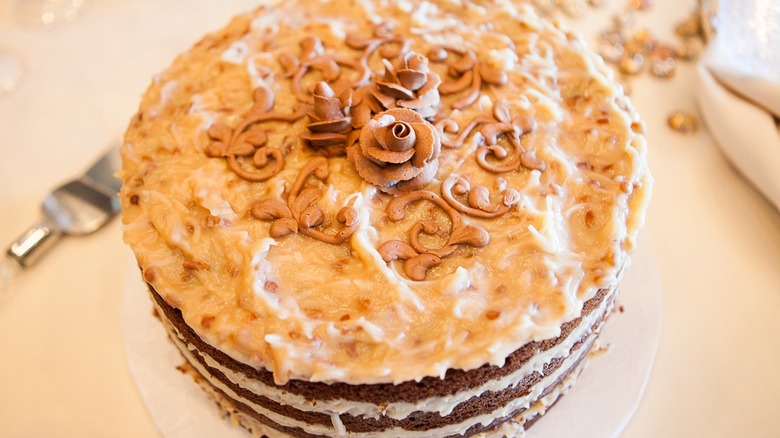
Don't let the name fool you. German chocolate cake's moniker is sneakily deceptive. One would assume this decadent dessert hailed from that European country known for its iconic bratwurst and beer gardens, but this cake actually comes straight from the Lone Star State.
It's an origin story that goes all the way back to Dallas, Texas, circa 1950. This is when a local Texan homemaker decided to submit one of her beloved recipes to a newspaper, under the heading "German's chocolate cake" (a nod to a chocolate baking product named after Samuel German, not the European country). Alas, just like a game of telephone, somewhere along the line, the message got garbled (and an apostrophe got dropped), making this a dessert that has been sparking confusion ever since. But, one fact remains: It's a Texan creation.
In true Texas form, the German chocolate cake embodies Southern comfort. Picture layers of lush chocolate cake, piled high with a signature gooey pecan and coconut frosting, sandwiched between (and slathered atop) the whole spectacle itself. What results is a messy, satisfying, sultry affair that shames all other desserts that dare to even try to say they are decadent. Let's just say "extra" is a great adjective, which only further proves this cake is Texas to its core. From one small home kitchen oven to a single newspaper to global favorite, this cake with a confusing name has become a household name.
7. Dr Pepper
Before soda was a global sensation, the Lone Star State already had something popping off. It was called Dr Pepper, and it was a bubbly drink first created in 1885 in Waco, Texas (making it the first major soft drink made in the entire United States). It all happened in a tiny Texas drugstore, where pharmacist Charles Alderton spent his days mixing medicines and tinkering with flavors at the onsite soda fountain.
Folklore attests that Alderton, in an attempt to capture the pleasant aromas of the shop (think fruity, sweet, syrupy), embarked on a trial-and-error testing adventure, eventually landing on the blend we now know as Dr Pepper. Customers immediately loved the bubbly concoction, which they at first fittingly dubbed the "Waco."
As to why the new (and current) name of Dr Pepper became the final moniker remains shrouded in mystery. What we do know is that we stop caring once we taste it, as that unique flavor trumps the rest. Described as a blending of 23 various flavors, Dr Pepper is a mix of sweet, spicy, cherry-esque, and everything else nice that we just can't seem to put a finger on. In fact, that description of the impossible to box in soda flavor profile is one of the most apt character profiles of the state of Texas, too, come to think of it. Just like its origin state of Texas, Dr Pepper sparkles, wows, and definitely keeps us guessing.
8. Shiner Beer
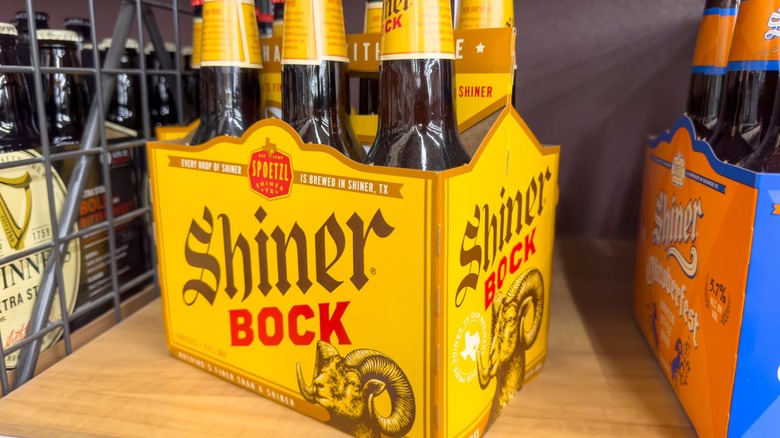
Shiner Beer got its start in the tiny Texan town of Shiner. The brewery, first established in 1909, was began by some local businessmen who decided their growing community, which was filled with German and Czech immigrants, needed a beer of its very own.
Now, this process, while an excellent idea, was anything but easy. Suffice to say, Shiner Beer had a rocky start, marked by early batch snafus and the brewery even coming face to face with threats of closure. Things weren't looking great, until Kosmos Spoetzl came along in 1914, that is. Spoetzl was an experienced brewmaster, who happened to bring with him a tried-and-true, Bavarian-style recipe that turned the entire operation around and set the foundation for what Shiner would become.
And, if that bumpy start wasn't enough, more challenges popped up, namely Prohibition. But, true to Texas, this brewery was not a fan of giving up. It not only endured, but adapted expertly, pivoting to produce other products in order to stay afloat until the iconic Shiner Beer could once again be tapped into. As for the taste? Words like "smooth" and "caramelized" are often paired with Shiner Beer when the brand comes up, which is a testament to the brew's old-world influences, with a Texas kick and twist.
9. Chili con carne
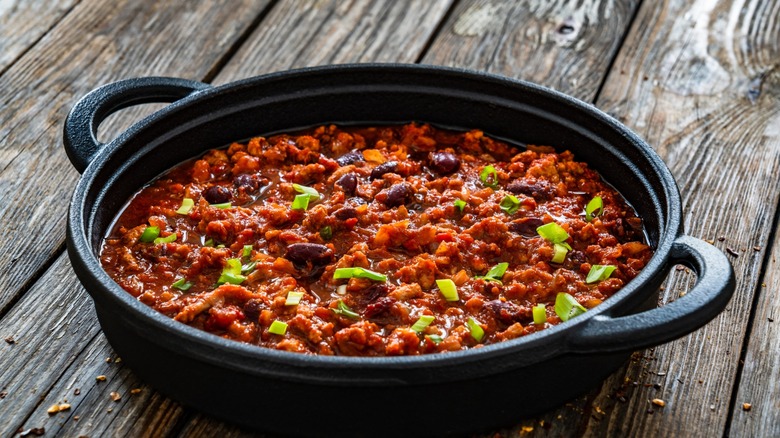
Texas is known for its chili. And, as for chili con carne? That was named the official state dish in 1977. While it may have reached the height of its heyday with this accolade in the 1970s, the fact remains that chili con carne, or "bowl of red," as it's commonly known in the Lone Star State, has roots that stretch all the way back to the 1800s. This was when the delectable dish became a staple and meal mainstay in the city of San Antonio.
We have mentioned Texas, and many of its iconic dishes, being "extra." And, when chili con carne is involved, this is one bowl chock-full of all the things. Think a heaping helping of juicy and tender beef, spices out the wazoo, and a zingy red sauce that'll really ruffle your feathers (it is made from chiles, after all). And, let it be made clear: This chili has no beans.
This beanless chili first gained steamed when the now famed "Chili Queens" of San Antonio began scooping it up in public plazas to eagerly awaiting crowds. Think huge pots, gurgling and bubbly, their smoke sending flavorful spice scents floating through the air. Like Texas, chili itself has direct ties to cowboys and trail life. While early versions were made from dried beef, fat, and peppers, which were turned into a paste that could be cooked, chili con carne is an elevated, improved version of Texas in a bowl.
10. Pecan pie
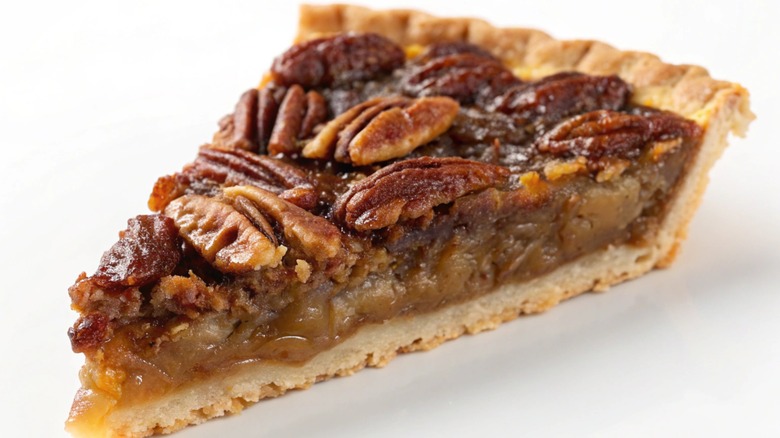
If there's one dessert that feels right at home on a Texas table spread, it's pecan pie. After all, this sweet, nutty, and absolutely delicious pie was named the state dessert in 2013 (but Texans had already been claiming it long before this, to be honest). Making pecan pie an official state food is really sensical, too, since pecans are native to the Texas area (the Lone Star State being among the nation's biggest pecan producers).
It may surprise you to learn that the very first known printed pecan pie recipe was linked all the way back to 1898. It was a proud Texan woman who submitted the dessert recipe to a cookbook, and from that moment onward, the pecan pie has gained in popularity by leaps and bounds, going from one solo kitchen to gracing the tables of families and even restaurants nationwide.
The picture of Texan southern comfort, pecan pie is notoriously rich and decadent, yet simple, in its preparation. The recipe fills a delightfully flaky crust with a luxuriously dreamy blend of butter, eggs, sugar, and pecans. What that becomes is nothing short of bliss, showcasing a now caramel-like pie filling laced with nutty characteristics that are just a chef's kiss. Locals will tell you, "Nothing says Texas quite like a slice of homemade pecan pie," and that sentiment rings true, right to its birthplace in the heart of it all.
11. Chicken fried steak
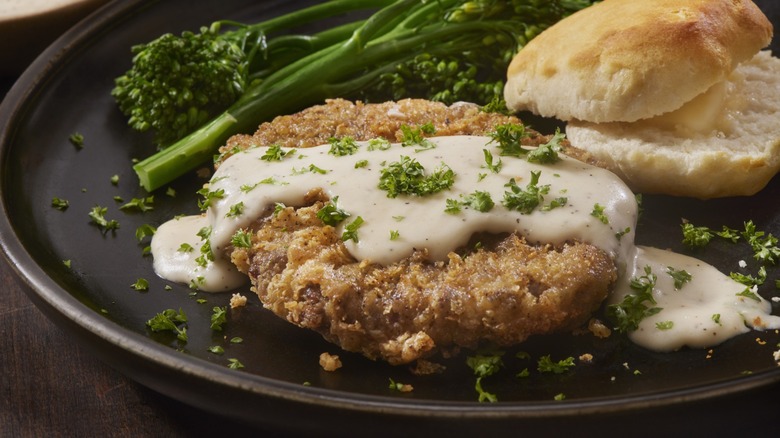
Among the Texas foods visitors must try at least once is the iconic chicken fried steak. This classic is beloved for its crispy, gravy-smothered characteristics. In fact, it is so adored in Texas that the state has already given the meal its very own official day of celebration (October 26). So, where did this mainstay meal that is so good it deserves an entire holiday first begin? The tale goes that German and Austrian immigrants to Texas brought with them the classic Wiener schnitzel.
However, this famed European favorite known for its reliance on thinly-pounded and breaded veal wasn't exactly on the menu in the Lone Star State. So, resourceful as ever, these pioneering folks set to make the best of what they had, creating their own iteration using tougher cuts of beef. And, after a bit of tenderizing and an application of a coating with some stellar seasonings, this was thrown into a sizzling pan, and chicken fried steak was born.
There's also a bit more Lone Star lore thrown in for good measure, with one particular tale claiming a cook in Lamesa accidentally combined an order of fried chicken with fried steak, thus creating the dish by mistake. Whether that's true or just a good story to swap over a shared meal or campfire circle remains unproven. What is fact is that Texas claims it, and has most definitely made it its own.