

The Dish That Zohran Mamdani Carries Fond Childhood Memories Of

Zohran Kwame Mamdani, I see you — and not just because of your commitments to protect tenants, expand affordable housing, and fund free childcare. I see you — for digging into a steaming plate of chicken biryani with your hands, without hesitation, at Kabab King, the unassuming NYC restaurant that later catered your inauguration. When you said kuku paka was one of your favorite dishes from childhood, I felt like you could see me too.
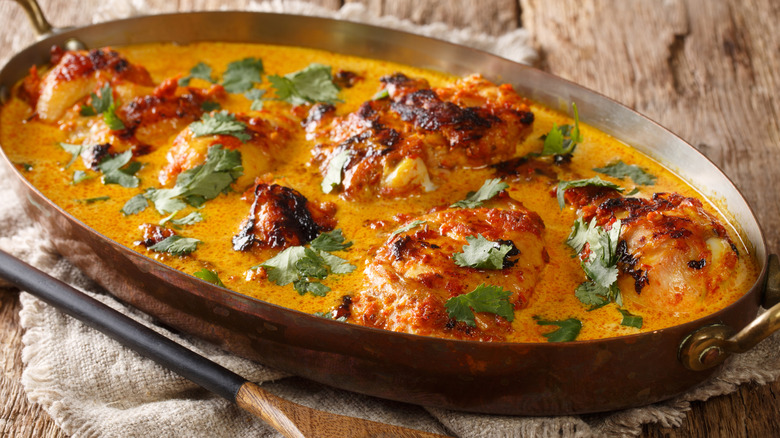
Kuku paka, a coconut milk-based chicken curry, is an all-time favorite of mine, and it perfectly captures the unique confluence of cultures across East Africa — especially in present-day Uganda, Kenya, and Tanzania. Mamdani's parents were born in India and later moved to Uganda, where he was born. My paternal great-grandparents immigrated from India to Tanzania, too. In Kiswahili, "kuku paka" is the shortened version of "kuku wa kupaka" — "kuku" translates to chicken, and "paka" refers to the coconut milk sauce.
As with many regional dishes, the preparations vary from country to country and family to family. Some of the most classic recipes call for char-grilling bone-in, skinless chicken, but others call for braising the meat. Often, the chicken pieces are marinated in ingredients like salt, garlic-ginger paste, and dried spices, as well as something acidic like yogurt or lemon juice. The coconut milk sauce is always prepared separately. At its most simple, the coconut milk is flavored with salt, turmeric, fresh green chiles, and cilantro. Other recipes will incorporate garlic, ginger, onions, and tomatoes into the base of the sauce and add fragrant spices like ground cumin and coriander. The chicken either briefly cooks in the curry, or the sauce is poured over the finished chicken.
How to serve kuku paka
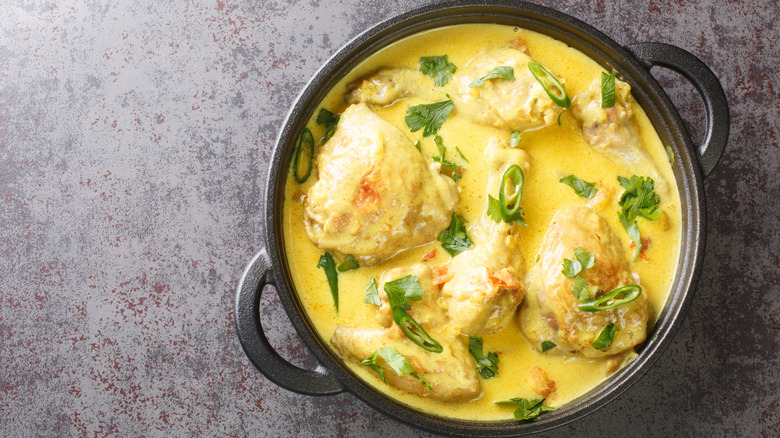
The grilled chicken is sometimes accompanied by chunks of potatoes or peeled hard-boiled eggs. In some versions, the coconut sauce is reduced until thick and creamy; in others, it is much lighter. It can be served with a pile of steamed white rice or delicious flatbreads. In East Africa, chapati is usually the flatbread of choice, and it happens to be another one of Zohran Mamdani's favorite foods. There are many different types of chapati around the world — in Uganda, they are typically made with white flour and on the thicker side as opposed to thinner, whole wheat South Indian ones or flaky, layered Kenyan chapatis.
Kuku paka can also be served with bread, slightly sweet fried buns called mandazi, or ugali, a thick porridge made with fine white cornmeal. Ugali can range from soft and pliable to more cake-like. Either way, you use your fingers to mold it so that it can act as a handheld scoop for the coconut milk sauce. Kachumbari — a tomato, onion, and cilantro salad dressed with lemon juice — is a common accompaniment to many savory meals, including kuku paka.
How kuku paka came to be
Zohran Mamdani's story (and mine) is part of a larger narrative. Many Indian Muslims migrated to East Africa as laborers, as indentured servants to the British colonizers, and for various economic and sociopolitical reasons. Former dictator of Uganda, Idi Amin, expelled tens of thousands of Indian Ugandans in 1972, but Mamdani's family was among those who stayed.
Centuries of trade and movement across the region created a cuisine that blends African ingredients, Indian spices, and shared cooking techniques, resulting in foods that are deeply reflective of the place. As Mamdani put it to Bon Appétit, "I think one of the things that I've also been so fascinated with over the course of my life is how food tells the story of the people. It tells the story of migration. It tells the story and the struggles and the joys." He pointed out coconut milk, in particular, as representative of "a new culture that is a mix of multiple."
Many East African Indians are of Gujarati descent, including Mamdani. In the state of Gujarat, fresh coconut milk is not commonly used in savory cooking. On the coast of East Africa, on the other hand, coconut milk is integral. Similarly, meat was not a daily fixture back in India, but as Indian communities found economic stability in Africa, it became a more regular part of their diet. Kuku paka was undoubtedly created along the shoreline where palms are plentiful and moved further inland from there. While you won't find it on Indian restaurant menus, kuku paka continues to be a wildly popular, comforting dish that's emblematic of the history of all East Africans.