

How To Reduce The Risk Of Listeria Exposure
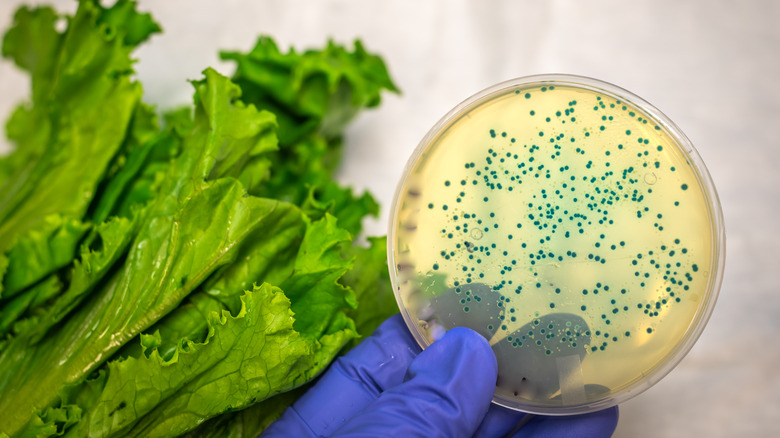
Listeria is a strain of bacteria responsible for food poisoning symptoms that can leave you swearing off certain foods for the foreseeable future. It's a prolific little bug; found everywhere in the environment. If you're exposed to Listeria bacteria, you can develop Listeriosis and find yourself experiencing symptoms that can range from uncomfortable to severe (and potentially dangerous if you're in at-risk groups like pregnant women and people over 65).
There are two types of Listeriosis, a mild version that causes gastrointestinal symptoms and only lasts a couple of days, and invasive Listeriosis with more severe symptoms like headache, stiff neck, loss of balance, convulsions, and confusion. Food is one of the major sources of Listeria exposure, especially products like unpasteurized dairy, deli meats, and fresh fruits. While not every food contains concerning levels of Listeria — just 1,250 people are infected every year in the United States, according to the U.S. Centers for Disease Control — it can be deadly.
Contamination can happen when foods encounter bacteria via cross-contamination during production or processing, thanks to unwashed hands, surfaces, equipment, or close contact with other tainted food. Listeria is also tricky for a couple of reasons – it can survive cold storage like refrigeration and freezing, and spreads easily in places like the grocery store deli. The window of time for the onset of Listeriosis symptoms is wide; gastrointestinal issues can start within a few hours, but sometimes they don't appear for up to six weeks after eating contaminated food. However, there are steps you can take to reduce your risk of getting Listeriosis using straightforward strategies that revolve around food choices, prep, and storage.
High-risk foods that could be contaminated with Listeria
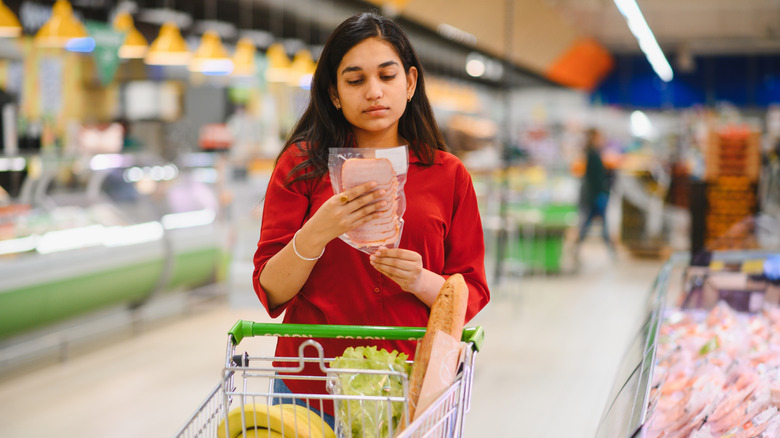
Are certain foods more susceptible to infection by Listeria than others? Well, there's a reason why doctors tell pregnant women to swear off deli meats until they give birth. Deli meats are among the foods most likely to be contaminated with Listeria, and on occasion, the source of nationwide incidents like the Listeria outbreak of 2020. Other high-risk foods include hot dogs, unpasteurized foods, sprouts, and raw fish dishes like traditional ceviche or sushi. Sprouts are at higher risk for Listeria contamination because they grow in warm, humid conditions that support bacterial growth.
Ready-to-eat foods are also higher risk for Listeria contamination (remember the 2024 ready-to-eat meat recall?) because they may be prepared in the deli section on the same surfaces as higher-risk meats. The packaging of these foods can hold moisture, which creates a perfect environment for Listeria growth, and the bacteria can continue to multiply as ready-to-eat foods sit in refrigerated storage.
We also rarely reheat these foods before eating. It's easier just to dig in than pop it in the microwave for a second heating, but cooking foods over 165 degrees Fahrenheit kills the bacteria. Other foods that are higher risk for contamination include raw milk, cut melons like cantaloupe, and soft cheeses.
Food prep and storage steps to prevent Listeriosis

The U.S. Department of Agriculture has four easy steps to remember when it comes to food safety: clean, separate, cook, and chill. They are basic standards you should use in your own kitchen – always wash your hands with soap before handling raw meat, use separate cutting boards when you're processing multiple ingredients to avoid cross-contamination, cook raw foods to a safe temperature before eating, and put leftovers in the fridge. To help prevent growth of Listeria in foods, don't let anything that requires refrigeration sit out at room temperature for more than two hours – one hour if the temperature in the room is 90 degrees Fahrenheit or higher.
Another easy step to take to reduce the risk of listeriosis is to keep your fridge clean. Wipe up any spills and remove spoiled foods that can harbor bacteria. Wipe down surfaces with soap and water to lower the risk and remove any food that looks spoiled. Keep foods covered, check for expiration dates, and consume ready-to-eat meals quickly instead of letting them linger in the fridge.