

Your Guide To The 3 Different Types Of Chicago-Style Pizza
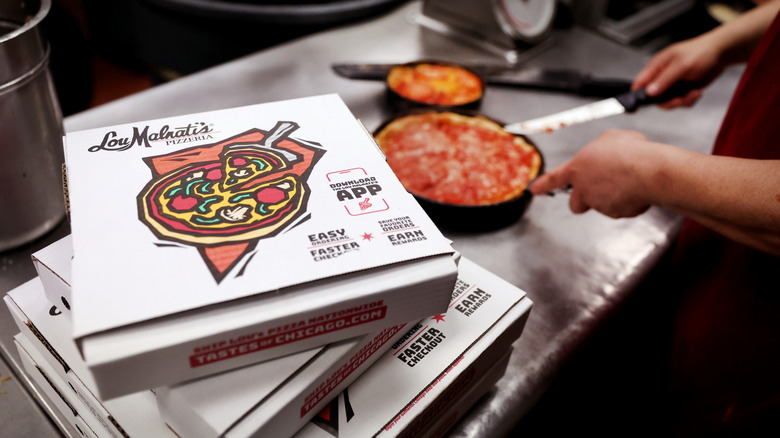
When those of us not native to the Windy City think of Chicago-style pizza, the first (and perhaps only) one that springs to mind is deep-dish. As it turns out, though, there are three types in all. In order to find out more about the different styles, we spoke to Noel Brohner, who describes himself as a pizza consultant and founded a company called Slow Rise Pizza that teaches pizza-baking classes and provides catered pizza parties. "Chicago-style pizza generally refers to three distinct formats: deep dish, stuffed pizza, and tavern-style thin crust," said Brohner.
Deep dish, as the name implies, is baked in a pan with high sides (typically a round one). It could be considered an upside-down pizza of sorts, as it has the cheese as a bottom layer over the dough, followed by toppings and then sauce. Brohner also noted that the crust isn't just thicker but differs in other ways: "The dough is typically enriched with oil and pressed into the pan rather than stretched. It requires a longer bake and careful fat management." Stuffed crust is similar to deep dish but adds a second dough layer over the cheese and toppings but under the sauce. Brohner described it as "taller, denser, and more steam-heavy, which changes how the dough behaves and how ingredients are balanced." Tavern-style pizza has a thin crust and is cut into squares. As per Brohner, "The dough is leaner, the bake is faster, and the topping ratio is different. Structurally and texturally, it's almost the opposite of deep dish." He summed up the different styles from a baker's perspective, saying: "Each style uses different hydration levels, fat percentages for the dough, different bake times and build methods."
Tavern-style thin crust is most popular
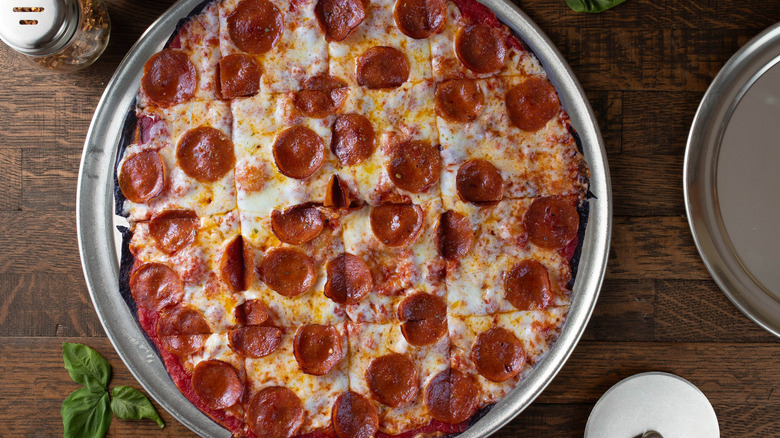
This may go against public perception, but deep dish is actually not the pizza of choice for most Chicagoans. "If we're talking about the style that locals eat most often, tavern-style thin crust may be the truest expression of Chicago pizza culture. It's embedded in neighborhood bars, family gatherings, and delivery culture. Deep dish may be the icon, but tavern-style is the everyday reality. In many ways, that makes it the most authentic representation of Chicago's pizza identity," declared Noel Brohner.
So what sets tavern-style pizza apart from the other Chicago pies? According to Brohner, "It's lighter, easier to share, and more of an everyday pizza." He notes that while tavern-style pizza is growing in popularity with pizza connoisseurs across the country, the rest of the public has yet to catch up (though nationwide chains like Domino's and Pizza Hut do feature tavern-style pizzas on their menus, and the style is readily available in frozen form as well.) "I think that the thin and crispy texture is attractive for many reasons: it's less filling than most other styles so customers tend to feel lighter after eating it [and] the ratio of crust to sauce to cheese and toppings hits a button that many people find hard to stop eating once they sample it," he explained.
As to where to experience tavern-style pizza at his finest, Brohner lists Kim's Uncle, Pat's, Vito & Nick's among his top picks. He also added, "Oh, and it should probably be said that George's Deep Dish actually does a respectable thin crust tavern style, despite having 'Deep Dish' in the name."
Deep dish is the out-of-towner favorite
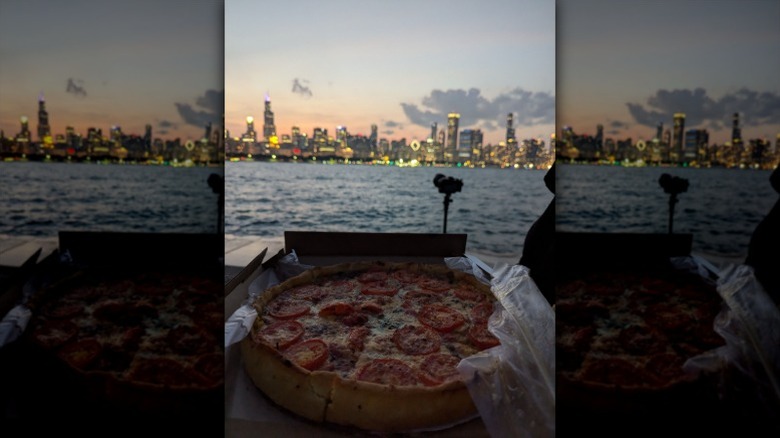
In Noel Brohner's experience, "Deep dish tends to be what visitors seek out," noting that it typically "dominates the tourism conversation." It's not strictly tourist fare, though. One of his childhood favorites, Pequod's Pizza, is known for its deep-dish style. And although Brohner has explored many other styles since then, he still has a soft spot for this hometown favorite. "Pequod's is known for its caramelized cheese or fried aka 'frico' cheese rim and elevated pizza crust (possibly emanating from the decades old steel pans they still use on every pie) and is a must for pizza fans in the know and for newbies who are willing to travel beyond the beaten path for a great pizza experience," he enthused.
There are several other restaurants in Chicago that are said to sell the best deep-dish pizza as well."For classic deep dish, Lou Malnati's is a benchmark for buttery crust and balanced build," Brohner opined, expressing a preference for the original outpost in the Chicago suburb of Lincolnwood. He also gave George's Deep Dish another shout-out: "George's leans into fermentation-driven flavor and structure, giving it a more complex, slightly tangy base with a modern, craft approach."
Chicago-style stuffed crust is different than Pizza Hut's
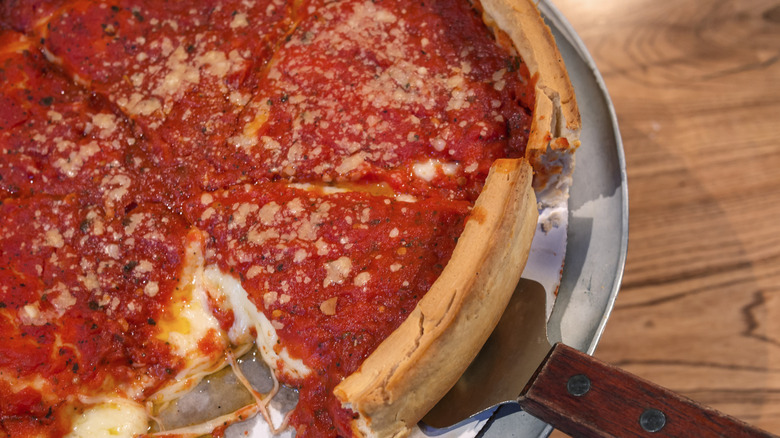
Some people think Pizza Hut invented stuffed crust pizza back in the '90s, although it might have been some guy in Brooklyn or an unknown pizza chef in 1940s Italy. This style of pizza, though, isn't the same as the Chicago-style stuffed crust that debuted in the '70s. Chicago stuffed crust pizza is basically deep dish with an extra layer of dough over the first layer of cheese and toppings, while Pizza Hut's version is a standard pizza with cheese baked inside the crust.
"Giordano's remains the most recognizable name in the stuffed crust game," Noel Brohner explained, He added, "The Art of Pizza is a local favorite known for a more nuanced sauce-to-cheese ratio than the big chains." (The latter sells single slices of stuffed crust as well as whole pizzas.) He also observed that some Chicago-area pizzerias even make stuffed crust the Pizza Hut way: "If you are specifically interested in a stuffed pizza where the cheese is stuffed into the outer crust or rim of the pizza, there are a few options of note, but the one I've heard recommended more than the others is Moretti's because they don't use mozzarella but instead the aged and slightly more salty Asiago cheese."
Whether you're a fan of either kind of stuffed crust or are more partial to tavern-style or deep-dish, you owe it to yourself to experience all three. Should you have the opportunity to visit Chicago, Brohner advised trying as many of his recommended restaurants as you can. The way he sees it, "Each is worth visiting because they reflect a different chapter of Chicago's pizza history, and each handles dough, cheese, and bake differently."