

The Key Difference Between A Spice And A Seasoning
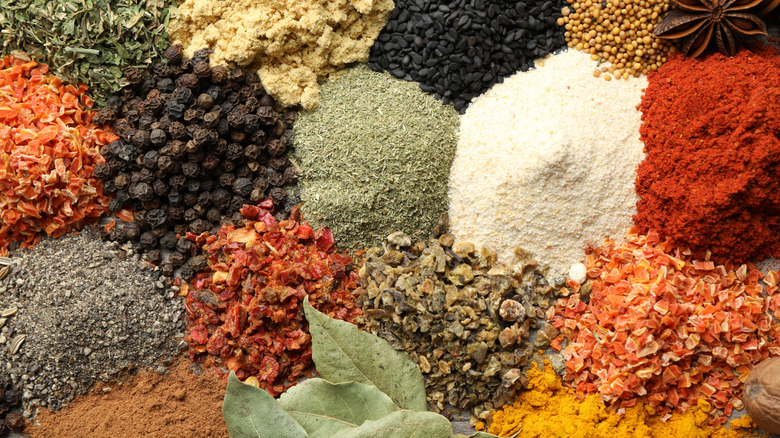
We humans have been sprinkling bits of bold-flavored plant life onto our food for much of our history. A typically bland or mild-tasting meal, be it eggs or potatoes or noodles or meat, nearly always benefits from a spice or seasoning. But are those terms interchangeable? They're both ways to add strong flavors into neutral bases. But you should be wary substituting one for the other, because seasonings are more complicated than simple spices.
A spice is typically composed of a single ingredient made from parts of a plant, which is often (but not always) ground into a fine powder. On the other hand, a seasoning is a mix of several ingredients and may include added minerals, like salt, or various oils or animal products. A spoonful of black pepper, a sprinkling of powdered ginger, or a bit of cinnamon are all spices. A mixture of black pepper, salt, ground garlic, and chili powder would be seasoning, as would a mix of ginger, salt, and sesame; it's fairly common for seasonings to contain a prominent spice mixed with salt and some extras. On the other hand, the label on a spice container will ideally list exactly one ingredient, although some may also include a preservative or artificial coloring.
Using spices, seasonings, and beyond
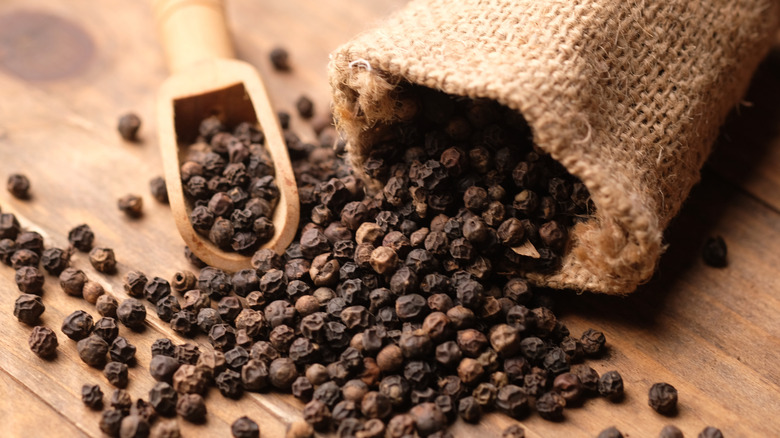
You'll often see spices in powder form in grocery stores, although you can easily make a spice yourself by grinding that root or flower. There's also a school of thought which suggests that whole spices are better than ground spices because they're fresher when you buy them in produce form rather than powdered. Either way, a spice can be a quick way to add heat to a dish, although different spices serve specific roles: There are aromatic spices like nutmeg and floral-tasting spices like coriander.
Conversely, a seasoning can do multiple things at once. For example, that surprisingly versatile Old Bay seasoning contains ground red and black pepper, paprika, celery salt, and a secret mix of many more spices. That combination adds both heat and the distinctive flavor which we now associate with seafood.
One last note: A spice shouldn't be confused with an herb. Spice can come from any part of the plant, including its flowers and roots, except its leaves. If it comes from the leaf of a plant, then it's an herb. Coriander is a perfect example of this division: The leaves of the coriander plant are used to make cilantro, a strong-tasting herb and America's most popular and divisive ingredient, but the plant's dried seeds, when ground, are called coriander (to make matters more confusing), and is therefore a spice. A seasoning also shouldn't be mixed up with a rub, which is mainly designed for meats and involves much larger-sized granules of its ingredients than the fine granules often found in seasoning.